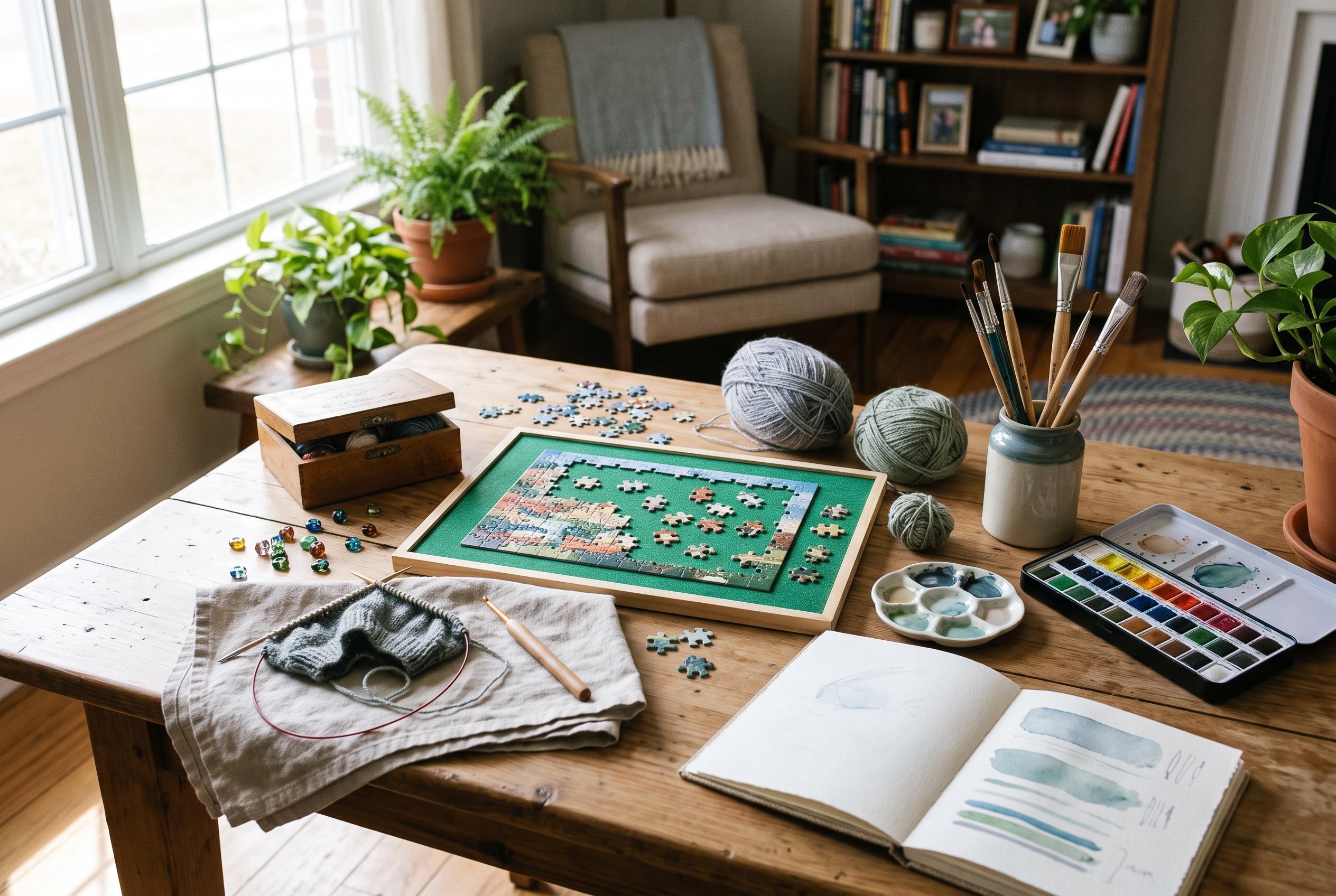

Engaging in hands-on activities can counteract rumination, reduce stress and improve mental health, offering a simple yet effective tool for daily wellbeing.
Hobbies can do more than fill spare time. They can also interrupt the kind of repetitive, self-defeating thinking that keeps people awake at night and drains attention during the day. The central idea is simple: when the mind is stuck replaying worries, a hands-on activity can pull focus back into the present and give the brain something concrete to do.
That matters because rumination is not harmless daydreaming. Research published in the British Journal of Psychiatry has shown that therapy aimed specifically at repetitive negative thinking can improve outcomes for people with lingering depression symptoms. Other reviews in the medical literature likewise link rumination with depression and anxiety, underlining why breaking the cycle can be so important.
A hobby works differently from passive distraction. Scrolling a phone or switching on the television may provide a brief escape, but the mind often drifts straight back to the same anxious loop. Making, stitching, building, baking or puzzling demands attention, coordination and small decisions. Those sensory and practical tasks can be hard to do while worrying in circles at the same time.
That is one reason clinicians and health writers continue to highlight the wider benefits of hobbies. Healthline and UCLA Health both point to better mood, lower stress and healthier ageing. Harvard Health has also noted findings from a large international study of older adults suggesting that people with hobbies tend to report better health, happiness and life satisfaction.
For many people, the value is not just in the finished object. The act of creating can be the reward. A few minutes spent handling fabric, tools, thread or paint can be enough to break the spell of overthinking and replace it with something calmer and more useful. In that sense, a hobby is not an indulgence. It is a practical way to regain mental footing.
Disclaimer: This content is for informational purposes only and is not intended to be a substitute for professional medical judgment, advice, diagnosis, or treatment.