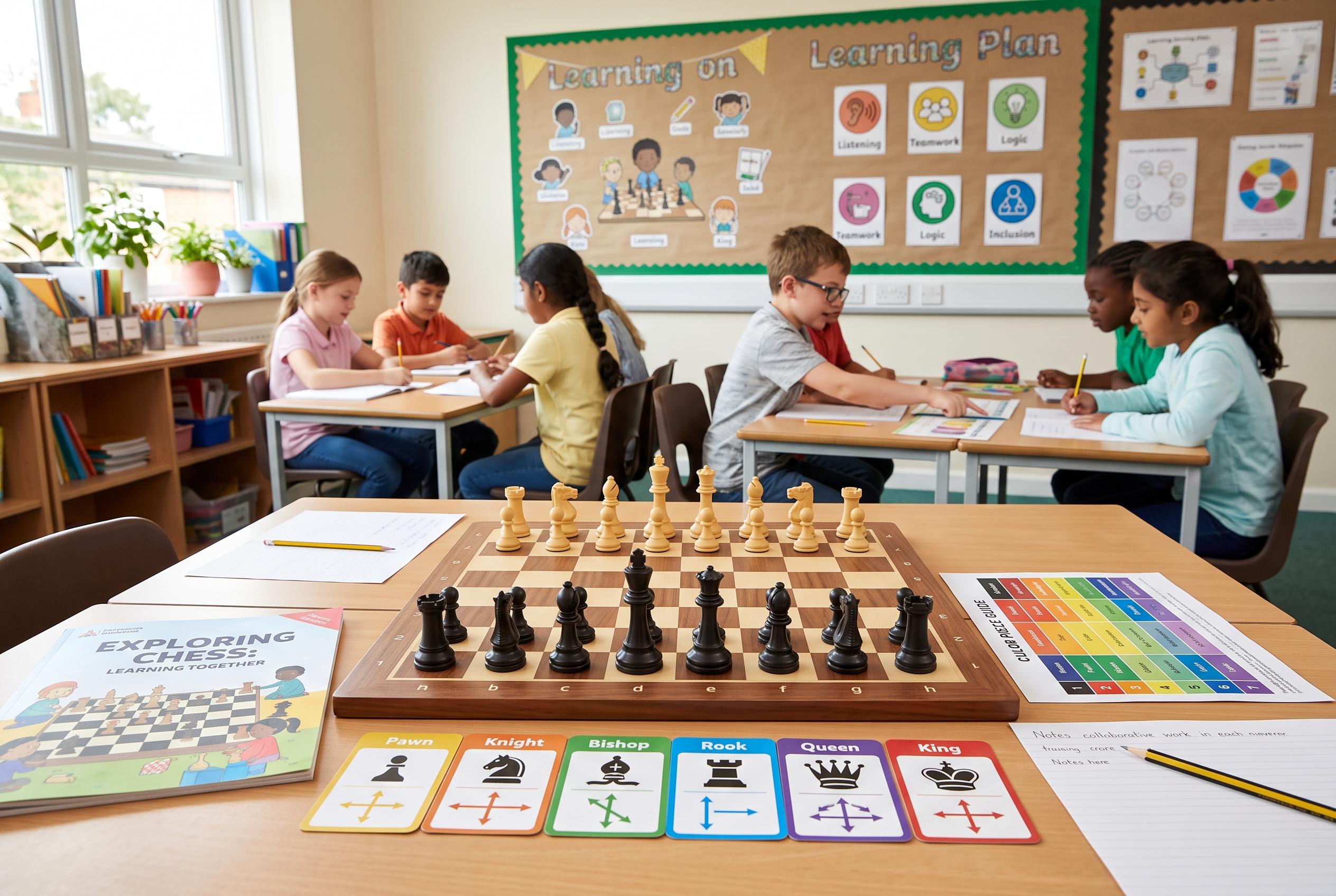

As chess becomes a staple in classrooms worldwide, experts warn that its educational value risks being overshadowed by competitive pressures; advocates call for a focus on learning, social skills, and inclusive pedagogy to unlock its full potential for all pupils.
Chess has won a place in classrooms around the world, but advocates say its educational value can be lost when schools treat it too much like elite sport. Carlos Maury Escalante, a former specialist at Peru’s education ministry, argues that the game belongs first in the classroom as a tool for learning, confidence and social development. FIDE’s Chess in Education Commission says the game is most effective when it is used to support intellectual and 21st-century skills, either as a stand-alone subject or woven into other lessons.
Maury Escalante warns that importing the logic of rankings, elimination rounds and podiums into school settings can turn a playful activity into a source of pressure. In his view, children should encounter chess as an opportunity to learn through enjoyment, social contact and gentle challenge, rather than as an early test of sporting status. FIDE’s education arm has made a similar distinction in its own materials, separating school-based chess from competitive chess and promoting the board as a classroom resource for all pupils.
That approach has been reflected in a wider international push to normalise chess in education. FIDE says its projects include school programmes in Singapore, Cyprus and Catalonia, alongside work with the International School Chess Federation to support longer-term projects in schools. The organisation also notes that chess education has evolved from a narrow focus on competition to a broader aim: helping children, and even adults and seniors, build useful skills through structured play.
The Peruvian columnist also cautions against treating promising children as if they were already professionals. He argues that the school years are the main window for building an academic base and that time devoted solely to technical training cannot be recovered later. FIDE’s own recent activity suggests the field is still expanding, not closing down: in 2026 the federation dedicated the year to chess in education and launched a global survey to measure how widely school chess is used and to guide policy through 2030.
Maury Escalante says parents and schools should protect balance. He points to the game’s value in maths, language, logic and movement, from coordinates and geometry to verbal reasoning and spatial awareness, while urging teachers to prioritise pedagogy over tournament credentials. FIDE similarly presents chess as a flexible learning method that can be embedded across subjects and supported by modern training tools, while also backing specialist projects such as Infinite Chess, which uses the game to support children with autism in a structured, calming environment.
Disclaimer: This content is for informational purposes only and is not intended to be a substitute for professional medical judgment, advice, diagnosis, or treatment.