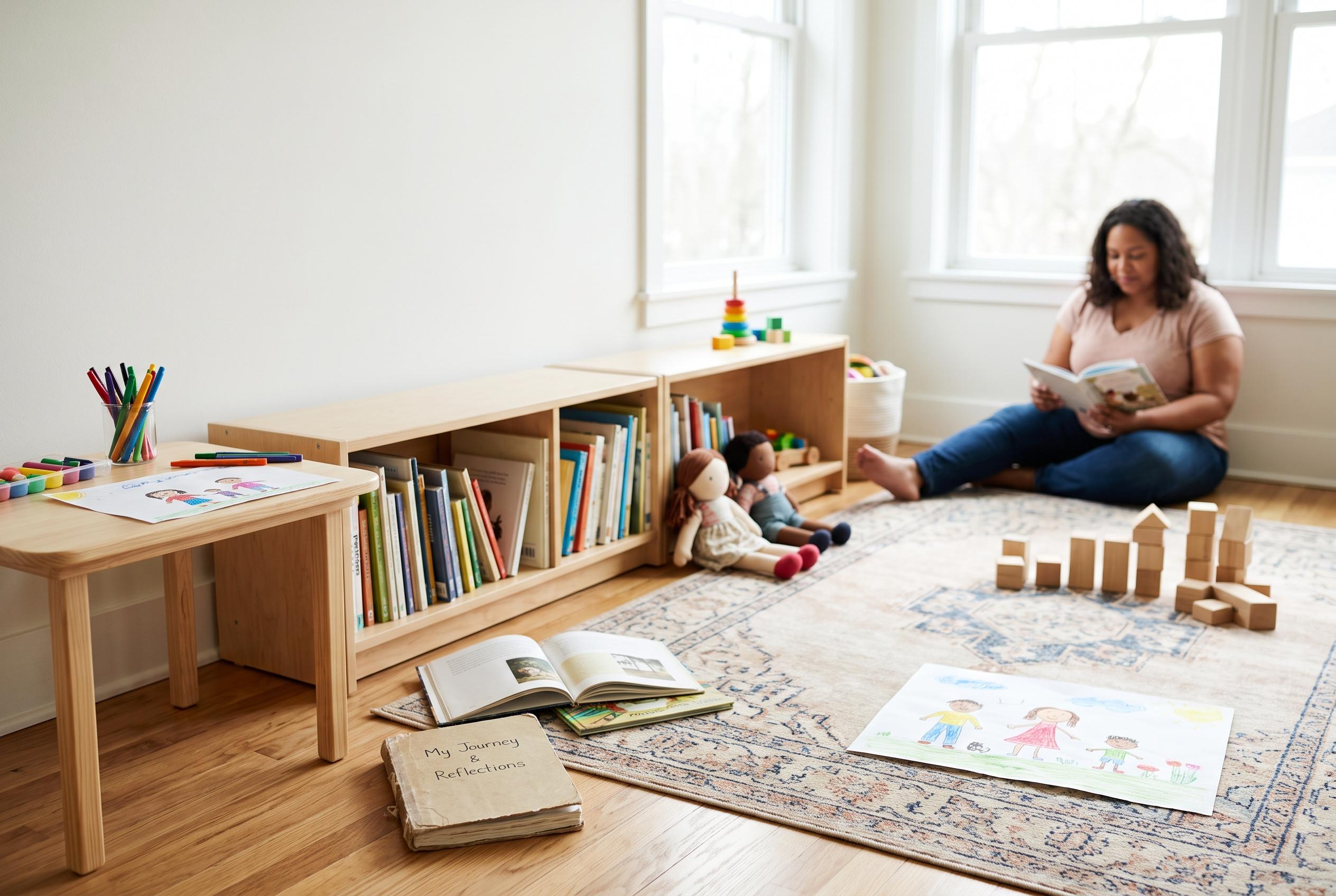

A call to recognise childhood as a vital stage of human growth within humanistic psychology, challenging perceptions of children as merely future adults and emphasising their intrinsic worth and current experiences.
Humanistic psychology has long presented itself as a richer account of what it means to be human, but one of its most obvious blind spots is childhood. The tradition’s focus on freedom, meaning, creativity and growth has been influential, yet it has often been written as though the fully realised human being arrives already formed. That leaves a basic question unresolved: what happens to the child before adulthood begins?
As Simply Psychology notes, humanistic psychology emerged in the mid-20th century as a “third force” between behaviourism and psychoanalysis, with Carl Rogers and Abraham Maslow among its best-known figures. Rather than reducing people to observable behaviour or buried drives, the approach emphasised free will, personal potential and the importance of a supportive environment. Other overviews, including those from MentalHealth.com and the Michigan School of Psychology, describe it as an integrative framework centred on dignity, self-awareness, relational care and the drive towards self-actualisation.
That broad vision has not always extended to children. Much of the humanistic literature treats childhood as a prelude to the real business of personhood, when the individual is presumed to be old enough to choose, reflect and grow in recognisably adult ways. But, as the argument in this commentary suggests, children are already living through fear, attachment, shame, belonging and wonder. If humanistic psychology is serious about lived experience, it cannot afford to ignore the first stage in which that experience takes shape.
The article’s strongest claim is that a child is not a person-in-training but a person now. That view fits closely with the wider humanistic tradition, which holds that people possess intrinsic worth and an inborn capacity for development. In Rogers’ terms, growth does not begin at some arbitrary moment in adulthood; in Maslow’s, human flourishing is the unfolding of potential already present. On that logic, childhood is not merely preparation for humanity. It is one of humanity’s earliest expressions.
The same argument reaches education. When schools define childhood chiefly as preparation for later productivity, they risk turning learning into a long exercise in compliance. The piece points to holistic approaches such as Reggio Emilia, which see children as whole people with emotional, social, creative and intellectual lives. That emphasis aligns with broader humanistic ideas discussed in psychology overviews, but the commentary argues that many classrooms still lean far more heavily on control, measurement and future outcomes than on the child’s present reality.
The case for a humanistic approach is just as strong in therapy. Too often, child mental health services concentrate on managing behaviour rather than understanding what a behaviour might be communicating. The article argues for a shift away from asking how to fix a child and towards asking what the child is experiencing. That means looking beyond symptoms to family relationships, school pressures, culture and wider circumstances, and treating parents as part of the healing environment rather than as bystanders or scapegoats.
For caregivers and professionals, the practical implication is straightforward: children need to be met, not merely managed. They need presence, empathy, acceptance and authenticity, qualities Rogers treated as conditions for growth. They also need adults to recognise that needs are not defects and that difficult behaviour often carries meaning. Humanistic psychology has spent decades defending dignity, choice and growth. Its next task may be to extend those values to children without hesitation, and to say plainly that childhood is not a waiting room for life. It is life.
Disclaimer: This content is for informational purposes only and is not intended to be a substitute for professional medical judgment, advice, diagnosis, or treatment.