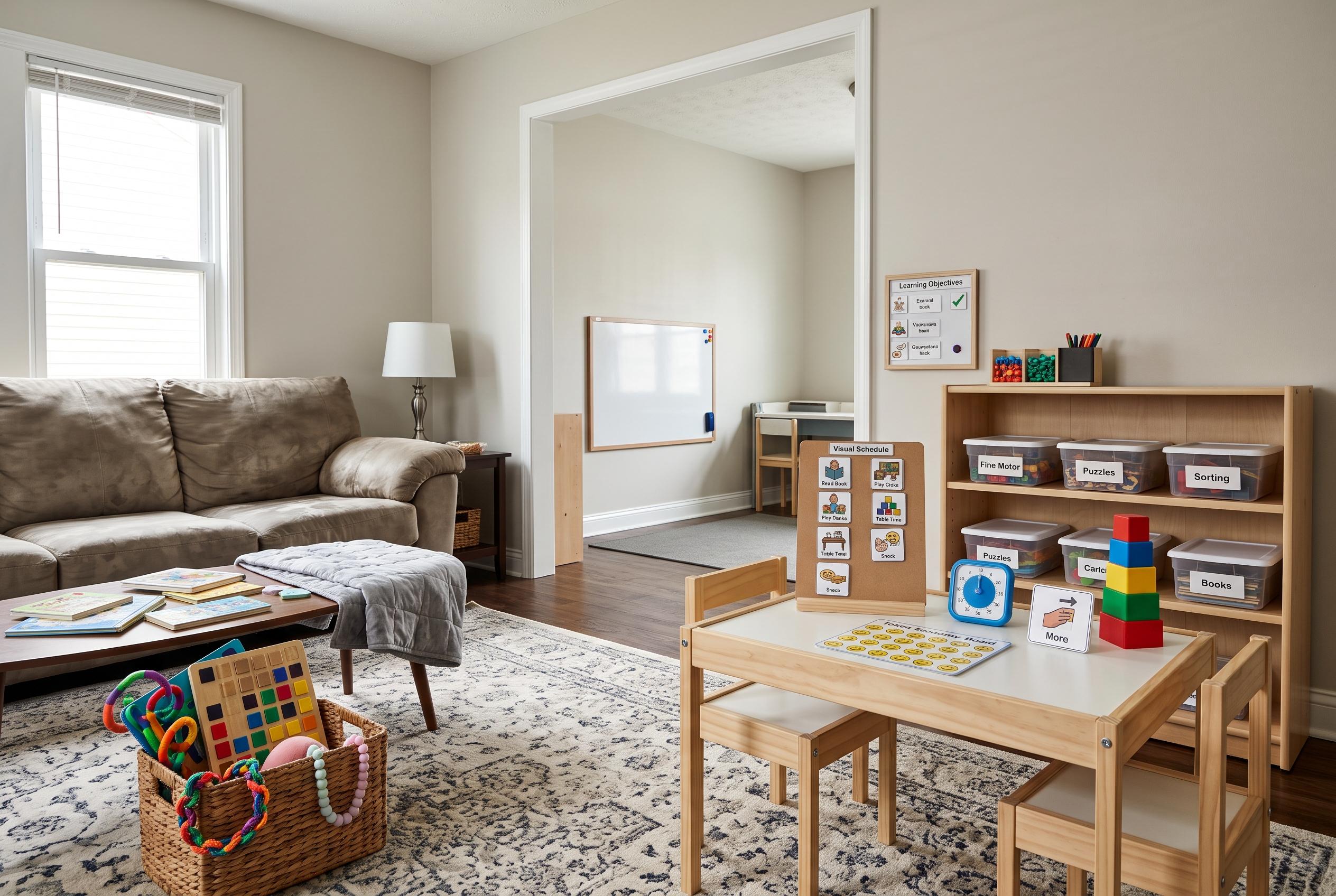

Choosing the right environment for ABA therapy is increasingly tailored to individual child needs, balancing the benefits of centre-based and in-home approaches, with many families considering a flexible, combined strategy.
For many families, the choice between centre-based and in-home ABA therapy comes down to one question: which setting will help a child learn most effectively right now? Both approaches can support skill-building, but they do so in different ways, and the best fit often depends on a child’s age, temperament, routine and goals, according to ABA.com and the National Autistic Society.
Centre-based therapy takes place in a clinic designed for teaching, usually with multiple therapists, structured rooms and a predictable schedule. That setup can be especially helpful for children who respond well to routine, need fewer home distractions or benefit from regular peer contact. In a centre, social skills such as turn-taking and sharing may arise more naturally because other children are often present, giving therapists more opportunities to work on group interactions.
The trade-off is that families must usually build their week around drop-offs, pick-ups and a fixed appointment pattern. That is why staff consistency matters so much, as a child’s progress can depend heavily on seeing the same therapists regularly. For some families, the extra travel is worth it if the environment helps their child stay focused and engaged.
In-home therapy moves the session into the child’s everyday setting, which can make it easier to practise skills where they are actually needed. ABA.com notes that this can support faster generalisation, meaning a child is more likely to use a skill beyond the original lesson. Parents also tend to get more hands-on coaching because the therapist is working in the same spaces where routines, meals and play already happen.
Home-based sessions can be a strong option for younger children, for children who find transitions difficult, or for families juggling multiple appointments. The setting can feel less disruptive, but it also means therapy must fit around normal family life, and parents may need to manage distractions that a clinic would otherwise control. The National Autistic Society says the decision should be tailored to the child rather than treated as a one-size-fits-all choice.
For many families, the most practical answer is not either-or but both. A mixed approach can give a child the structure and peer exposure of a clinic while still allowing practice in the home environment. Providers often recommend trying one setting first and adjusting if progress stalls or needs change, especially because many programmes can shift between settings over time.
Cost and convenience also play a part, but they should not be the only deciding factors. Families are usually best served by asking how progress will be measured, how transitions are handled and whether the team can coordinate with school or other therapies. In the end, the right setting is the one that matches the child’s needs, the family’s routine and the goals they are trying to reach.
Disclaimer: This content is for informational purposes only and is not intended to be a substitute for professional medical judgment, advice, diagnosis, or treatment.