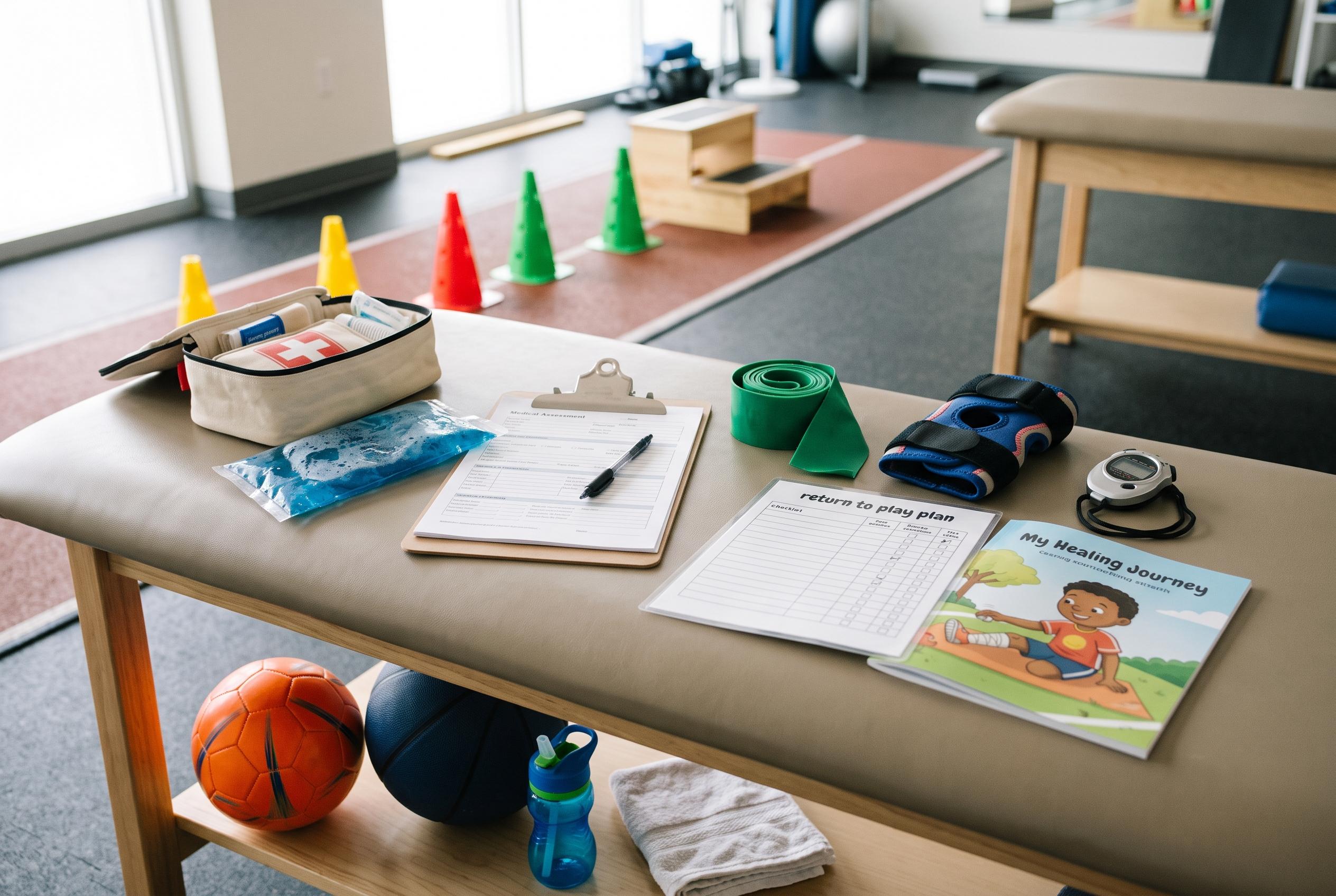

Experts emphasise that proper medical assessment, emotional support, and gradual return to play are crucial for young athletes recovering from sports injuries, ensuring long-term wellbeing and performance.
For parents, a sports injury can turn a routine practice into an anxious scramble. The first priority, according to Cleveland Clinic and HealthyChildren.org, is to treat likely sprains and strains with rest, ice, compression and elevation, often called the RICE method. That means stopping activity, using a wrapped ice pack for short periods, supporting the injured area with a bandage and keeping the limb raised to help reduce swelling. But those groups also stress that home care is only a starting point, not a substitute for a proper medical assessment, especially when pain is severe, swelling is significant or weight-bearing is difficult.
If symptoms are more than minor, specialist care can make a difference. Cleveland Clinic’s paediatric sports medicine programme says children and teenagers often benefit from a team approach that can include orthopaedic surgeons, sports medicine doctors, physical therapists and exercise physiologists. That kind of care can be especially useful when an injury is complicated, recovery is not progressing as expected or a young athlete needs a plan that takes both healing and future performance into account.
Recovery takes time, and the timeline depends on the injury. WebMD notes that sprains and strains can range from mild to severe, with some cases settling in a few weeks and others taking much longer, particularly if a fracture is involved or the injury has been aggravated by returning too soon. Experts interviewed by the site say follow-up matters because pain relief alone does not mean a child is ready for full activity. A brace, prescribed exercises or formal physical therapy may be part of the process.
The emotional side of an injury can be just as important as the physical one. Children’s National Hospital says young athletes often need support for the mental and emotional strain of being sidelined, particularly when their identity is closely tied to sport. Parents can help by validating frustration, encouraging them to stay connected to the team and finding other safe activities that preserve confidence while they recover.
When it is time to play again, gradual progress is the safest route. HealthyChildren.org and WebMD both advise easing back in step by step rather than returning at full intensity straight away. If pain or swelling returns, that is a sign to slow down. The goal is not only getting back on the pitch, court or field, but doing so in a way that lowers the risk of another setback and helps a child keep enjoying sport for years to come.
Disclaimer: This content is for informational purposes only and is not intended to be a substitute for professional medical judgment, advice, diagnosis, or treatment.