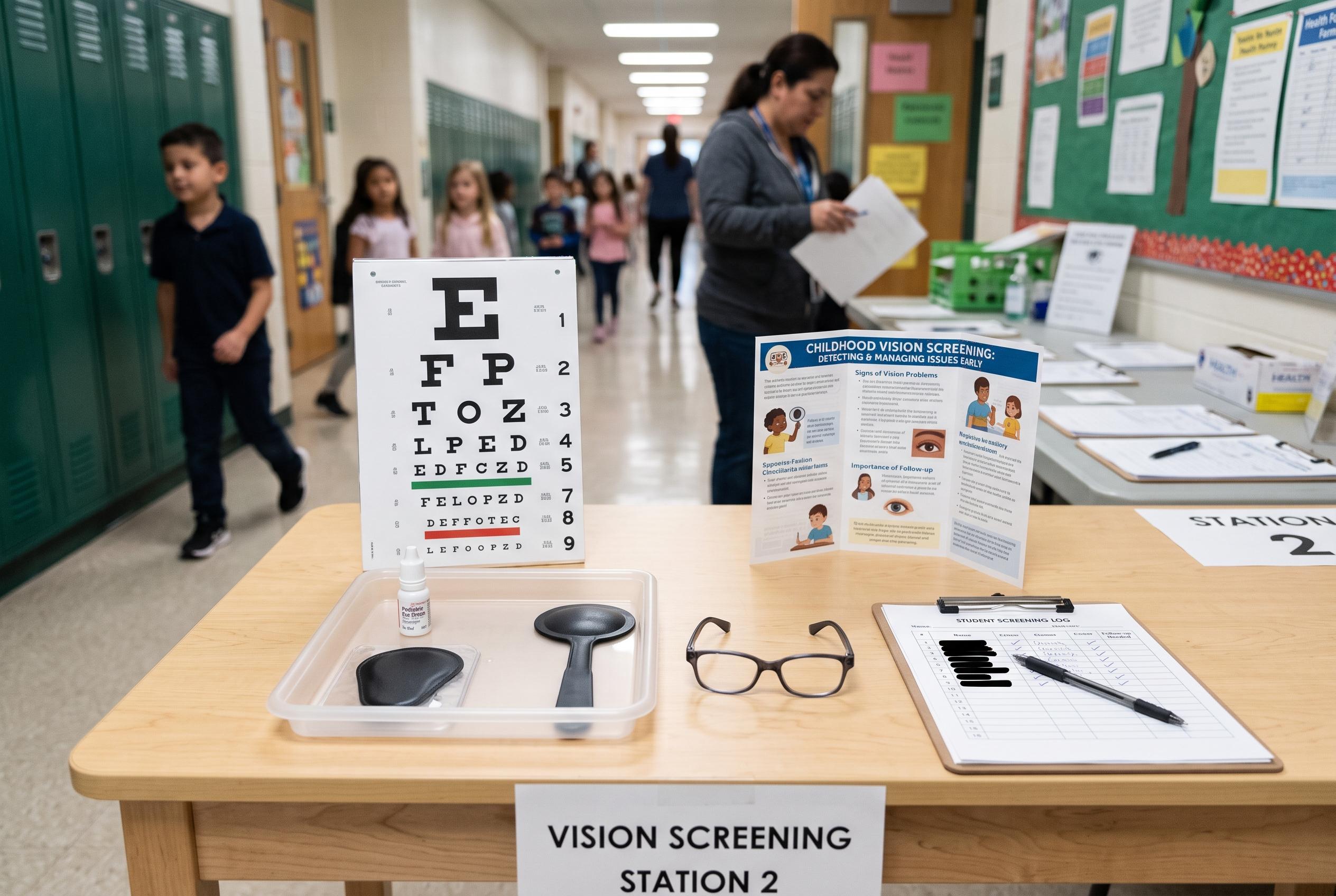

Experts warn that routine school eye checks miss the majority of children’s vision problems, leaving millions undiagnosed and at risk of long-term impact, as follow-up care falls short.
Millions of children in the United States have an eye or vision condition on record, but specialists say the true number is probably far higher because routine school checks miss many cases. The American Optometric Association says standard screenings can overlook as many as three-quarters of vision problems, leaving children to struggle without realising anything is wrong. According to the Centres for Disease Control and Prevention, about five million children have a diagnosed eye or vision problem.
That gap matters because many children do not complain about blurred vision, double vision or eye strain. Dr Teri Geist, president of the American Optometric Association, told NBC Palm Springs that children often cannot identify a problem if they have never known anything different. She said parents and teachers should watch for signs such as trouble concentrating, slipping schoolwork, behaviour changes, frustration, low confidence, withdrawal and frequent eye rubbing.
Health guidance from HealthyChildren.org and MedlinePlus says vision screening is useful, especially because some problems do not cause obvious symptoms, but it is only a first step. Both sources say children who fail a screening, or who show warning signs, should be sent for a full eye examination. The difference matters: a screening is a basic check, while a comprehensive exam can assess how the eyes work together and detect conditions that a school test may miss.
The American Optometric Association says the follow-up problem is just as serious as the screening gap. It says around 61% of children who are flagged with an eye issue never reach a doctor for treatment. Geist argued that earlier diagnosis gives children more options and protects eye health later in life. Harvard Medical School has also reported that school-based screening programmes can produce substantial numbers of failures, underlining the limits of current approaches, particularly in underserved communities.
Disclaimer: This content is for informational purposes only and is not intended to be a substitute for professional medical judgment, advice, diagnosis, or treatment.