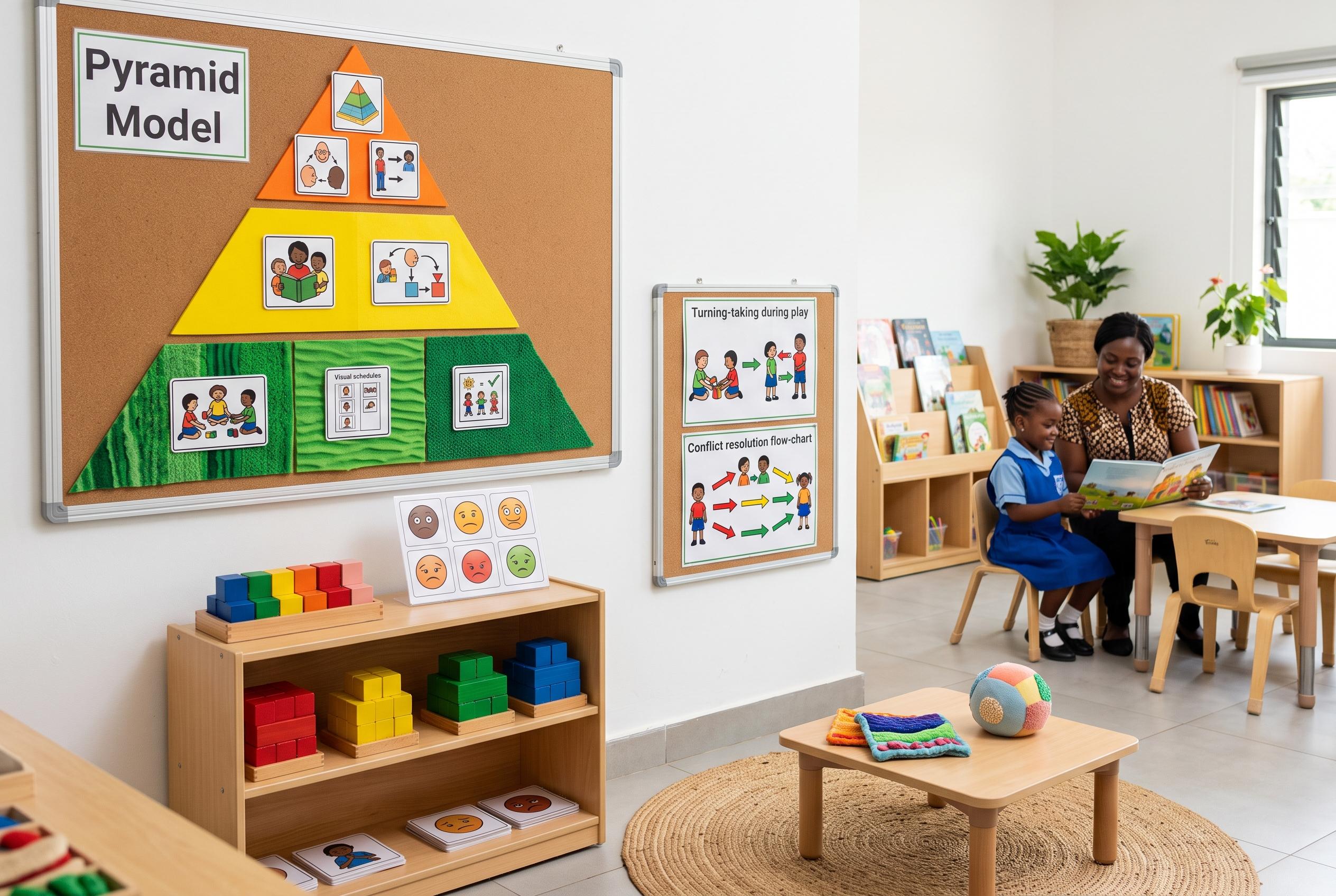

Ghana has launched the Pyramid Model Ghana, a comprehensive framework aimed at improving social, emotional, and behavioural support in schools and early childhood settings, integrating it with existing educational reforms to foster inclusive and life-ready learners.
Ghana has launched Pyramid Model Ghana, a new initiative aimed at strengthening how schools and early childhood settings support children’s social, emotional and behavioural development. The announcement adds to a wider push in the country to improve education outcomes, following recent programmes focused on learning quality, accountability and access. According to the launch report, organisers want the model to help children not only succeed in class, but also develop the skills needed for everyday life.
At the centre of the launch was Thara Brigitte Mills-Simmonds, founder of Mulan Smart Educational Centre, Mulan Neurodiversity School and the Mulan Resource Centre, who argued that education must go beyond examinations. She said: “Education must not only prepare a child to pass an examination. It must prepare that child for life.” Her remarks reflected a concern that academic achievement, while important, does not by itself equip children to manage emotions, communicate effectively, build relationships or cope with pressure.
The Pyramid Model itself is described by its developers as a comprehensive, multi-tiered framework of evidence-based practices for young children. It provides universal support for all children, with more targeted help for those who need it and more intensive intervention where necessary. The approach is used to promote positive behaviour, reduce challenging behaviour, strengthen family engagement and support inclusion for children with developmental delays and disabilities.
In Ghana, the new initiative is intended to complement, rather than replace, existing curricula. Mills-Simmonds framed it as a collaborative effort involving government, educators, practitioners, families and partners, saying the aim is to create learning environments where every child can belong and thrive. The launch also came against the backdrop of other education reforms in Ghana, including the Ghana Education Outcomes Project, which seeks to bring out-of-school children back into classrooms, and a USAID-backed accountability programme designed to improve primary education delivery.
Disclaimer: This content is for informational purposes only and is not intended to be a substitute for professional medical judgment, advice, diagnosis, or treatment.