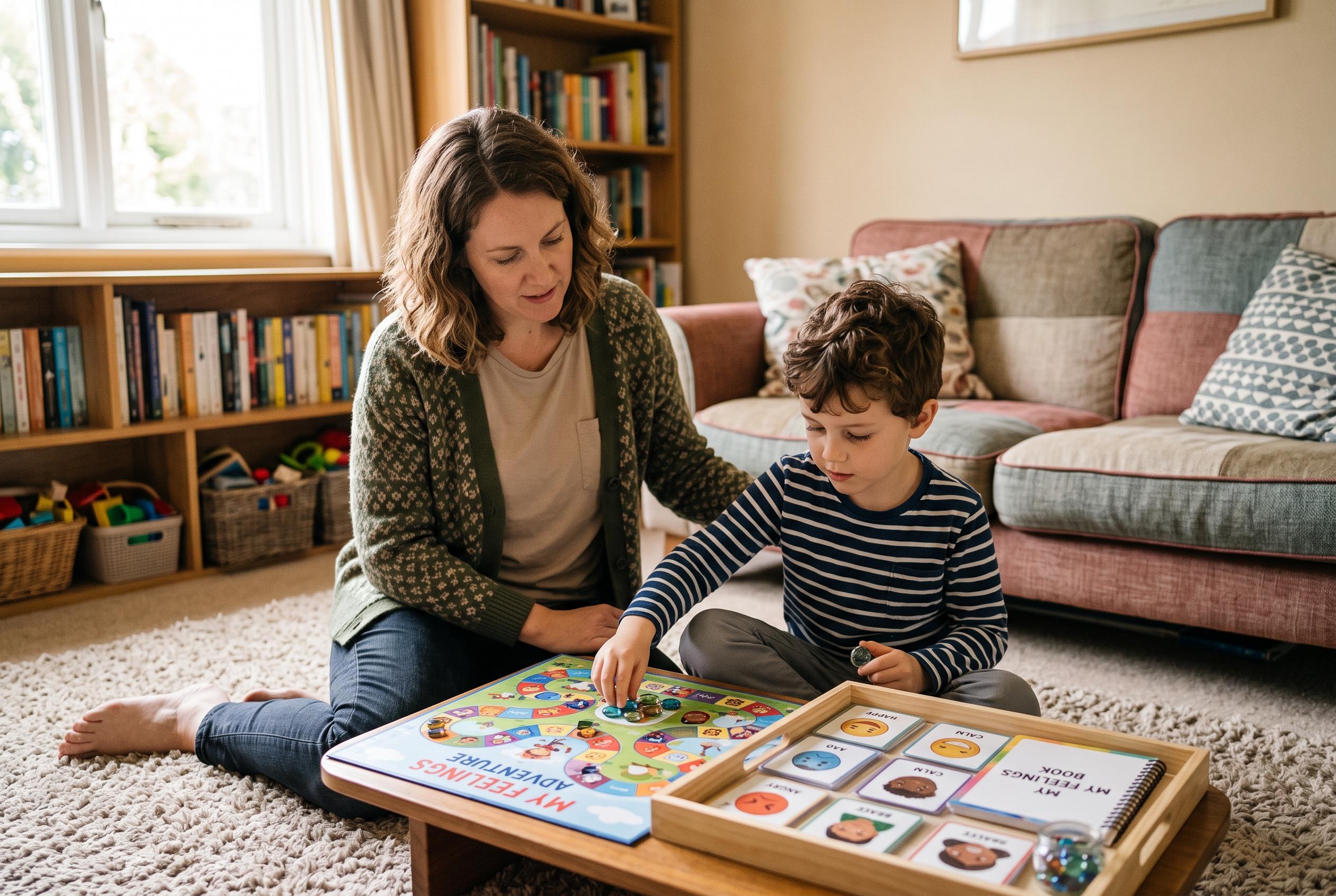

A new perspective on family life highlights the importance of parental emotional awareness in fostering healthier, more connected homes. Recognising and managing feelings can positively influence children’s emotional resilience and overall well-being.
Parents do not leave their feelings at the door when they walk into family life. Joy, pride and affection sit alongside frustration, fear, guilt and sadness, and those emotions inevitably shape the atmosphere at home. Hilary Jacobs Hendel argues that understanding that inner life can help adults become more present, more connected and more resilient.
One reason this matters is that emotions travel. A tense voice, a sharp expression or a rigid posture can communicate distress long before a parent says a word. Children are highly sensitive to that signal, and they often absorb the mood rather than the explanation. A parent may be angry about work, but a young child may simply feel that anger as directed at them.
Those feelings also affect how adults respond in the moment. A toddler’s meltdown can trigger fury; a teenager’s distance can stir fear or grief. The more parents can name what is happening inside them, the more room they have to pause before reacting. That pause can be the difference between an automatic outburst and a response that matches the values a parent wants to model.
Research on emotion socialisation backs up that idea. According to Nature Index summaries on parental emotion socialisation and child development, children learn emotional habits by watching how adults handle feelings, whether that means validating distress, guiding a child through it or dismissing it altogether. Supportive responses tend to build emotional competence and resilience, while unsupportive ones can weaken self-regulation and raise the risk of later emotional problems.
The past can also surface in surprisingly direct ways. A child’s defiance, neediness or tears may stir memories of a parent’s criticism, neglect or high expectations, prompting a reaction that feels bigger than the moment calls for. That is one reason family experts say parenting is shaped not only by what is happening now, but by what was learned long before. Broader research on parenting and child emotional development also shows that parental stress and poor regulation can unsettle the home environment and heighten reactivity in children.
Parents, meanwhile, have emotional needs of their own. Rest, support and space to process difficult feelings are not luxuries; they help adults stay steady enough to care well for their children. The article argues that burying anger and sadness can feed anxiety and depression, while grounding, breathing and simple emotional validation can help regulate the nervous system. In that sense, looking after parents’ emotional health is not a distraction from family life. It is part of it.
Disclaimer: This content is for informational purposes only and is not intended to be a substitute for professional medical judgment, advice, diagnosis, or treatment.