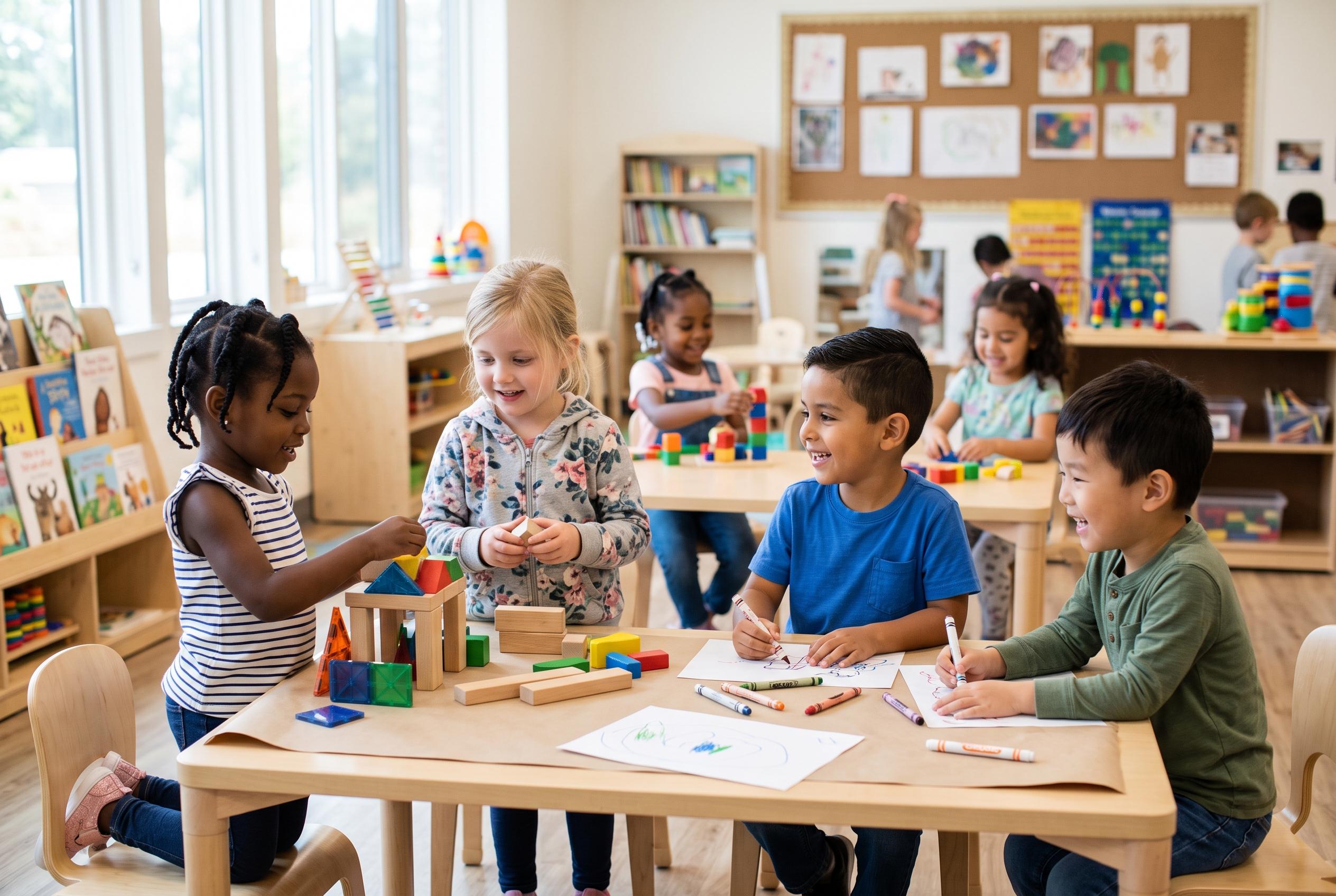

A survey reveals that 82% of parents now see confidence, creativity, and social skills as essential for school starting age, reflecting a shift in focus driven by AI’s impact on children’s development.
Bright Horizons says parents are increasingly treating confidence, creativity and social skills as core parts of school readiness, not extras. In a survey commissioned by the childcare and education provider, 82% of parents said confidence matters as much as knowing the alphabet when children start kindergarten, reflecting a broader shift in how families think about early learning.
The company said the findings come from its 2025 Modern Family Index, which also found 73% of parents believe the rise of artificial intelligence has made so-called durable skills, including creativity, social ability and emotional awareness, as important as reading, writing and maths. Bright Horizons said 79% of parents think creative skills will be especially important for children growing up alongside AI.
That view is broadly consistent with the National Association for the Education of Young Children, which says school readiness goes beyond academic basics and includes social and emotional competence, curiosity and approaches to learning. UNICEF and the OECD have also warned that AI and other digital tools can shape children’s development in ways that are not yet fully understood, while academics say the technology should be treated as a distinct influence on how children learn and interact.
The World Economic Forum has separately said skills such as creative thinking, resilience, flexibility, leadership, social influence and self-awareness are likely to be among the most valuable in the workplace by 2030. Taken together, the research suggests that parents are looking well beyond the classroom checklist, and that the abilities many see as hardest to automate may matter from preschool onwards.
Disclaimer: This content is for informational purposes only and is not intended to be a substitute for professional medical judgment, advice, diagnosis, or treatment.