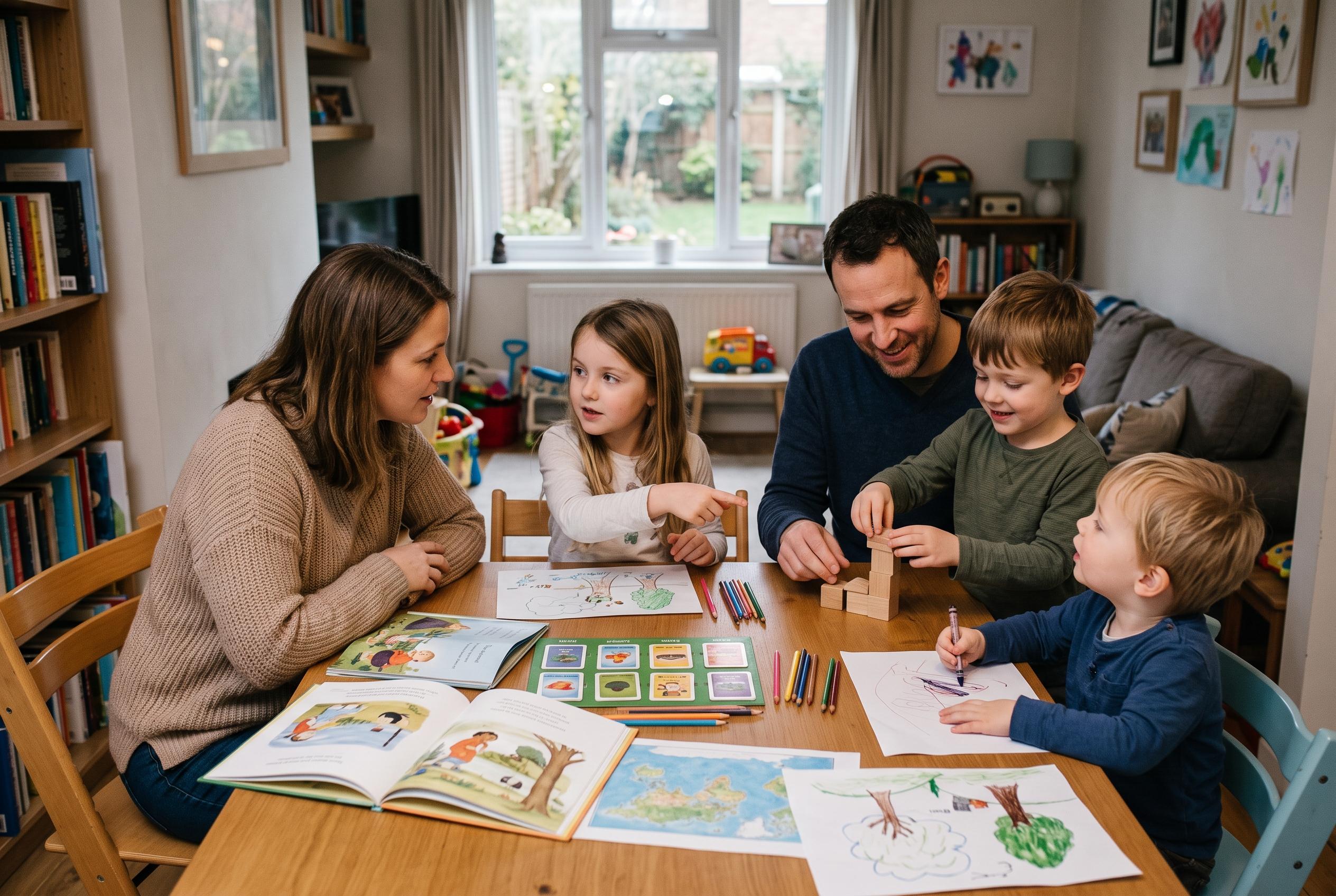

As experts emphasise the vital role of home environments in shaping children’s values, resilience, and learning, the message emerges that education begins long before school, relying heavily on familial bonds and active engagement.
When family life weakens, something irreplaceable is lost: the daily example, affection and closeness that no institution can fully provide. Education at home is often mistaken for simple instruction, yet the two are not the same. Schools pass on knowledge and skills, but families shape values, routines and the way children learn to treat other people. A child learns respect not only through explanation, but by seeing it practised at home.
That early environment also gives children their first sense of belonging, duty and boundaries. A parent who listens, sets limits and allows a child to face the consequences of poor choices is helping to build resilience as well as character. Research from the US government’s youth services site says family engagement has a strong positive effect on young people’s outcomes, while a systematic review cited by the National Bureau of Economic Research found that early parenting programmes can improve learning, especially when they focus on cognitive stimulation. The message is clear: what happens in the home can shape how children learn long before they enter a classroom.
Those lessons matter even more as parents and teachers confront a generation often described by psychologists as less able to deal with frustration. That concern has fuelled debate over whether adults, in trying to protect children from disappointment, are preventing them from learning how to cope with mistakes, setbacks and responsibility. In that context, a poor grade should not become a search for someone to blame; it should also become a chance to help a young person recognise error and work towards a solution. Evidence cited by the California Department of Education and European education experts points in the same direction, showing that family, school and community work best when they reinforce one another rather than compete.
That cooperation is especially important for disadvantaged families. European Commission education material says family learning can lift children’s development by as much as 15 percentage points in some groups, while US research on parenting education has found benefits across different income and ethnic backgrounds, including Latino and White families. Together, these findings support the idea that education is not the sole responsibility of schools. The state must guarantee quality teaching, but it cannot replace the emotional and moral work of family life. Real education begins at home, where children first learn how to live with others, take responsibility and face difficulty with confidence.
Disclaimer: This content is for informational purposes only and is not intended to be a substitute for professional medical judgment, advice, diagnosis, or treatment.