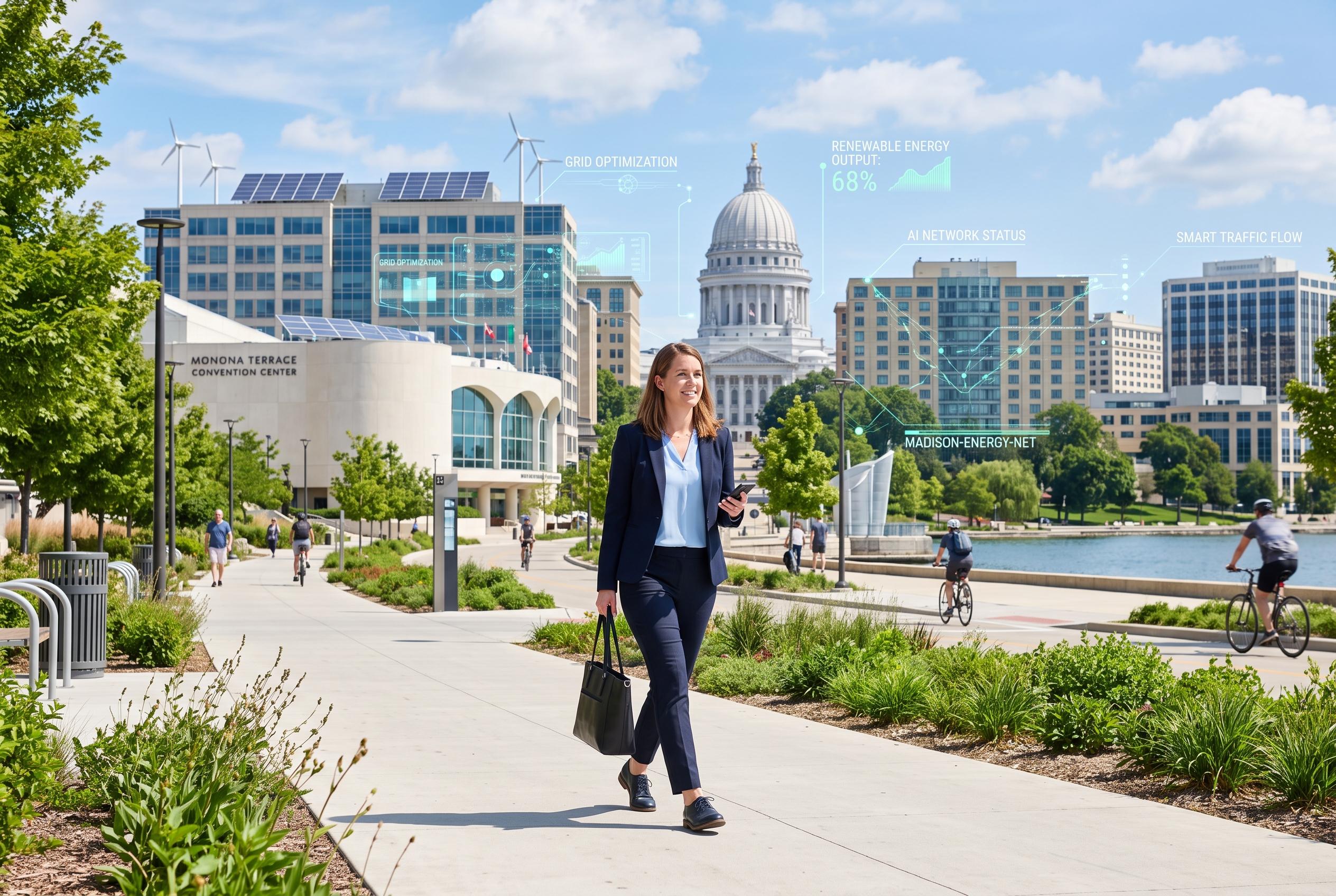

Madison advances its environmental and technological policies with expanding energy savings programmes and a university-wide AI readiness drive, amid ongoing efforts to enhance safety and infrastructure.
Madison is entering a busy period for school and city policy, with several programmes aimed at helping buildings, staff and students adapt to tighter standards and changing expectations. The City of Madison has begun the third year of its Building Energy Savings Programme, expanding the effort to its final group of large commercial properties, while the University of Wisconsin–Madison has set 2026 aside as a campuswide push for artificial intelligence readiness and competency. Together, the moves point to a broader push in the city to improve efficiency, responsibility and long-term planning.
According to the city, the energy programme is now in its third year after 345 commercial buildings successfully benchmarked their energy use in 2025, leaving 92% of required properties in compliance. The programme, adopted unanimously by the Common Council in 2023, requires large commercial buildings to record annual energy use and complete tune-ups every four years. This year’s deadline for buildings over 25,000 square feet is 30 June.
At UW-Madison, university leaders say 2026 will focus on making students, staff and faculty better prepared to use AI thoughtfully and responsibly. The initiative builds on the RISE-AI investment area and on a new five-year strategic framework announced in April 2026. The university says the effort is meant to support innovation while also addressing academic integrity, environmental concerns and other ethical issues tied to rapidly spreading AI tools.
The wider backdrop in Madison has also been shaped by public safety and infrastructure issues. City figures show violent and property crime fell in 2025, with police crediting community outreach and data-driven patrols. Meanwhile, Madison Water Utility is awaiting the latest ruling on its 2025 rate application, part of its normal two-year cycle to keep charges aligned with operating costs, capital work and system maintenance.
For families, these developments matter because they affect the institutions around their children’s daily lives: schools, neighbourhood buildings, public services and the broader civic environment. In a city where education, research and local government are closely linked, the same themes keep resurfacing , efficiency, accountability and preparation for what comes next.
Disclaimer: This content is for informational purposes only and is not intended to be a substitute for professional medical judgment, advice, diagnosis, or treatment.