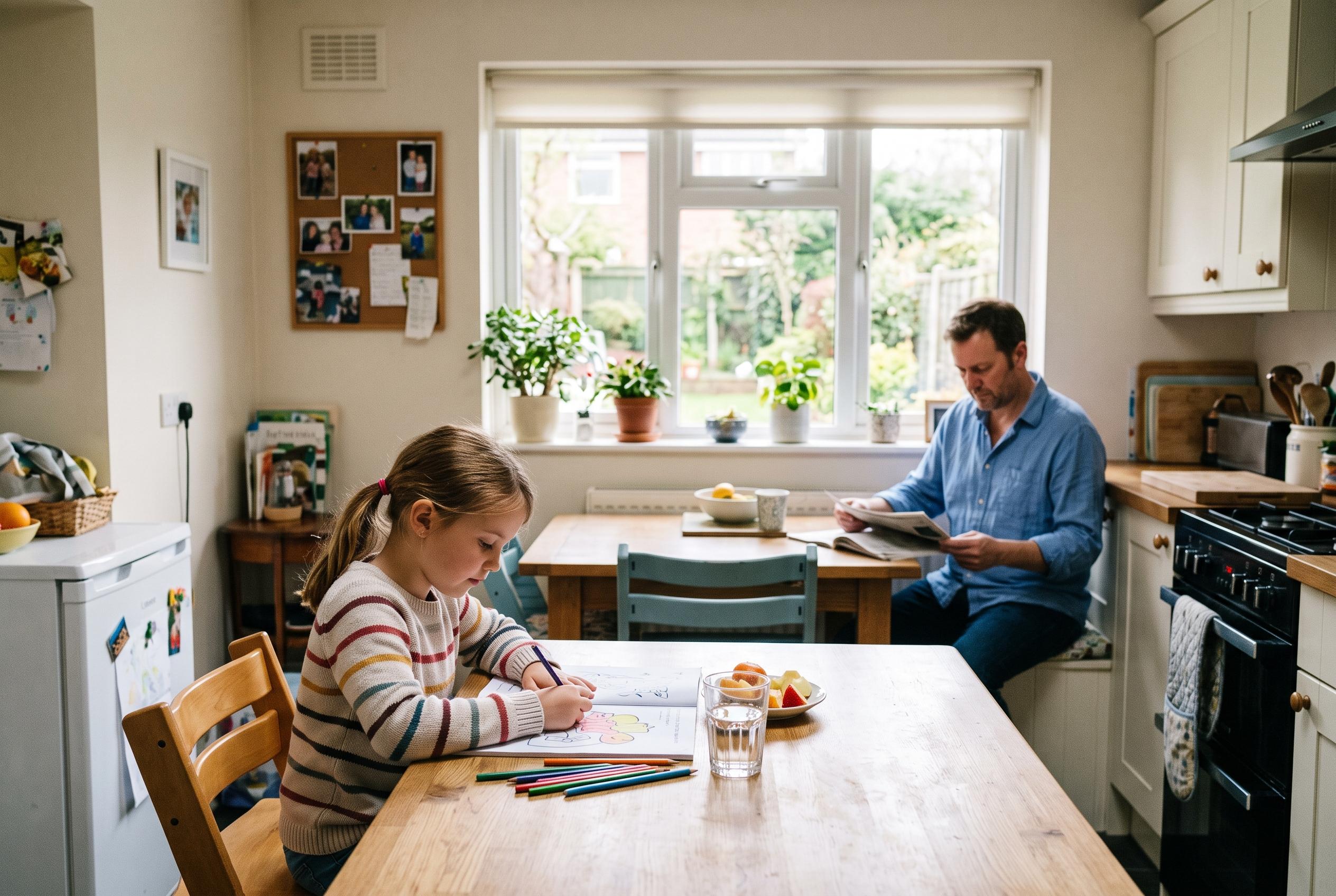

Expert advice highlights the importance of honesty, routines, and external support for children living with a parent experiencing mental illness, with early signs and safeguarding strategies emphasised.
When a parent is living with a mental illness, the impact often reaches far beyond the person diagnosed. Children can feel confusion, fear and responsibility at once, and experts say the most important protection is not silence, but age-appropriate honesty, steady routines and reliable support from more than one adult.
Professor Michael Kölch of the University of Rostock told the German press service dpa-tmn that any mental illness can be hard for children, although the effect depends on how severe and long-lasting the symptoms are. A mild, temporary depressive episode may place less strain on a family than a chronic addiction problem or a severe anxiety disorder that repeatedly disrupts daily life and relationships.
The risks are not limited to immediate stress at home. According to the German network Neurologen und Psychiater im Netz, children of mentally ill parents face a higher likelihood of developing mental health problems themselves. That does not mean illness is inevitable, but it does mean families and professionals should pay close attention to emotional strain, especially when parental symptoms affect attachment, care and consistency.
Warning signs can be subtle. Sabine Wagenblass, who speaks for the federal working group for children of mentally ill parents, said to dpa-tmn that some children try to manage everyone else’s feelings, become the class clown, act aggressively or go very quiet and unnoticed. Another red flag is parentification, when a child takes on adult duties and becomes responsible for the household in ways that are too heavy for their age.
Other sources point to additional signs that may appear when a child is struggling psychologically: withdrawal, mood swings, sudden fears, sleep problems, unexplained physical complaints, concentration difficulties and a loss of interest in things they used to enjoy. Allianz’s health service says parents should take persistent or worsening changes seriously, even if a single behaviour does not in itself signal an illness.
Experts interviewed by dpa-tmn and other guidance cited in the related material agree that children usually benefit from clear, honest explanations. Kölch said children notice when something is wrong, even if adults try to shield them from it, and Wagenblass said the key message is that the child is not to blame. Age matters: younger children may need simple picture books or short explanations, while older children can handle more direct conversations about feelings and symptoms.
Support outside the immediate parent-child relationship is often crucial. Kölch said children need dependable adults and structures, while Jörg Backes of Germany’s National Centre for Early Help stressed the value of childcare, schools and leisure activities as places of relief and normality. The broader environment can help with practical tasks, encourage treatment and offer children ordinary experiences , from trips and play to time in nature, groups and hobbies , that make home life feel less isolating.
Disclaimer: This content is for informational purposes only and is not intended to be a substitute for professional medical judgment, advice, diagnosis, or treatment.