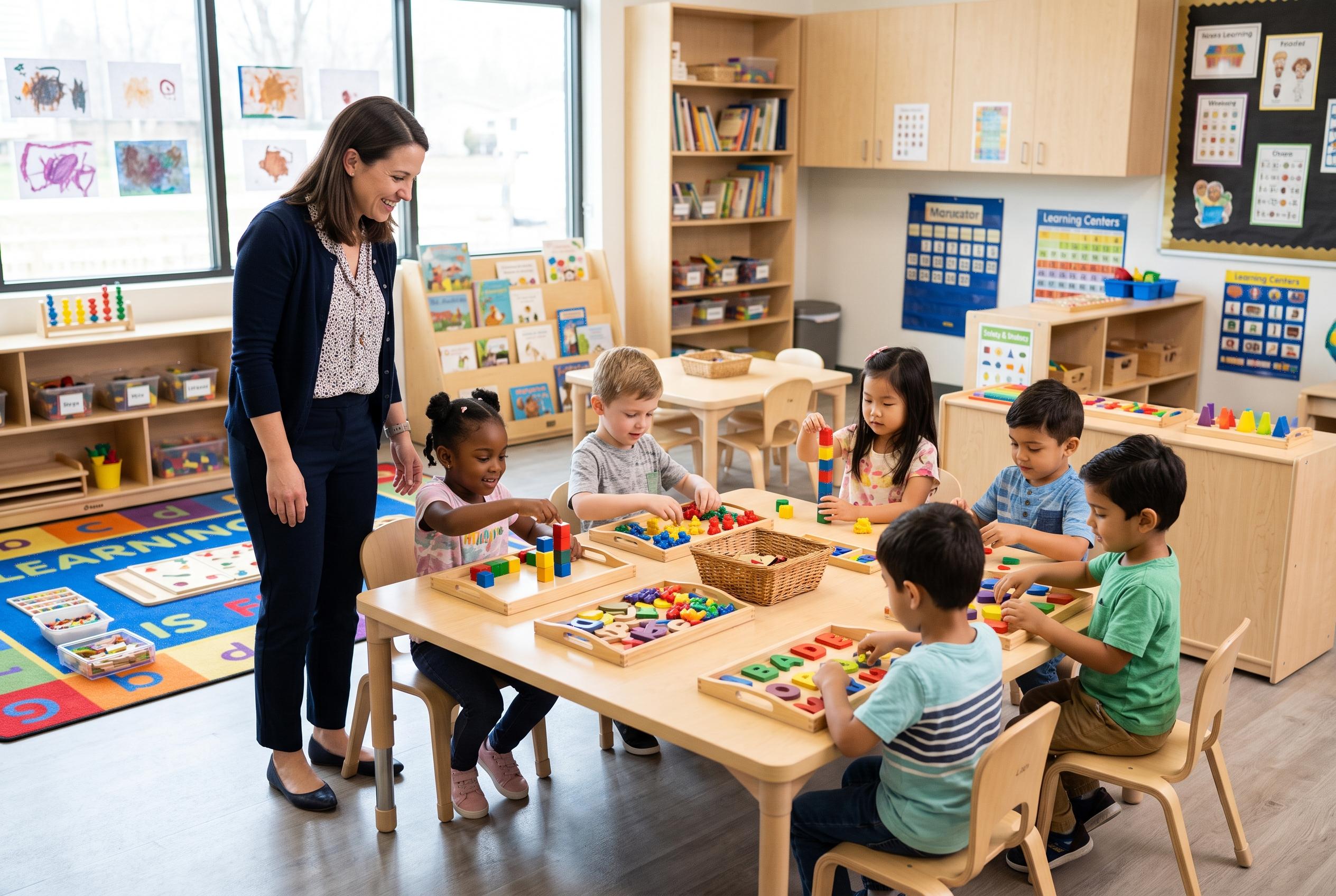

A comprehensive study following nearly 400,000 children reveals that high-quality pre-school education, especially when well-structured and delivered by qualified staff, can positively impact students’ academic performance and behaviour long after early schooling years.
A long-running study of almost 400,000 children suggests that high-quality pre-school can have benefits that last well beyond the first years of education, with pupils who took part in Florida’s free Voluntary Prekindergarten programme tending to perform better later in school than peers who attended lower-intensity nursery settings or had no formal early education, according to the reporting cited by Lada.kz. The research followed students in Miami-Dade County from third grade through to the end of school, and the findings were published in Early Childhood Research Quarterly.
The results point to more than simple classroom instruction. The researchers said the structure of the programme mattered as much as the lessons themselves. In the pre-kindergarten setting, teachers were required to have higher qualifications, and children were gradually introduced to school routines, expectations and discipline before entering formal education at five. That early exposure appears to have helped them settle more easily into later academic life.
Other studies in the same journal back up the broader case for well-designed early education, particularly for children from disadvantaged backgrounds. Research on a Baltimore pre-kindergarten programme found gains in language, literacy and basic maths problem-solving, while another study concluded that higher-quality state-funded preschool was linked with stronger school-readiness in language, literacy and mathematics. A separate paper found that county pre-K participants did better in literacy, language, maths and self-regulation, with especially strong benefits for dual-language learners and children from low-income households.
The picture is not uniformly positive, however. A Tennessee study published in Early Childhood Research Quarterly found that while the state’s voluntary pre-K programme produced early gains, some of those advantages had faded or reversed by second and third grade, with participants showing more disciplinary issues and special education placements than comparison children. Another National Bureau of Economic Research paper on universal preschool in Boston reported longer-term gains, including higher college attendance, more SAT test-taking and better graduation rates, along with fewer serious disciplinary outcomes. Taken together, the evidence suggests that preschool can make a meaningful difference, but only when quality remains high and the benefits are sustained by the rest of the school system.
For parents, the message is less about choosing public over private provision than about looking closely at what happens inside the classroom. Stability among staff, teacher qualifications, a calm routine and a child’s comfort in the setting all appear to matter. The strongest case made by the researchers is that good early education is not just about readiness for school; it can shape how children cope with school for years afterwards.
Disclaimer: This content is for informational purposes only and is not intended to be a substitute for professional medical judgment, advice, diagnosis, or treatment.