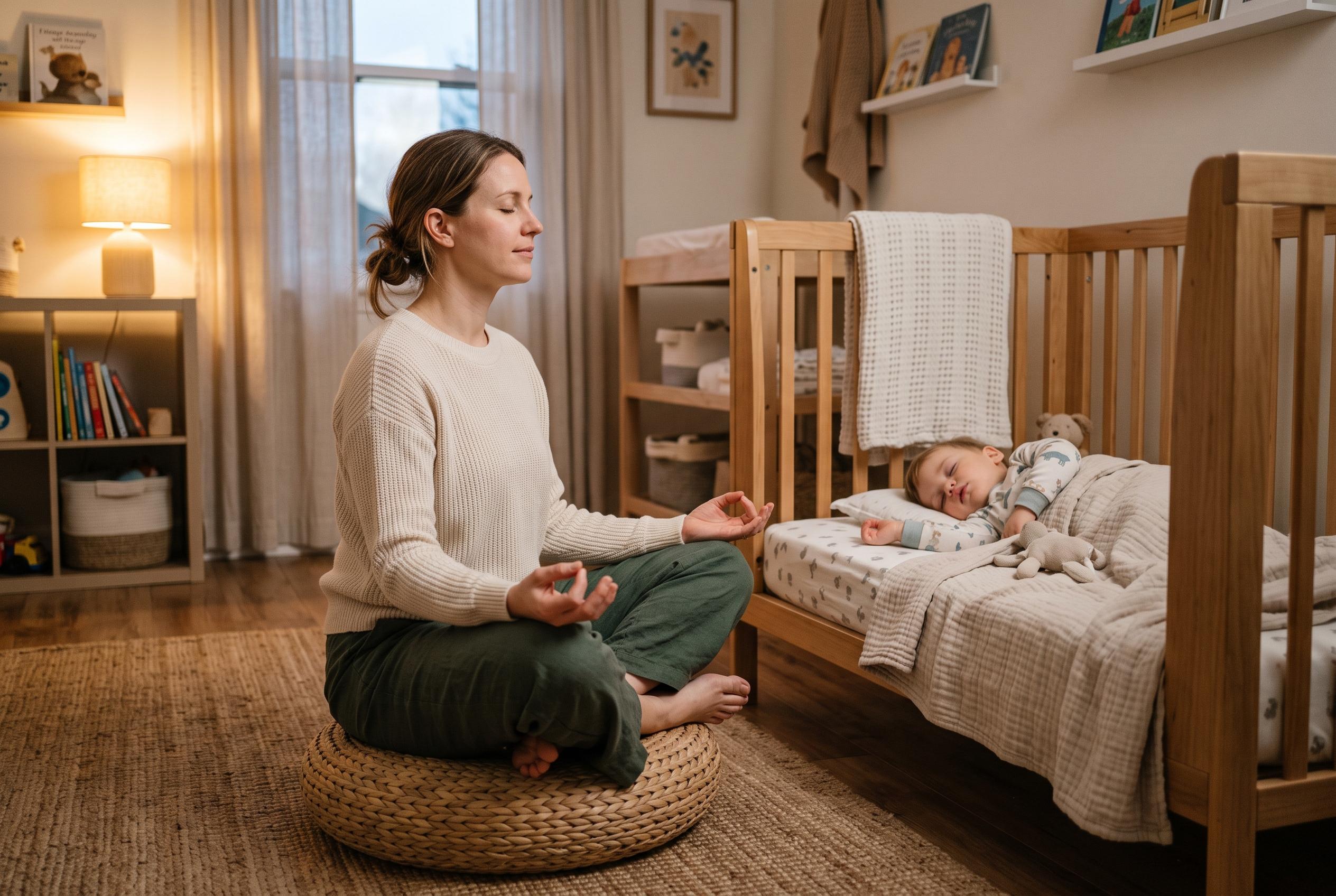

Dr Madhavi Bharadwaj emphasises that stepping back and calming oneself before responding can help parents better manage bedtime conflicts, reinforcing the crucial link between parental self-regulation and children’s emotional well-being.
For many parents, the hardest moments arrive at bedtime, when tired children start to clash and everyone is running on empty. Dr Madhavi Bharadwaj, a paediatrician and parenting educator known on Instagram as “Bacchon Ki Doctor”, has described one such evening as a reminder that calming herself came before calming her children. In her account, she said she was so exhausted by the end of the day that she knew she might have shouted if she had stayed in the room while her daughters were fighting.
Rather than forcing an immediate response, Bharadwaj stepped away and folded clothes in another room until she felt more settled. “Someone might see this and think, ‘Is she a responsible mother? Her kids are crying and she’s folding clothes. ‘ But no, I was regulating myself,” she said. When she returned, she was able to separate the children, distract them and settle them with a book before bedtime. Her husband was away that day, so there was no one else to take over.
The episode reflects a wider point that child-development specialists make regularly: parents cannot reliably co-regulate a child’s emotions if they are still flooded themselves. Harvard Health has described co-regulation as the back-and-forth process in which caregivers help children manage distress, while also recognising that adults may need to strengthen their own emotional skills first. ParentMap has likewise noted that self-regulation improves when parents practise simple tools such as paced breathing, brief pauses and other calming exercises before a crisis begins.
That matters because children often mirror the tone and pace set by the adults around them. If a parent reacts in anger, a tantrum can escalate. If the adult can slow down, the child is more likely to settle too. Bharadwaj’s message is not that parents should walk away from responsibility, but that a short pause can be an act of care. In moments when patience feels gone, stepping back for a minute may be what allows a parent to return with the steadiness a child needs.
Disclaimer: This content is for informational purposes only and is not intended to be a substitute for professional medical judgment, advice, diagnosis, or treatment.