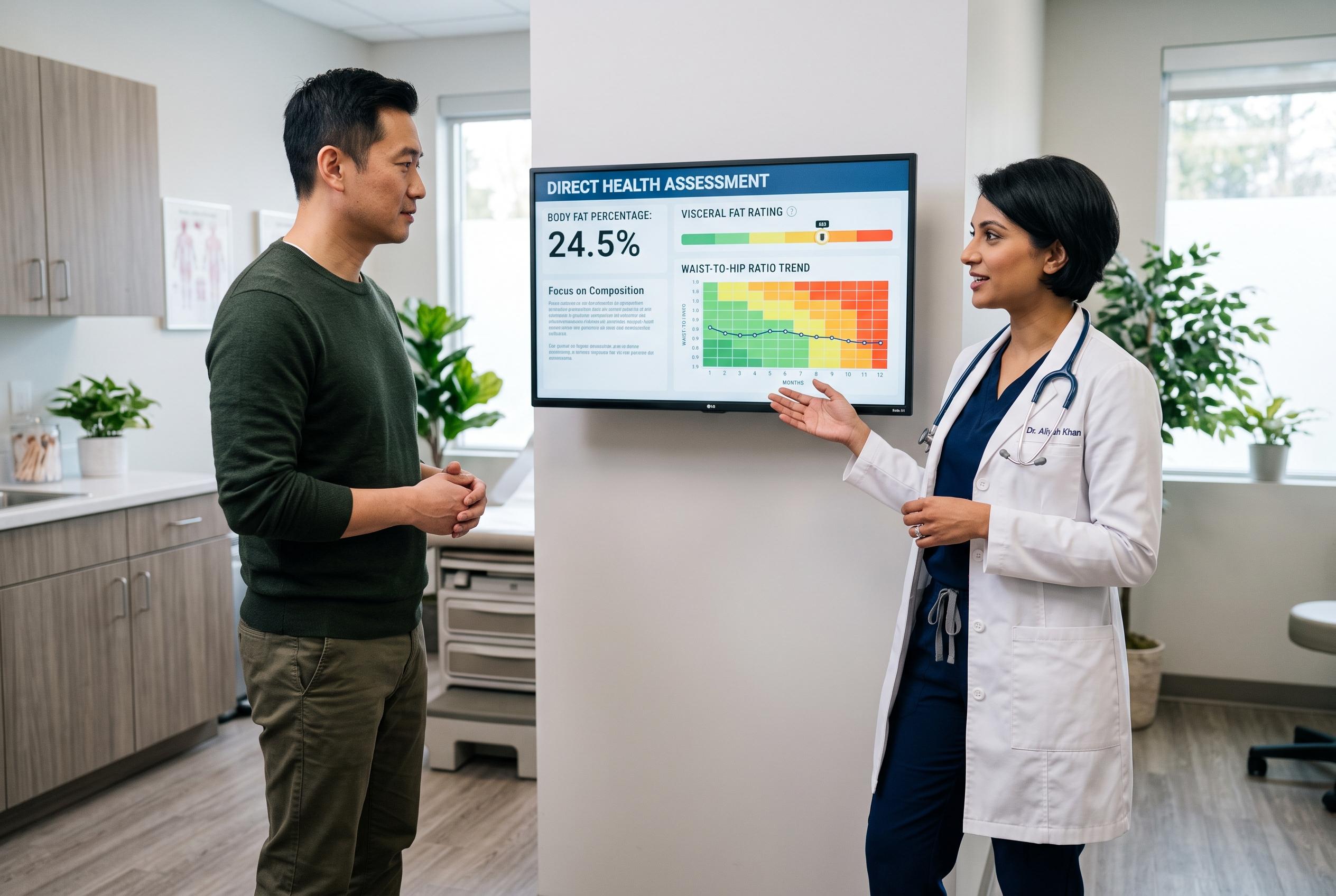

A global shift is underway as medical experts move beyond BMI towards direct body fat measurements and waist ratios to better assess health risks amid rising obesity rates and changing treatment approaches.
Body mass index, long treated as the default shorthand for obesity, is losing its monopoly in clinical medicine. In January 2025, a panel of more than 50 international experts working under The Lancet Diabetes & Endocrinology argued that BMI alone is too blunt to describe a person’s health risk, and more than 75 medical organisations have since endorsed the broader framework it set out. The commission did not declare BMI obsolete, but it did argue that a single weight-to-height ratio can hide important differences in body fat, muscle and where fat is stored.
The case for change is reinforced by the scale of the problem in the United States. Data from the CDC’s National Health and Nutrition Examination Survey for August 2021 through August 2023 show that 40.3% of adults aged 20 and older had obesity, 9.7% had severe obesity and 31.7% were overweight. With so many people being assessed through a single metric, even modest misclassification can affect millions of diagnoses, referrals and treatment decisions.
BMI was always intended as a population measure rather than a clinical verdict. It is quick, cheap and useful for broad trend analysis, but it cannot distinguish between fat and lean tissue or identify dangerous central fat around the organs. That matters because two people with the same BMI may have very different metabolic profiles and very different risks of diabetes, heart disease or liver disease.
Evidence for those limits has become harder to ignore. A study in the journal Nutrients that used DXA scans, which directly measure body composition, examined 1,351 adults in northern Italy and found that more than one-third were placed in the wrong category when BMI was compared with measured body fat. Among people classified as overweight by BMI, about 53% were reassigned once body fat was measured directly, while close to 34% of those in the obesity range were similarly misclassified.
The Lancet commission’s answer is not to discard BMI entirely, but to use it alongside better measures. It separates clinical obesity, where excess fat is already harming health or limiting function, from preclinical obesity, where risk is present but organ damage has not yet appeared. To make that distinction, it recommends direct body-fat measurement where possible, or BMI combined with other measures such as waist circumference, waist-to-hip ratio or waist-to-height ratio.
That shift also matters because treatment is changing fast. A KFF poll released in 2025 found that about 12% of U.S. adults say they are currently taking a GLP-1 medicine for weight loss, diabetes or another condition, while 18% say they have taken one at some point. As more patients turn to medication, clinicians need a way to track whether weight loss is coming from fat or from muscle, and whether a patient’s health is improving or simply their scale number is falling.
In practice, the new approach starts with a fuller clinical picture: medical history, metabolic markers, medications, lifestyle factors and, where available, a better read on body composition or fat distribution. Some weight-management services and telehealth programmes now market themselves around that sort of individual assessment, using BMI as one input rather than the deciding factor. The broader message from specialists is straightforward: body size still matters, but it cannot be the whole story.
For now, BMI is unlikely to disappear from forms, charts or insurance rules. Its appeal is too simple and its history too entrenched. But the direction of travel is clear. Waist-based measures, bioelectrical impedance and DXA scanning are gaining ground because they tell clinicians more about risk than BMI can on its own. The number on the chart is increasingly being treated as a starting point, not the final word.
Disclaimer: This content is for informational purposes only and is not intended to be a substitute for professional medical judgment, advice, diagnosis, or treatment.