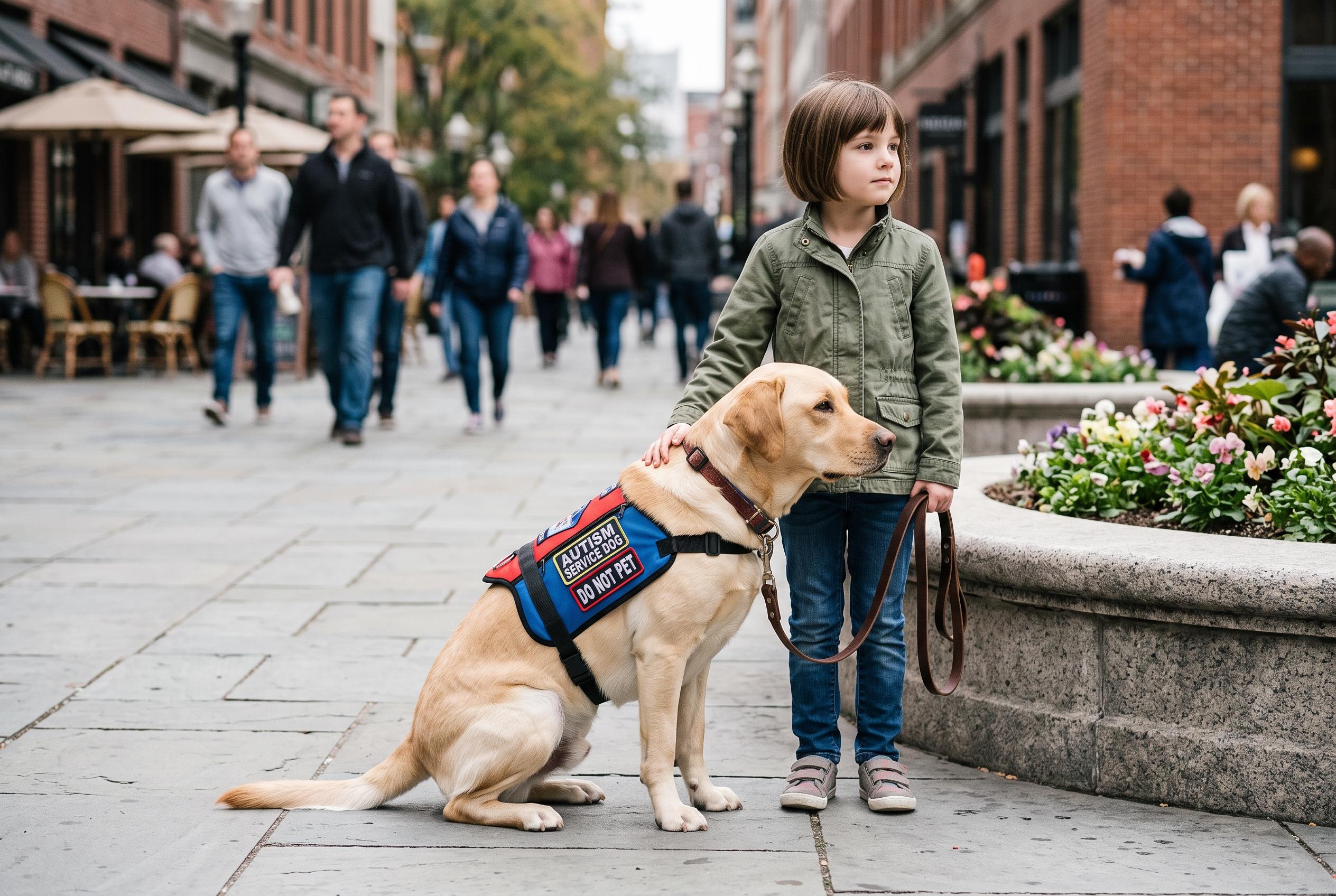

Autism assistance dogs are transforming support for individuals with autism, providing safety, behaviour intervention, and emotional stability through extensive training and practical tasks, significantly improving daily life for families and adults alike.
Autism service dogs are trained to do far more than provide companionship. For children and adults on the autism spectrum, they can help prevent wandering, interrupt repetitive behaviours, deliver calming deep pressure and make social situations easier to manage. Research and autism-support organisations say the most valuable roles are practical ones: keeping a child safer in public, helping them settle during overwhelm and giving families a more predictable daily routine.
Safety is often the first concern. Autism assistance dogs can be taught to brace and hold position when a child tries to run, a task sometimes described as anchoring. That can give parents an added layer of protection in places such as car parks, shops and crowded public spaces. Studies and guidance from autism charities also point to behaviour interruption as a key skill, with dogs trained to nudge, paw or otherwise redirect attention when a person is engaging in stimming or other repetitive actions.
The dogs can also be used for sensory support. Deep pressure therapy, in which a dog leans across a lap or presses against a child or adult, is commonly described as calming during a meltdown or period of anxiety. The Indiana Resource Centre for Autism says these dogs may also act as a social bridge, helping children engage more comfortably with peers and adults. Recent research has linked autism assistance dogs with better emotional wellbeing and improved quality of life for children and caregivers, although the evidence remains largely centred on reported family experience rather than large-scale clinical trials.
Training is extensive. Autism service dogs are usually selected for calm temperaments and then trained over many months, often for 18 months to 2 years, before placement. Organisations such as Canine Companions train both the animal and the family, because the dog’s work has to fit the child’s needs and the household’s routines. While some families choose owner-training, most rely on established programmes because the tasks are specialised and the safety stakes are high.
For parents, the appeal is not only the dog’s skills but the daily stability those skills can bring. Families commonly report fewer public meltdowns, better sleep and greater confidence in leaving the house. For autistic adults, the benefits are similar but centred more on independence: grounding during anxiety, support in crowded places and help with routine. In all cases, the dog’s trained tasks, not its presence alone, are what make it a service dog.
Disclaimer: This content is for informational purposes only and is not intended to be a substitute for professional medical judgment, advice, diagnosis, or treatment.