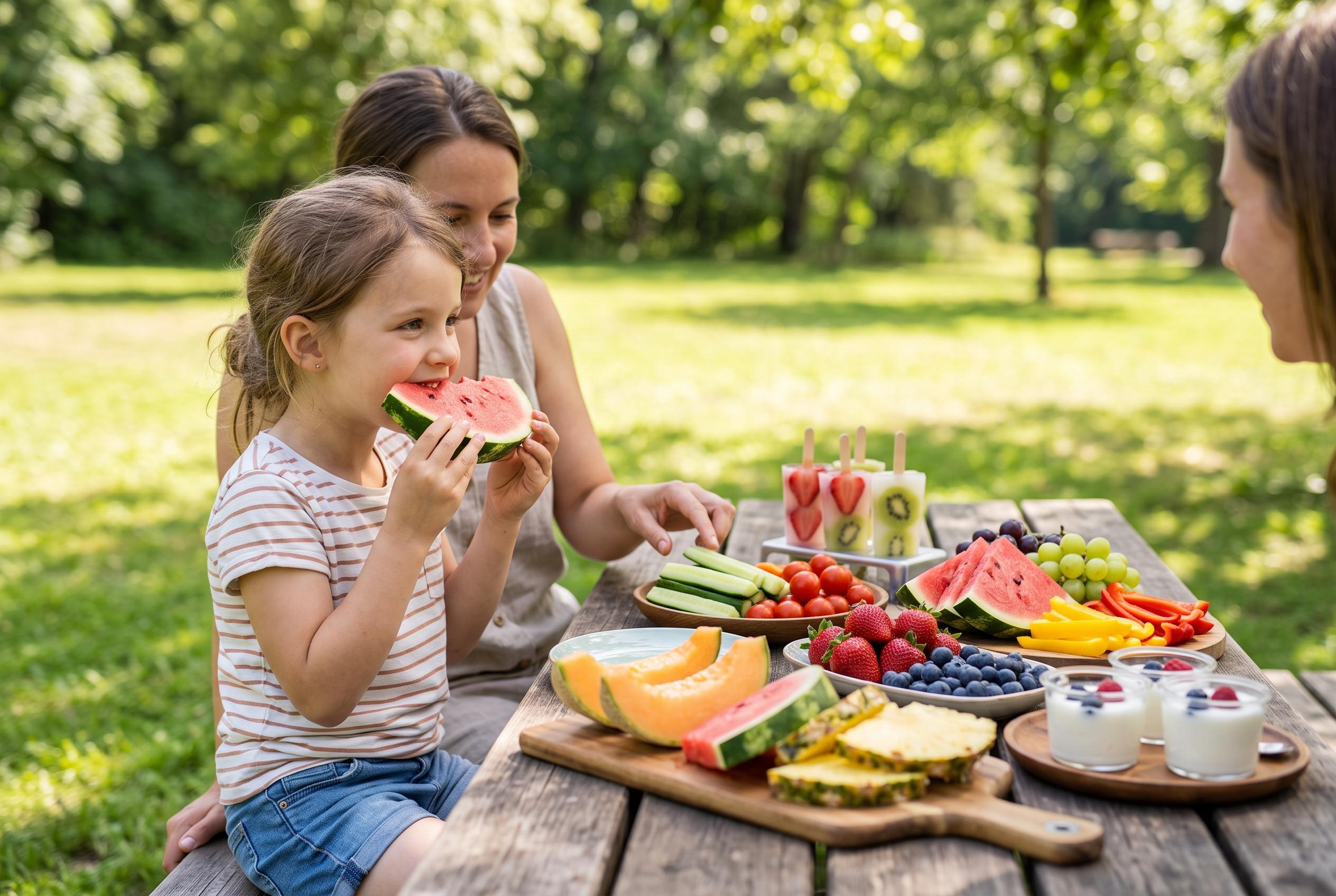

With rising temperatures, parents can boost children’s hydration through water-rich foods like fruit, vegetables, dairy, and creative treats, alongside regular drinks, to prevent dehydration and keep kids happy and healthy in hot weather.
Hot weather can make even the most organised family feel as if every child is one sip away from a meltdown. Yet hydration does not have to rely only on a water bottle. Food can make a meaningful contribution too, especially when children are too busy playing to stop for a drink.
That matters because children lose more water when temperatures rise and they sweat more. Nutrition experts note that water-rich foods should not replace regular drinks, but they can help fill the gap. Studies cited by health and nutrition writers show that fruits, vegetables, milk and yoghurt all add to daily fluid intake, while water and milk remain the main drinks children need for healthy hydration.
Watermelon, strawberries, oranges, peaches and melon are the obvious summer choices because they are mostly water. Healthline and Medical News Today both list them among the most hydrating foods, alongside cucumber, tomatoes and peppers. Research also suggests the pattern is real in children: studies in younger children have found that those who eat more fruit and vegetables tend to have better hydration measures and that fruit and vegetables can supply a meaningful share of total water intake.
For families who struggle to get children to drink, the format can matter as much as the ingredient. Homemade ice lollies made with yoghurt, milk, blended fruit or diluted juice can turn fluid into something more appealing, while giving parents more control over sugar content. Dairy foods also help. According to Healthline and other health guidance, milk and plain yoghurt contribute to hydration as well as providing calcium and other nutrients. Fortified dairy alternatives can work too, although their nutrition varies.
Vegetables can be just as useful as fruit. Cucumber, tomatoes and sweet pepper strips are easy to serve cold, pack into lunchboxes or pair with hummus and cheese. A simple snack plate or a so-called picky tea can combine several water-rich foods at once: fruit, vegetables, yoghurt, bread, crackers and dairy can all contribute to fluid intake without the pressure of a hot meal.
The wider message from the research is that food helps, but drinks still matter most. A study in the European Journal of Clinical Nutrition found that fluid intake patterns were closely tied to hydration status in children, while recent research in The Journal of Nutrition suggested that children’s drinking habits are strongly linked to their parents’ behaviour. That makes modelling a useful tool: if adults keep offering water, children are more likely to follow suit.
Parents should also keep dehydration in mind. Guidance for families warns against relying on a single symptom, since no one sign can confirm it on its own. A combination of changes in behaviour, appearance and drinking may be more useful to watch for. In practice, the best approach is straightforward: keep the drinks coming, but remember that in hot weather, hydration can come from a plate as well as a glass.
Disclaimer: This content is for informational purposes only and is not intended to be a substitute for professional medical judgment, advice, diagnosis, or treatment.