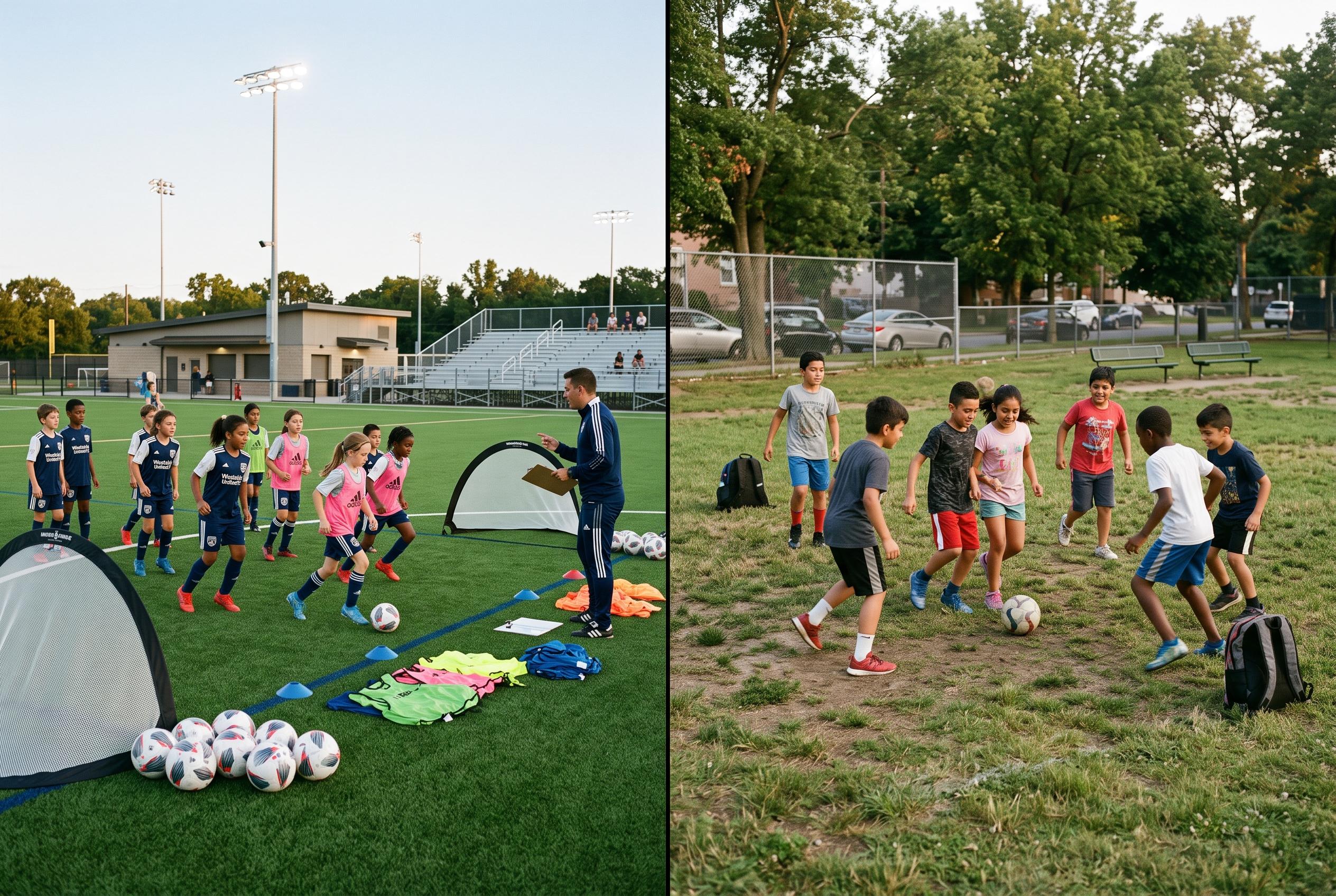

A new AP-Ipsos poll highlights the divide in organised youth sport participation in the US, with income levels significantly influencing access, costs, and long-term prospects for children.
Parents overwhelmingly see organised sport as good for children, but the AP-Ipsos poll suggests the benefits are not shared equally. About half of U.S. parents with school-age children say their kids play a structured sport, yet participation rises sharply with income: roughly 7 in 10 households earning at least $100,000 a year report a child in organised sport, compared with about 4 in 10 lower-income families.
The survey points to a familiar divide in youth athletics. Adults broadly associate sport with teamwork, fitness, resilience, friendship and less time in front of screens, while many parents see it as part of a healthy childhood rather than a path to elite competition. Even so, the practical costs can be hard to absorb. Two-thirds of sports parents estimate spending up to $2,000 a year on equipment, fees, training and travel, and about 2 in 10 spend between $2,000 and $5,000. Roughly 1 in 10 spend more than $5,000.
The financial strain is easy to hear in parents’ own accounts. Tanisha Curry, 51, of Ohio, told AP she shares the burden with family to keep her granddaughter’s volleyball participation affordable, saying travel, uniforms and food all add up. Kathryn Stuczynski, 37, of New York, said she and her husband budget carefully so their two daughters can keep taking part in karate, grappling and wrestling, even if that means foregoing other purchases. Both parents framed the trade-off as worthwhile for the experiences and confidence their children gain.
The poll also suggests many families have college ambitions in mind, even if they do not expect sport to become a career. About 6 in 10 sports parents say the chance of a scholarship or better college prospects matters at least a little in the decision to enrol a child, and lower-income parents are more likely than wealthier families to call that a major factor. Still, the survey found that most parents value the immediate benefits far more than any long-term payoff. About 8 in 10 sports parents say they feel proud and happy about their children’s involvement, and nearly all adults surveyed said lessons such as perseverance, teamwork and self-discipline are major or minor benefits of organised sport.
Disclaimer: This content is for informational purposes only and is not intended to be a substitute for professional medical judgment, advice, diagnosis, or treatment.