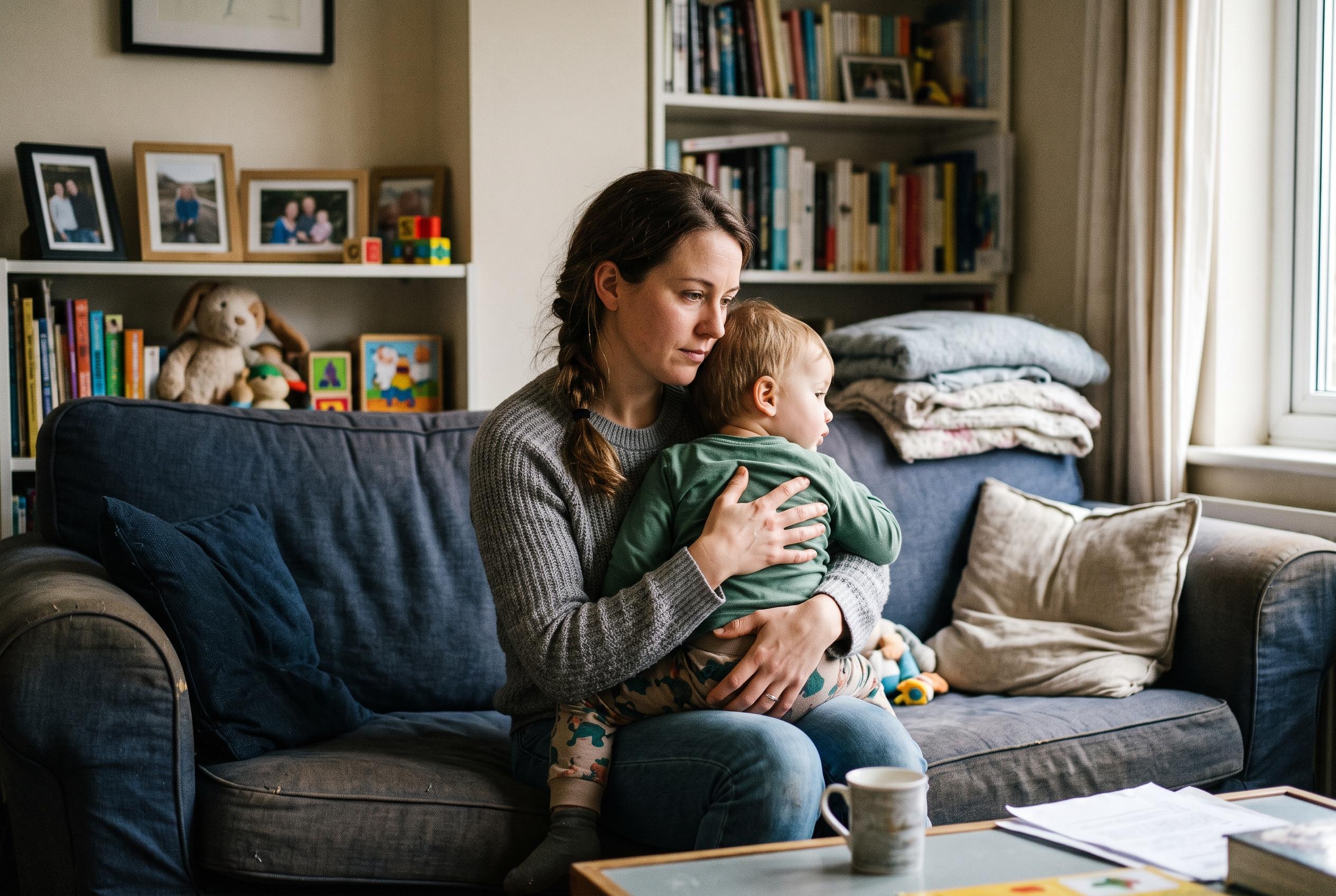

A study in the Infant Mental Health Journal reveals that childhood abuse leaves a lasting impact on mothers experiencing intimate partner violence, with specific parenting challenges linked to trauma symptoms rather than general disrupted parenting.
Childhood maltreatment appears to leave a lasting mark on mothers who have also lived through intimate partner violence, according to a study published in the Infant Mental Health Journal. But the research did not find clear evidence that post-traumatic stress symptoms explain the link between early abuse and later disrupted parenting as a whole. Instead, the clearest pattern was between childhood maltreatment and later post-traumatic stress symptoms, with some weaker signals that those symptoms may be tied to specific kinds of confusing or fearful parenting.
The study focused on 52 mothers and their young children in Dutch domestic violence shelters or receiving shelter-linked care. Most of the women had experienced at least one form of childhood maltreatment, many had endured multiple traumas in adulthood and more than two-thirds scored above an international threshold for post-traumatic stress symptoms on the PTSD Checklist for DSM-5. The researchers also recorded parent-child play sessions and coded them with the Atypical Maternal Behaviour Instrument for Assessment and Classification, a system used to identify behaviours that may be frightening, intrusive or otherwise atypical for children.
Using Bayesian analysis, the researchers found a moderate positive association between childhood maltreatment and post-traumatic stress symptoms. That relation held even in a sample already exposed to severe violence and multiple stressors, suggesting that childhood adversity may add unique risk later in life. However, the overall measure of disrupted parenting was not clearly linked to childhood maltreatment, nor to post-traumatic stress symptoms once children’s age was taken into account.
The picture was somewhat different when the researchers looked more closely at specific parenting patterns. There were signs that mothers with more post-traumatic stress symptoms were more likely to show role confusion and fearful or disoriented behaviour during play, although the evidence was not strong enough for firm conclusions. The authors said the findings do not support a simple mediation model in which childhood maltreatment leads to post-traumatic stress symptoms, which then produce disrupted parenting across the board. Instead, they argued that support for traumatised parents may need to focus on early identification and treatment of post-traumatic stress, while future studies test whether particular parenting behaviours are affected in more specific ways.
Disclaimer: This content is for informational purposes only and is not intended to be a substitute for professional medical judgment, advice, diagnosis, or treatment.