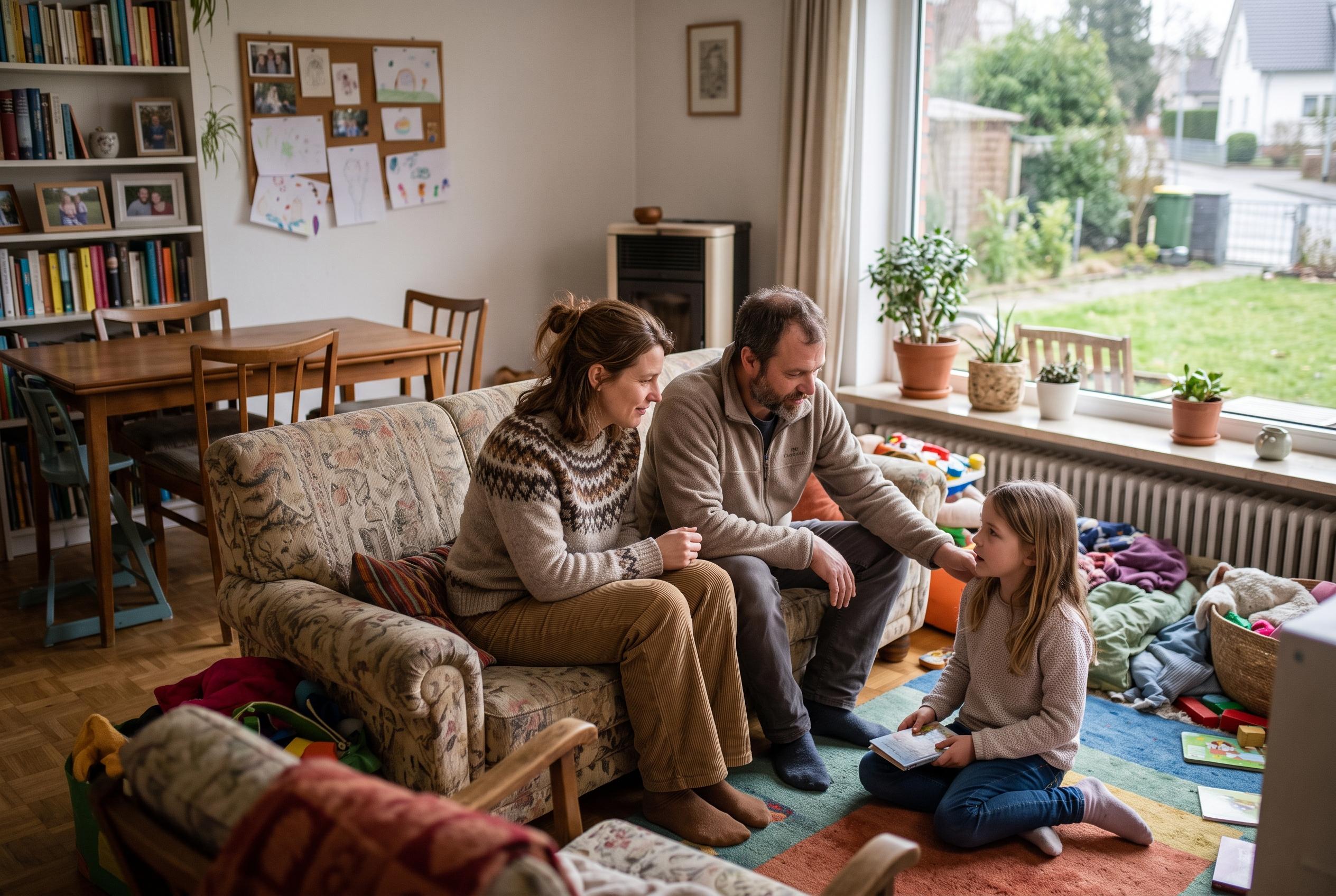

Expert insights highlight how parental mental illness impacts children, underlining the importance of early, honest communication and integrated community support to mitigate long-term effects.
Children can be deeply affected when a parent lives with a mental illness, but experts say the level of strain depends less on the diagnosis itself than on how severe, persistent and disruptive it is to family life. Michael Kölch, a child and adolescent psychiatry professor in Rostock, told the Aachen newspaper that almost any condition can become a burden if it significantly limits a parent’s ability to relate, care and provide stability. Research also suggests that co-existing conditions and long-term illness can increase the impact on children, particularly when parents struggle to accept treatment or their own diagnosis.
The effects on children are often less visible than a broken bone or a fever, but they can be just as serious. Sabine Wagenblass, who works with the German network for children of mentally ill parents, said children may become anxious about the parent, the family’s future or even their own mental health. Studies have linked parental mental illness with a higher risk of depression, behavioural problems, attention difficulties, lower confidence and social withdrawal in children. Other research and clinical reviews point to secrecy, isolation and parentification, when children take on adult responsibilities too early, as common patterns that can shape later life.
The youngest children are especially vulnerable. Jörg Backes of Germany’s national early help centre said the period from birth to age 3 is particularly sensitive because children depend heavily on a caregiver’s steady response. If illness leaves a parent unable to pick up on a baby’s cues, development can suffer. A systematic review on community support for families with serious mental illness also found children are at greater risk of poorer psychological and physical health, developmental problems and lower educational achievement, which is why experts increasingly argue for family-focused services rather than treatment that centres only on the adult patient.
Specialists say the first step is honest, age-appropriate conversation. Kölch argues that silence does not protect children for long because they usually sense when something is wrong. Wagenblass recommends asking children what they have noticed, then explaining the illness in simple terms and repeating that they are not to blame. Evidence from psychiatric support studies also suggests children cope better when they receive information tailored to their age and when their own perspective is taken seriously in care settings.
Support outside the home can make a major difference. Stable relationships, childcare, school, nursery settings, clubs, outdoor activities and contact with animals can all give children relief and a sense of normality, while other adults can help with practical tasks and encourage parents to seek treatment. A newer German model, CHIMP-NET, is testing more coordinated, family-oriented care for children and adolescents with mentally ill parents, reflecting a growing belief that support works best when adult psychiatry, child services and community help are linked rather than operating in separate silos.
Disclaimer: This content is for informational purposes only and is not intended to be a substitute for professional medical judgment, advice, diagnosis, or treatment.