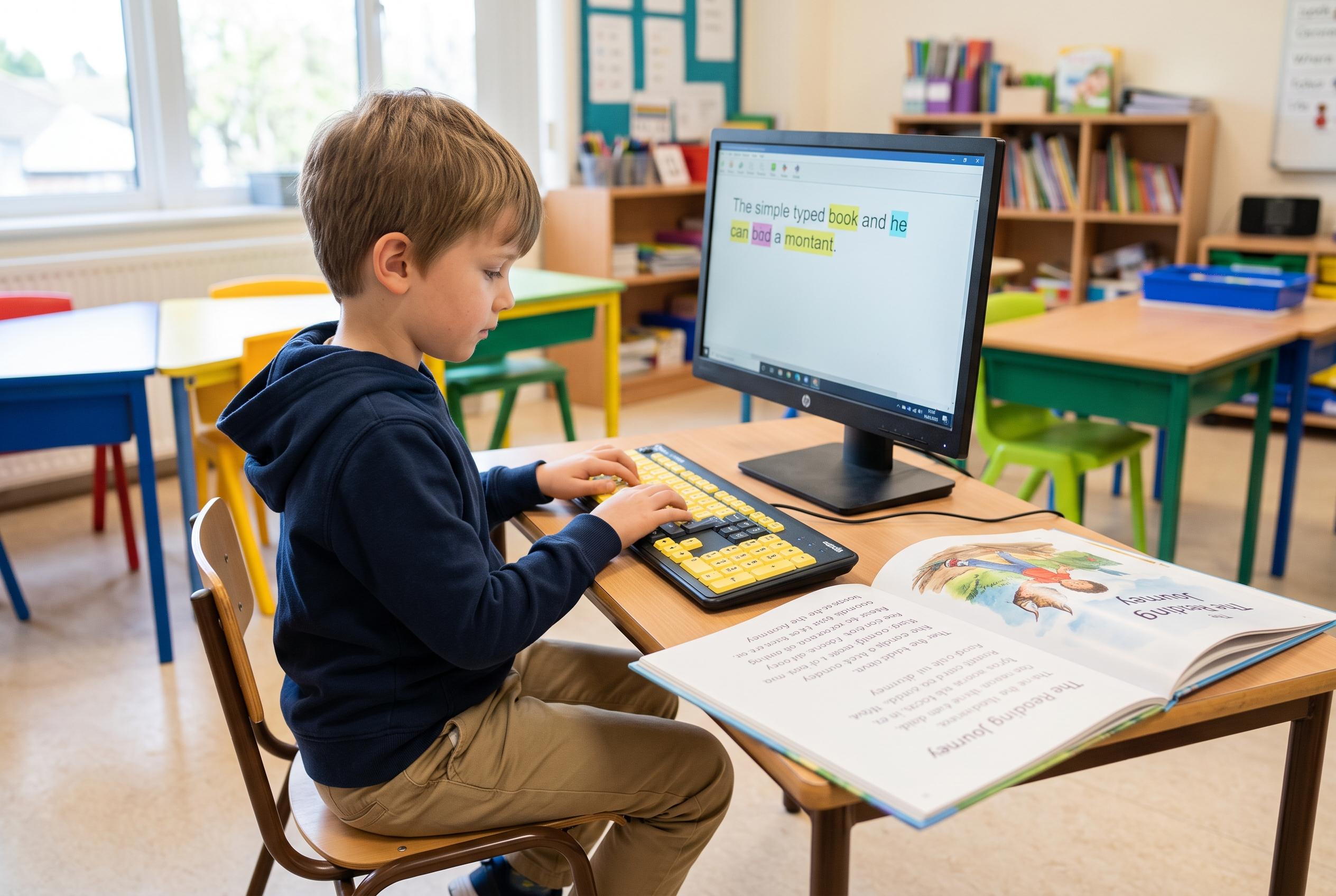

Introducing early typing can help dyslexic students develop reading and writing skills more easily, but handwriting still maintains a crucial role in early education and life skills development.
Introducing typing early can be a practical way to ease the burden of writing for dyslexic students, but handwriting still has a role, particularly in the early years. The main issue is that some children never develop automatic letter formation, so every word demands conscious effort. That can slow writing, drain working memory and make it harder to keep track of ideas during longer tasks such as maths problems or essay planning.
Typing is often simpler because it removes much of the fine motor work involved in shaping letters by hand. The Dyslexic Association says early typing practice can support reading, comprehension, vocabulary and spelling, especially when teaching is multisensory and the keyboard remains visible on screen. For some pupils, a keyboard can even help reinforce letter learning by turning each character into a single tap rather than a sequence of strokes.
That said, handwriting should not be dismissed altogether. Research published on PubMed Central found that handwriting difficulties in developmental dyslexia are often linked not just to motor control but also to graphomotor planning and spelling. Separate resources on dysgraphia, a writing difficulty that can overlap with dyslexia, note that handwriting may be slow, uneven or physically tiring, and that fine motor issues can range from mild to severe. For many children, occupational therapy, upper-body strengthening and repeated practice can improve legibility and fluency over time.
Support needs to be matched to the child. Some younger pupils may begin with basic typing, while others may need help such as colour-coded keys, a more spacious keyboard or speech-to-text software. If handwriting remains a significant barrier, schools can sometimes provide 504 plan accommodations, including keyboard use for classwork and tests. Even so, many experts still see value in teaching handwriting, since jotting notes, filling out forms and writing when technology is not available remain useful life skills.
Disclaimer: This content is for informational purposes only and is not intended to be a substitute for professional medical judgment, advice, diagnosis, or treatment.