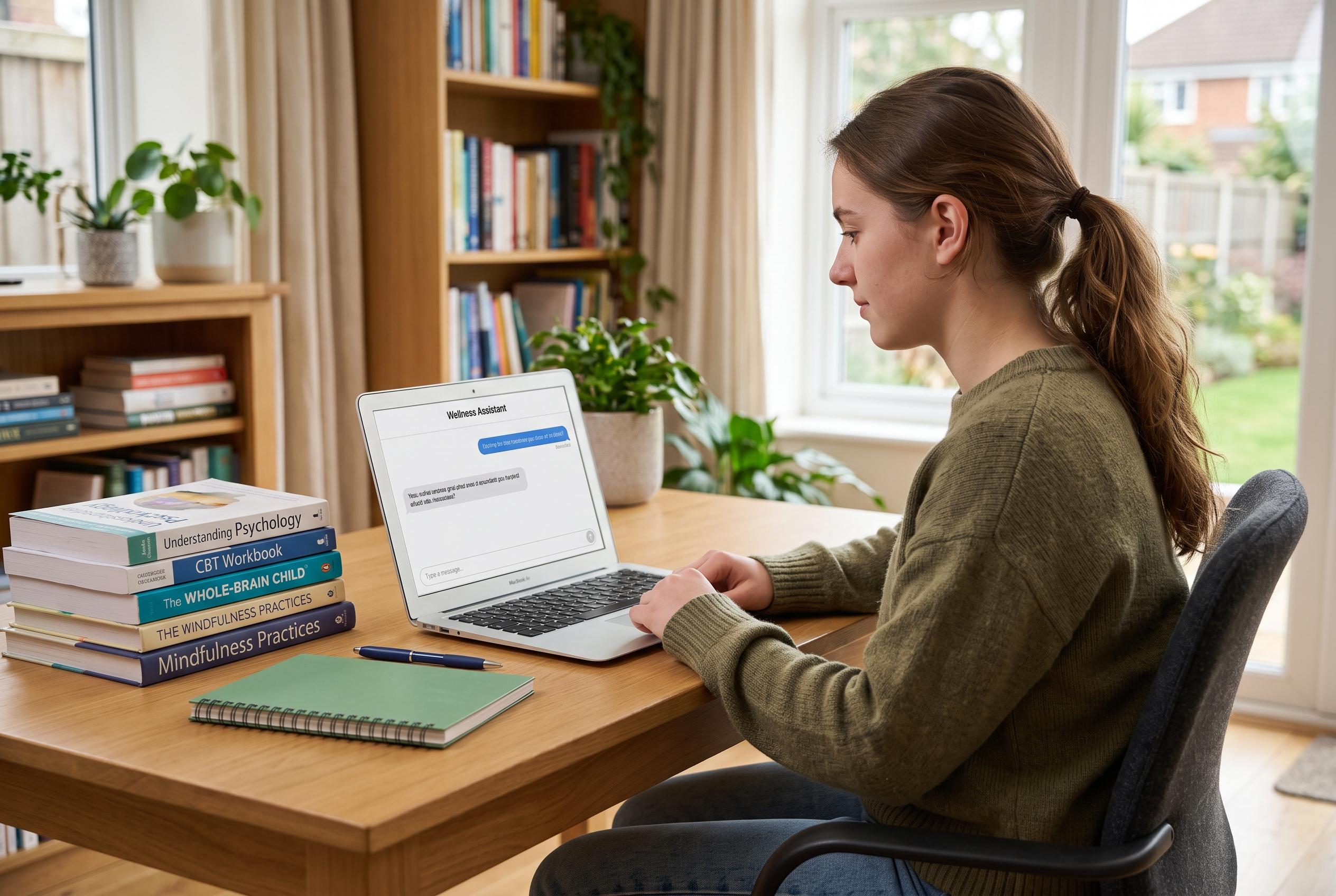

With increasing numbers of young people turning to AI chatbots for mental health support, experts emphasise their role as a starting point rather than a substitute for professional care, citing concerns over privacy, accuracy, and crisis management.
Many people are now turning to AI chatbots for mental health support, but experts are warning that the technology should be treated as a starting point rather than a substitute for care from a trained professional. A Belgian psychologist speaking to De Morgen said a 2025 study found that about 20% of young people were already using chatbots to ask questions about mental wellbeing, and added that the share was likely to have risen since then. Similar figures have emerged in the US, where research published in JAMA Pediatrics found that 19.2% of adolescents and young adults had used AI chatbots for mental health advice.
The appeal is easy to understand. Chatbots are available at any hour, they can provide quick explanations and they may feel less intimidating than booking an appointment with a therapist or doctor. The psychologist told De Morgen that people often use them to make sense of what they are feeling or to test whether a difficult situation is “normal”. In practice, he said, some patients now mention using AI alongside human support, treating it as an extra conversation partner.
But the concerns are significant. A systematic review indexed in PubMed highlighted privacy risks, the possibility of incorrect or harmful advice and poor responses in crisis situations. Consumer advocates in the US have also warned that some chatbot tools can encourage misleading thinking, including negative views of doctors and therapy. The psychologist interviewed by De Morgen said chatbots are built to keep users engaged, which can mean the responses are overly reassuring or skewed by whatever the user has already said.
That is why experts say the tools may be useful for general information or low-level support, but not for serious symptoms, self-harm or suicidal thoughts. According to the psychologist, AI can help some people with mild depression or anxiety, yet it should not replace face-to-face care when problems are severe. He also argued that the wider conversation should include practical alternatives, such as youth drop-in services and information platforms that can offer help with less friction than traditional mental healthcare.
Disclaimer: This content is for informational purposes only and is not intended to be a substitute for professional medical judgment, advice, diagnosis, or treatment.