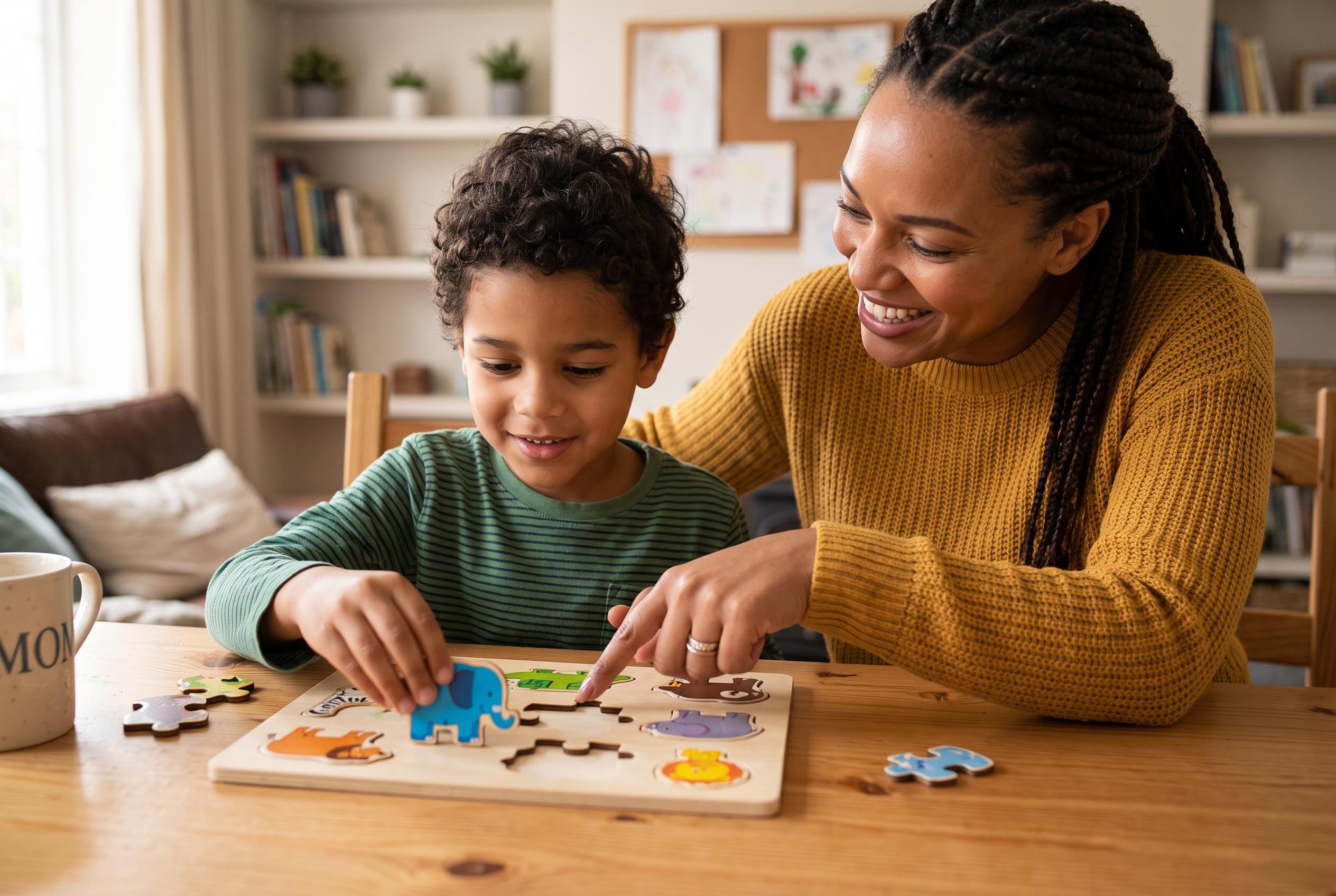

Research reveals how different types of praise shape children’s responses to challenges, highlighting the importance of specific, effort-based feedback over innate ability to foster resilience and a growth mindset.
What a child hears after success can shape how they face the next challenge. Research that began in the 1990s suggests that praise aimed at innate ability can make achievement feel like proof of who a child is, while setbacks can feel like proof that something is missing. By contrast, feedback that notices strategy, revision, persistence or help-seeking gives children a more useful place to stand when work gets harder.
In a 1998 study in the Journal of Personality and Social Psychology, Claudia Mueller and Carol Dweck found that fifth-graders who were praised for intelligence after doing well became more focused on performance than on learning. When the tasks later became difficult, those children were less persistent, enjoyed the work less and were more likely to give low-ability explanations for their performance than children praised for effort. The experiment was controlled and short-term, but it showed how quickly a single kind of response can influence what children think success means.
A similar pattern appeared in younger children. In a 1999 Developmental Psychology study, Melissa Kamins and Dweck reported that five- and six-year-olds who received person praise, meaning feedback about the whole self, showed more helpless responses after a setback than those who received process praise. That included more self-blame, weaker self-assessments and less persistence. The study used role-play, not natural family interaction, so it cannot measure the long-term effect of a parent’s everyday language, but it did reinforce the idea that whole-person approval can make worth feel conditional.
Evidence from ordinary homes points in the same direction, though less directly. In a 2013 Child Development study, Elizabeth Gunderson and colleagues observed parents and toddlers and later assessed the children’s motivational beliefs. Families in which parents used more process praise, especially praise for effort, strategies and actions, were more likely to have children who later showed incremental beliefs about intelligence and more challenge-oriented behaviour. Because the study was observational, it cannot prove cause and effect, but it suggests that the language of praise often travels with broader habits of teaching, patience and response to mistakes.
The practical lesson is not to ban the word “smart” or to replace it with hollow applause for effort. A 2002 review in Psychological Bulletin found that praise works best when it is sincere, specific and tied to something the child can control. That means noticing a child who checked work carefully, changed tactics, asked a precise question or kept going after the first idea failed. It also means understanding that effort alone is not always enough: sometimes a child needs instruction, a new tool, a break or permission to stop. The point is to keep ability from becoming a verdict, and to make difficulty feel like information rather than identity.
Disclaimer: This content is for informational purposes only and is not intended to be a substitute for professional medical judgment, advice, diagnosis, or treatment.