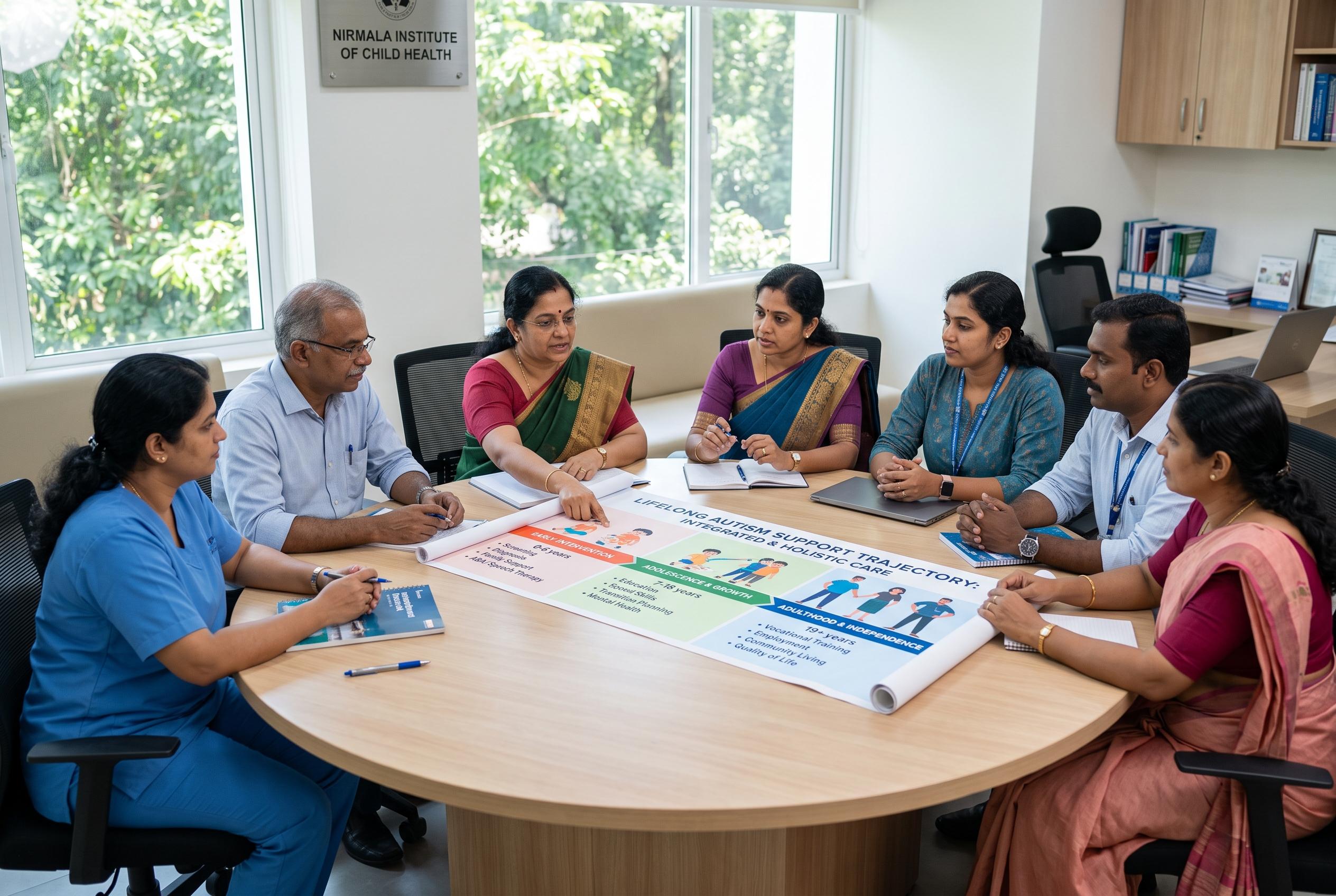

A national conclave in Kerala advocates for continuous, adaptable autism support across all life stages, highlighting the need for holistic and early intervention strategies to improve quality of life for individuals with autism.
Experts at a national conclave in Kerala have called for autism care that starts early and continues through childhood, adolescence and adulthood, arguing that isolated therapies are not enough for a condition that changes over a person’s lifetime.
Speaking at the meeting in Thiruvananthapuram on Thursday, specialists said early intervention can improve communication, social skills, cognition, motor abilities and behaviour in children with autism spectrum disorder. They also stressed that autism is a lifelong neurodevelopmental condition, which means support must adapt as needs, strengths and aspirations change over time.
Doctors at the event said around 90% of children with autism have at least one or two related medical or psychiatric conditions, making timely detection and treatment of those problems essential. They noted that these comorbidities are not fixed: they can shift as children grow older, and puberty can heighten awareness of social differences and peer comparisons, increasing the risk of anxiety and depression.
The organisers framed this as a life-course issue, saying the best outcomes come from a combination of early identification, inclusive education, mental health care, social participation and support for healthy ageing. The Hindu reported that speakers included M.K.C. Nair, founder-director of the Child Development Centre at Government Medical College, Paul Russell of Christian Medical College, Vellore, Lal D.V. of the Indian Academy of Paediatrics’ neurodevelopmental paediatrics chapter and Valsamma Eapen of the University of New South Wales Sydney. The two-day conclave is bringing together clinicians, researchers, educators, therapists, policymakers and programme managers from across the country.
Researchers and reviews cited in the related material support that approach. A chapter in the National Center for Biotechnology Information’s Bookshelf and a paper indexed by PubMed both describe life-course health development as a framework that can improve understanding and support for autistic people across their lives. A separate review in an Oxford academic volume and another article examining autism research argue that services should be designed around changing needs over time. Recent studies also point to the strain on families: one intervention study found that structured support for mothers of autistic children reduced caregiving burden and improved family functioning, reinforcing the case for care that supports not just the child but the household around them.
Disclaimer: This content is for informational purposes only and is not intended to be a substitute for professional medical judgment, advice, diagnosis, or treatment.