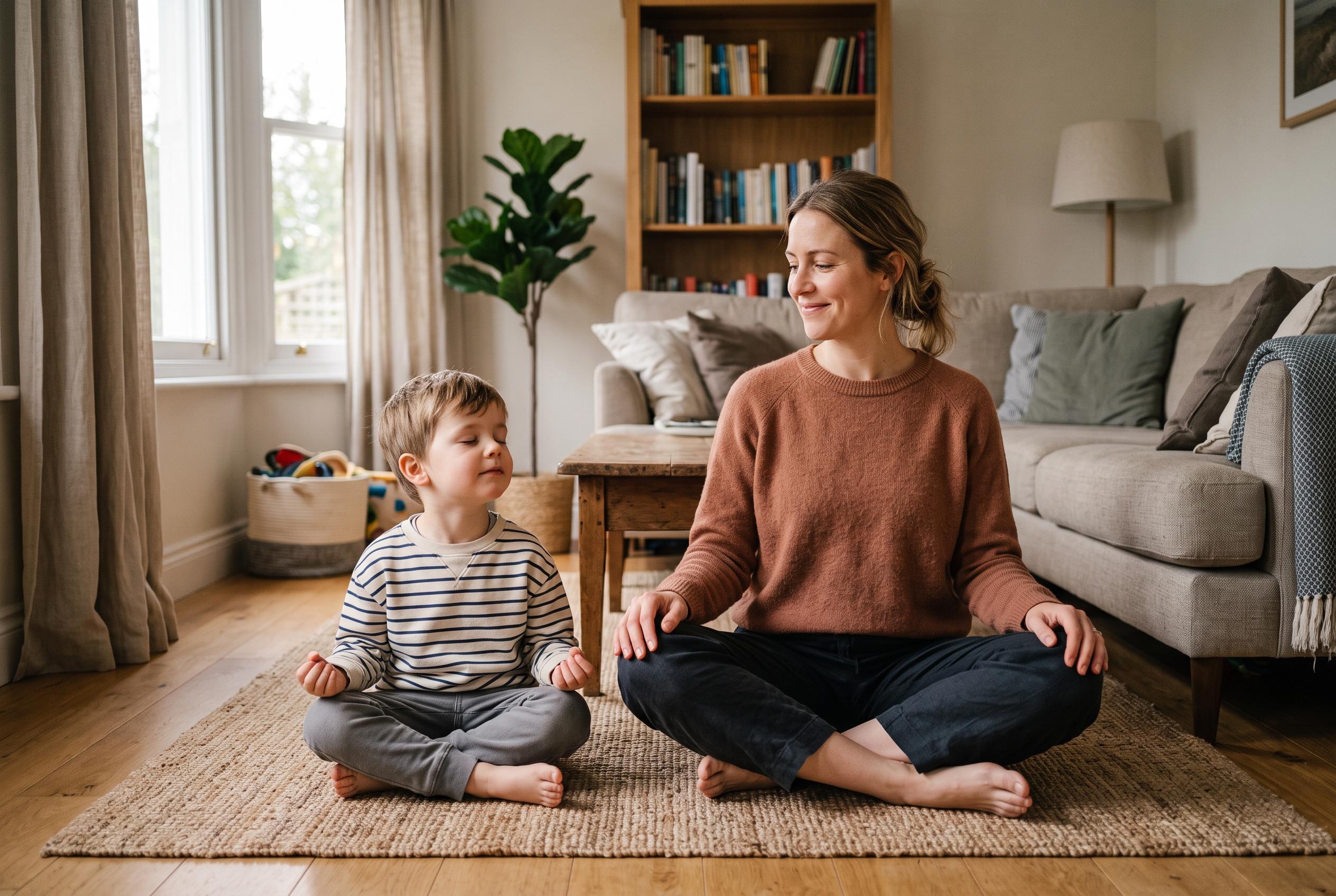

Children’s emotional wellbeing is increasingly supported by adults modelling calm responses, with simple practices like breathing and routines playing a key role in helping kids manage big feelings, according to recent expert insights.
In a recent episode of the AllMomDoes podcast hosted by Purposely, children’s author Kira Willey argued that the most useful emotional tools for families often start with the adult in the room. She described parenting as less about perfect answers and more about self-awareness, calm routines and simple practices that help a child move through big feelings without escalating the moment. The discussion also traced her shift from corporate work into children’s writing, reflecting a wider movement towards practical, everyday resources for emotional wellbeing. According to Purposely’s show notes, the conversation centred on breathing, transition rituals and ways to create connection before correction.
That emphasis on self-regulation is in step with wider guidance from child-development resources. Walden Wise, which develops parent and educator tools with scientists in children’s emotional development, says adults can help children manage strong emotions by first reducing their own tension and then modelling steady responses. Healthline similarly notes that self-regulation is a core developmental skill, because children learn to manage feelings and behaviour over time, not all at once. The message across those sources is consistent: when adults stay grounded, children are more likely to settle.
The practical techniques discussed in the podcast were deliberately simple. Willey pointed to breathing, body scans and small movements as ways to release tension before responding to a child’s behaviour. She also highlighted the value of clear expectations, especially around routines and transitions, which can reduce friction at moments when children are most likely to become dysregulated. That approach aligns with other parent-facing tools now on the market, from Gentle Paths Toolkits, which provides trauma-informed emotion resources for children and caregivers, to Calm Caterpillar, which uses mindfulness and Positive Behaviour Interventions and Supports methods in classrooms.
The broader field of children’s emotional learning has been expanding quickly, with programmes such as Emotional ABCs and Mightier offering structured ways for children to recognise feelings, practise regulation and build confidence. Emotional ABCs says its programme reaches children in more than 118,000 schools across 120 countries, while Mightier uses game play and a heart sensor to help children track and manage arousal in real time. Against that backdrop, Willey’s message was less about a single tactic than a philosophy: calm, connected adults give children a better chance of learning how to calm themselves.
Disclaimer: This content is for informational purposes only and is not intended to be a substitute for professional medical judgment, advice, diagnosis, or treatment.