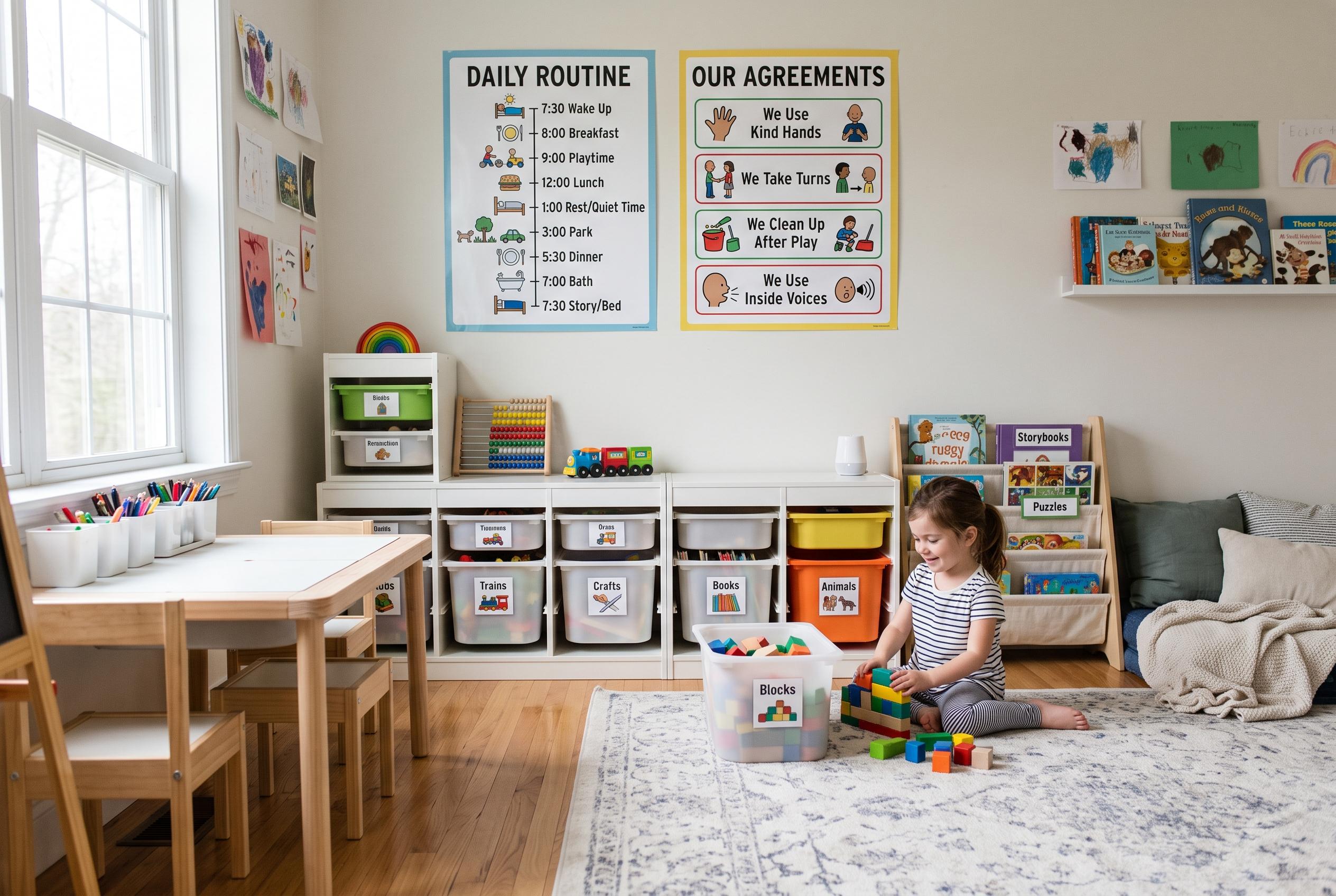

Experts suggest that tailoring organisation systems to a child’s age, establishing clear routines, and using predictable consequences can make tidying up more manageable and foster lasting habits among children.
Many parents know the scene: a child is told to tidy up and simply does nothing. That is not usually a sign of stubbornness, and it is rarely a parenting failure. More often, the problem is that the system is too complicated for the child using it, according to advice from parents’ guides by Understood and Children’s Minnesota, which both stress that organisation is a learned skill.
The first fix is to match the setup to the child’s stage of development. Younger children generally do better with one simple place for everything, such as a single toy bin, while school-age children can usually cope with only a few broad categories. Understood recommends keeping organisation age-appropriate, with more structure introduced gradually rather than all at once.
Another useful shift is to make clean-up less like a discussion and more like a routine. A timer, countdown or short warning can reduce arguments because it turns tidying into a clear task with a finish line. Understood and other parent-focused guidance also suggest breaking jobs into smaller steps, using checklists and setting regular routines so children are not faced with a vague, overwhelming instruction.
Natural consequences can also help if they are used calmly and consistently. If an item is left out, putting it away for a short period can teach children that things need a home. Experts quoted by parents’ guides say the point is not punishment but predictability, because repeated threats and uneven enforcement tend to create stress without building habits.
What adults say matters too. Instead of asking, “How many times do I have to tell you?”, it is usually more effective to offer a small choice or name one specific task. That approach lines up with wider advice from Understood, which recommends clear categories, visual reminders and manageable steps rather than broad complaints about a messy room or a cluttered backpack.
For many families, the real goal is not a picture-perfect bedroom but a system a child can actually use. Organising resources from Understood, Children’s Minnesota and several professional organisers all point in the same direction: start simple, involve the child in the plan and build from there. Once a basic habit is in place, more detailed organisation, such as labelled drawers or a fuller closet system, becomes much easier to maintain.
Disclaimer: This content is for informational purposes only and is not intended to be a substitute for professional medical judgment, advice, diagnosis, or treatment.