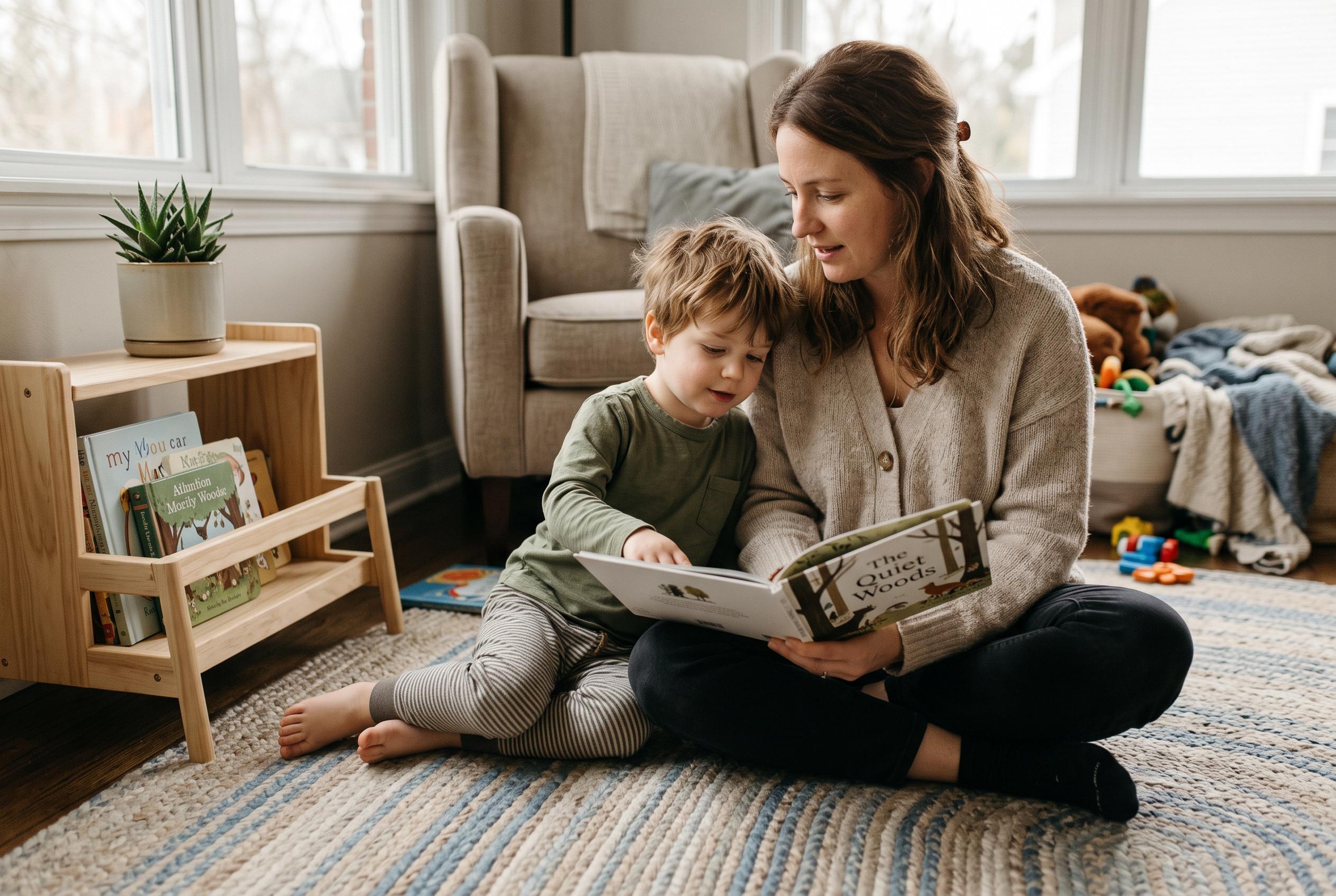

In an age of busy schedules, experts highlight the power of slow, intentional moments between caregivers and children, emphasising that small acts of presence and curiosity are vital for emotional well-being and developmental growth.
One quiet morning, a grandmother stood by a window with her grandbaby and watched the light shift across the room. There were no toys to tidy, no lesson to deliver and no task to finish. Yet in that ordinary pause, the scene captured something many parents and carers know but often struggle to protect: children notice the world slowly, and their smallest discoveries can hold their full attention. Chickadees Wooden Toys framed the moment as a reminder that childhood is often built not around big plans but around brief, shared acts of noticing.
That idea is echoed by children’s health specialists who say being truly present matters as much as simply being nearby. The Children’s Hospital of Dayton says presence means emotional availability as well as physical proximity, and that this kind of attention supports a child’s mental well-being. Experts also note that play is not a diversion from development but one of its foundations. According to Children’s Health, free play helps build confidence, resilience, creativity and social-emotional skills, while psychology researchers have warned that children in the United States are spending less time in unstructured play than previous generations.
The broader lesson is less about adding another parenting task and more about changing pace. St Louis Children’s Hospital describes mindfulness as attention to the present moment and says even simple practices can help children strengthen focused awareness. PBS Parents similarly stresses that children’s needs and responses are not identical, which means caregivers often have to tune in closely to what a child is signalling in a given moment. That may be a request to look, listen, help or simply share a discovery.
The grandmother’s reflection also lands with the clarity that comes only after children grow. The errands, appointments and household demands were real, she wrote, but the memories that stayed were not the ones built around efficiency. They were the ones shaped by backyard discoveries, kitchen conversations, books read repeatedly and the small invitations children offer throughout the day. Lurie Children’s Hospital says positive parenting depends on guidance, consistency and praise, but this story suggests another quiet discipline too: making room to follow a child’s curiosity for an hour, or even a few minutes, and treating ordinary time as something worth entering fully.
Disclaimer: This content is for informational purposes only and is not intended to be a substitute for professional medical judgment, advice, diagnosis, or treatment.