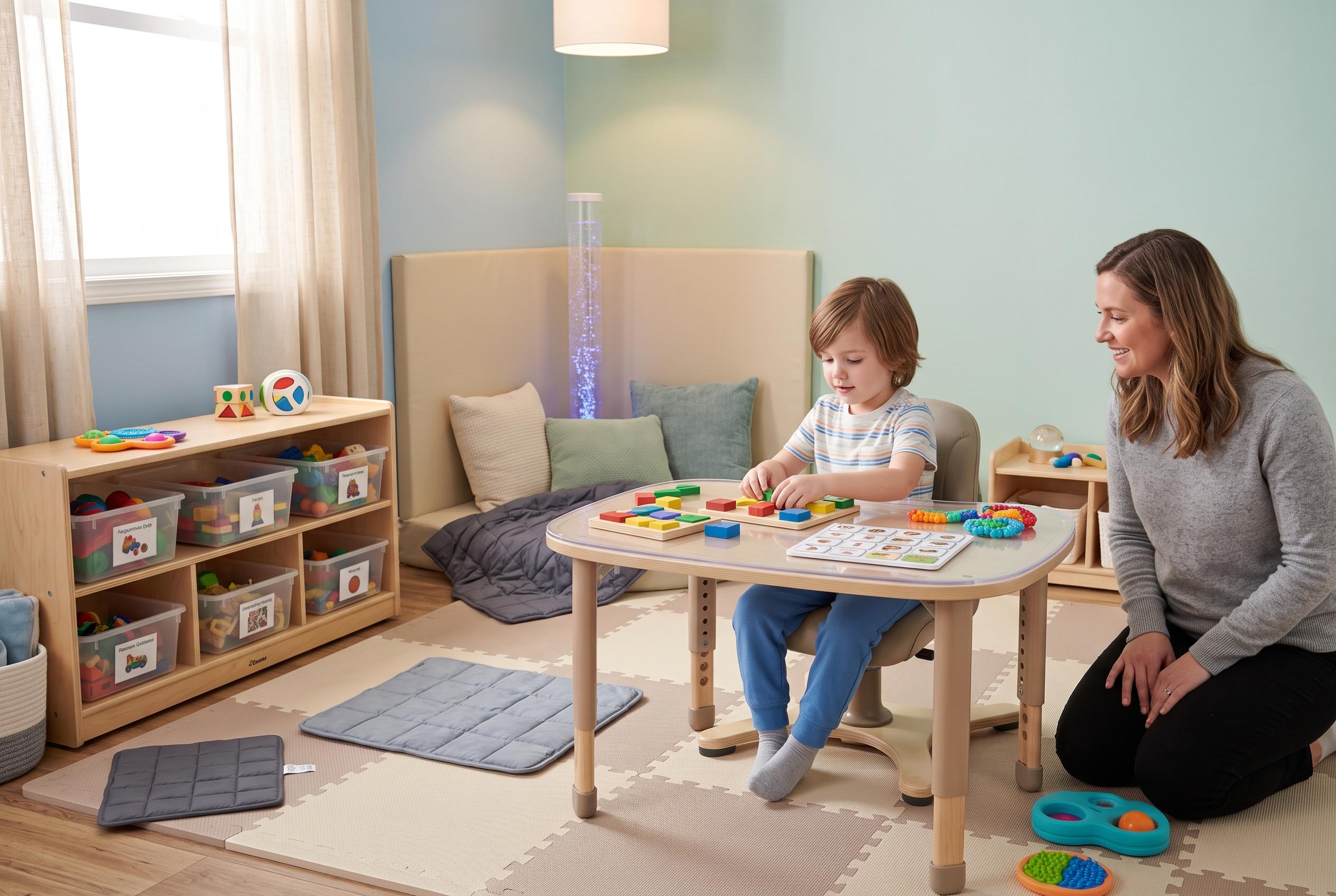

A thoughtful and adaptable home setting can significantly reduce stress, foster independence, and support emotional well-being for children with special educational needs and disabilities, benefitting the entire family.
A supportive home can do far more than keep a child safe. For children with special educational needs and disabilities, it can also reduce stress, make daily life more manageable and create the conditions for learning, confidence and calmer family relationships.
One of the biggest benefits is emotional security. PBS Parents says children are more likely to trust the adults around them when their feelings are met with patience rather than dismissal. In practice, that can mean soft lighting, a quiet corner and consistent responses from carers. When a child knows they will not be punished for becoming overwhelmed, home becomes a place where they can recover, try again and gradually build resilience.
The physical set-up of the house matters too. First Children Services and Mind Color Autism both point to the value of calm, predictable spaces with reduced clutter, thoughtful lighting and comforting textures. Keeping familiar items in the same place can lower anxiety, while clear routines help children know what comes next. That does not mean life has to be rigid, but it does mean the day is easier to navigate when transitions are expected rather than sudden.
A well-organised home can also encourage independence. UNICEF and Special Olympics both note that children thrive when spaces are adapted to their abilities, whether that means clearing routes for movement, offering suitable seating or making everyday tools easy to reach. Low hooks, labelled bins and picture-based checklists can turn ordinary tasks into manageable steps. Over time, those small successes help build confidence, motor planning and problem-solving skills.
Sensory needs are another crucial consideration. Some children are highly sensitive to noise, light, texture or movement, and even ordinary household stimulation can become exhausting. Simple changes such as blackout curtains, quieter appliances, noise-cancelling headphones or a weighted blanket can make a marked difference. Special Olympics and other guidance for families suggest starting with observation: notice what comforts a child and what seems to unsettle them, then adapt the environment accordingly.
The home can also support communication. PBS Parents stresses that children are more likely to express themselves when they feel heard and not judged. Arranging furniture so people face one another, leaving time after questions and narrating emotions in plain language can all help. When siblings and parents learn to recognise a child’s cues, misunderstandings fall and connection becomes easier.
Sleep and physical health benefit as well. A dark, cool room with a simple wind-down routine can help children settle more easily, particularly when the day has involved sensory overload or big transitions. Better rest often means steadier moods, sharper attention and more energy for learning the next day. Within the home, movement opportunities such as a swing, climbing equipment or a simple obstacle course can also help children regulate their bodies and stay active.
Perhaps most importantly, a supportive home helps the whole family. When parents and siblings take part in making adjustments, the message is that different needs are normal and worth respecting. Family life becomes less about trying to treat every child the same and more about making sure each child gets what they need to do well. That kind of environment supports empathy, reduces resentment and makes space for everyone to feel included.
Disclaimer: This content is for informational purposes only and is not intended to be a substitute for professional medical judgment, advice, diagnosis, or treatment.