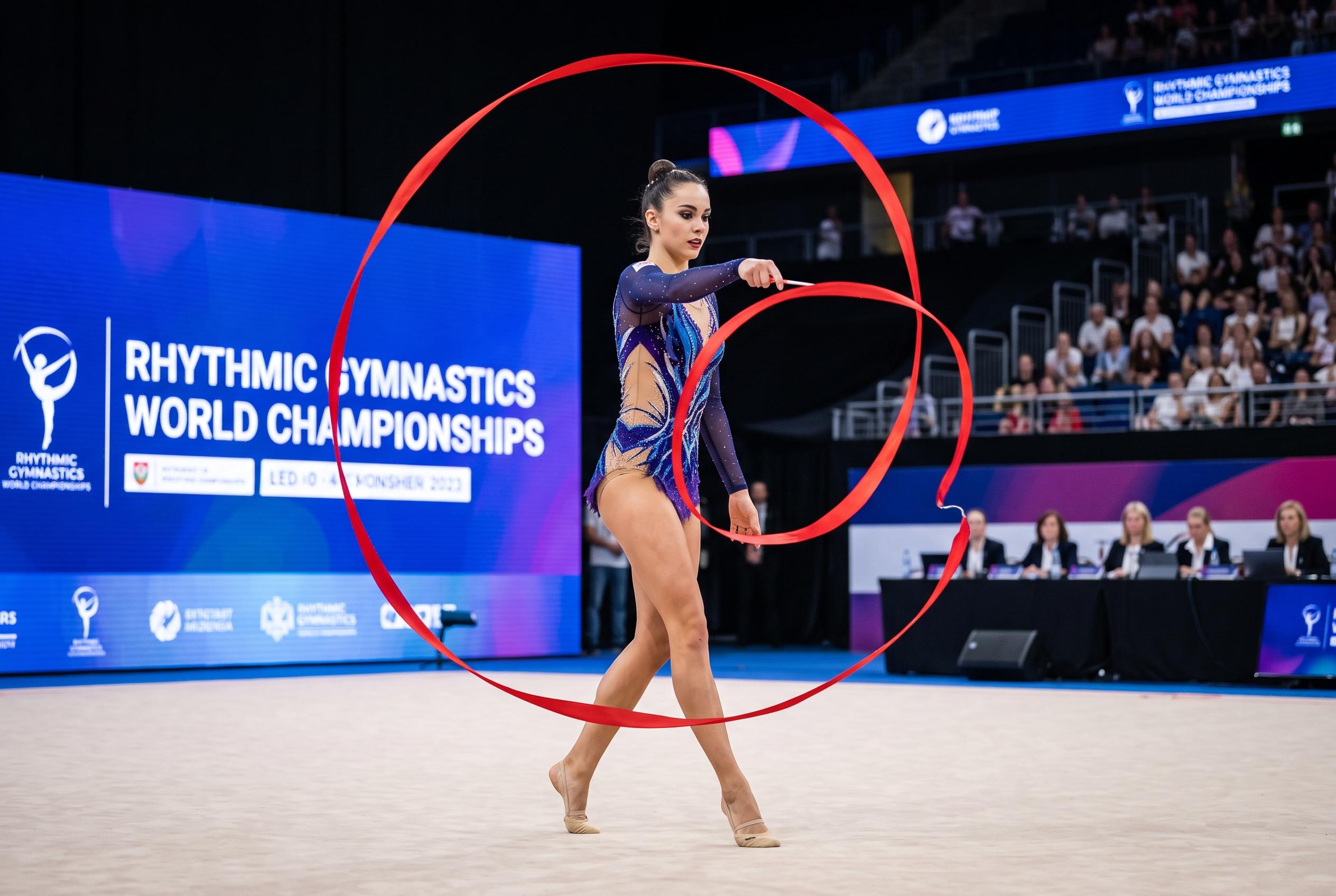

At the Frankfurt World Championships, a focus on athlete well-being is emerging alongside competition, with Germany leading the way in nutrition and injury prevention amid calls to modernise the sport’s image.
Frankfurt’s World Championships in rhythmic gymnastics have put the sport’s familiar images of grace and precision alongside a more hard-edged concern: athlete welfare. At the Festhalle, 345 gymnasts from 70 nations are competing from 12 to 16 August, with Germany’s Olympic champion Darja Varfolomeev among the leading contenders in the all-around and apparatus finals.
For Isabell Sawade, who leads the German national team, health is as important as medals. In an interview with the Frankfurter Allgemeine Zeitung, she said the federation pays close attention to what gymnasts eat at training camps and has stepped up medical checks, nutrition support and sports psychology. Sawade also pointed to RED-S screening, a tool used to detect relative energy deficiency in sport, which can affect performance and health when athletes do not take in enough energy.
Her comments reflect a wider body of research showing that rhythmic gymnastics places heavy demands on flexibility, power, coordination and endurance, while also exposing young athletes to high mechanical loads. Studies in elite gymnasts have found that inadequate nutrition is not just a performance issue but a medical one, with risks including stress injuries, anaemia and impaired immune function when energy intake falls short.
Sawade said the German programme has made progress, particularly in reducing injuries linked to fatigue fractures, but she acknowledged that attitudes vary and that some coaches still think differently about weight and eating. She rejected the idea of a single target body type for the sport, arguing instead that the priority is whether athletes feel comfortable and able to perform.
The issue also reaches beyond nutrition into how women’s bodies are presented in competition. Sawade said the sport has moved well past a rigid Soviet-era image, with athletes ranging widely in height and style, and with music choices now extending from classical pieces to rock. At the same time, officials have tightened rules on leotards and music that are judged inappropriate, especially in junior events, in an effort to curb the sexualisation of young gymnasts.
Disclaimer: This content is for informational purposes only and is not intended to be a substitute for professional medical judgment, advice, diagnosis, or treatment.