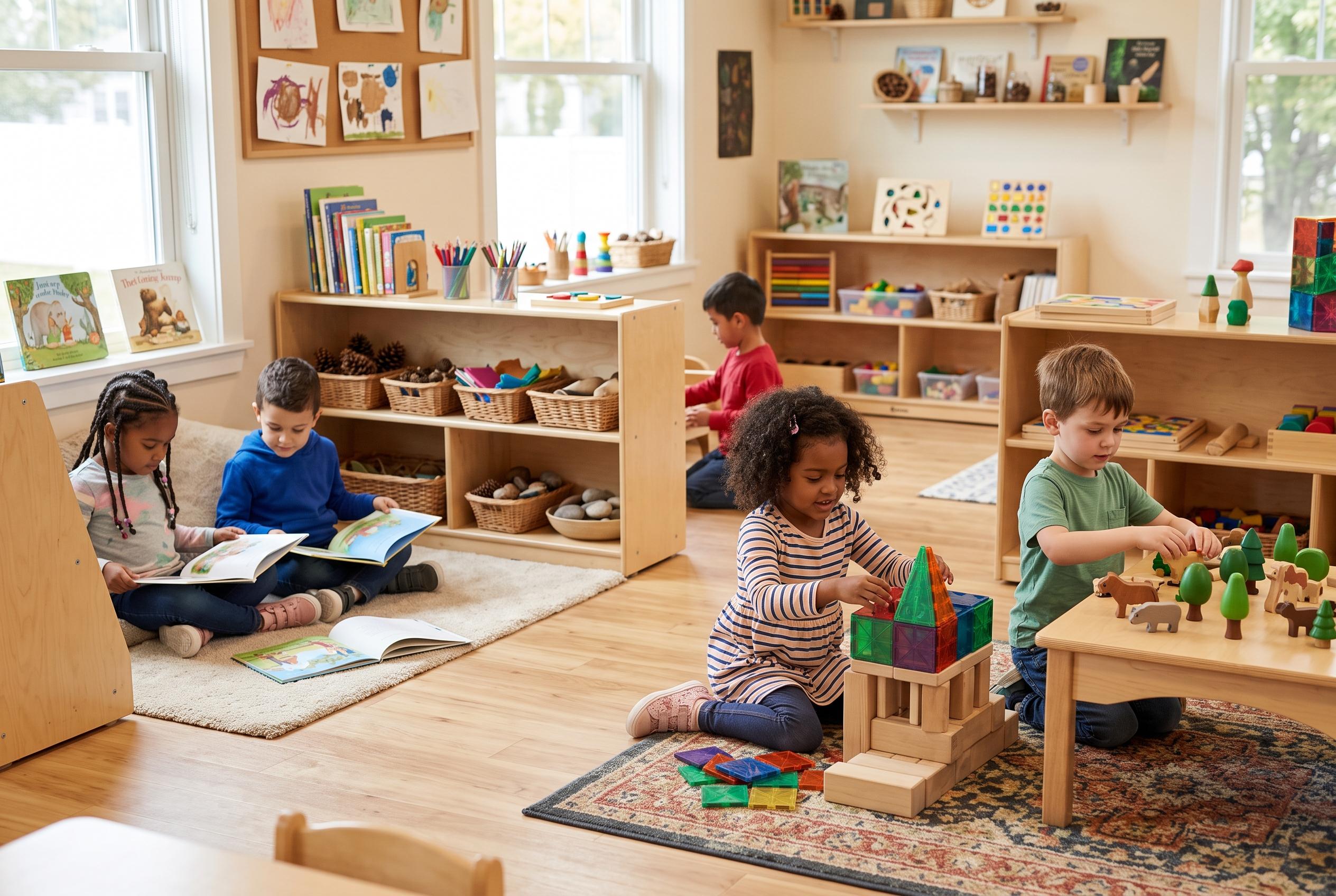

As teachers face increased expectations to nurture essential life skills, experts highlight the importance of unstructured play in childhood to foster resilience, creativity, and independence, challenging modern schools to protect space for children to learn through their own experiences.
Teachers are being asked to do more than deliver lessons. As Jeff Barrett argues in Teach, schools are increasingly expected to nurture judgement, independence, responsibility and persistence: traits that once grew more naturally through childhood itself. That shift matters now because free play and other unstructured experiences have become less common for many children, according to Scientific American and the American Psychological Association, which both link open-ended play with healthier social, emotional and cognitive development.
The point is not simply that play is enjoyable. Child development guidance from the American Psychological Association and Children’s Health says unstructured play helps children build resilience, creativity and self-regulation, while also giving them practice in solving problems with peers. Childcare.gov likewise says children need time each day to play in ways that are both structured and unstructured, because play supports physical, social and intellectual growth. The Canadian Public Health Association goes further, noting that unstructured play is part of healthy development and that limiting it can deprive children of important benefits.
Barrett’s classroom example of Matthew shows how those abilities can emerge when a young person is given something real to care about. What began as a school project to build a turtle habitat became an exercise in biology, maths, persuasion and project management. He was not learning those skills in isolation. He was using them because the work mattered to him, and that gave the work momentum that a worksheet could not.
That is the broader challenge for modern schools. Many are already teaching social and emotional skills explicitly, and that effort has value. But Barrett’s account suggests that schools may also need to protect the conditions in which children practise agency for themselves: time, freedom and a reason to keep going when a problem gets difficult. In other words, the missing curriculum may not be a new subject at all. It may be the space for childhood to do its work.
Disclaimer: This content is for informational purposes only and is not intended to be a substitute for professional medical judgment, advice, diagnosis, or treatment.