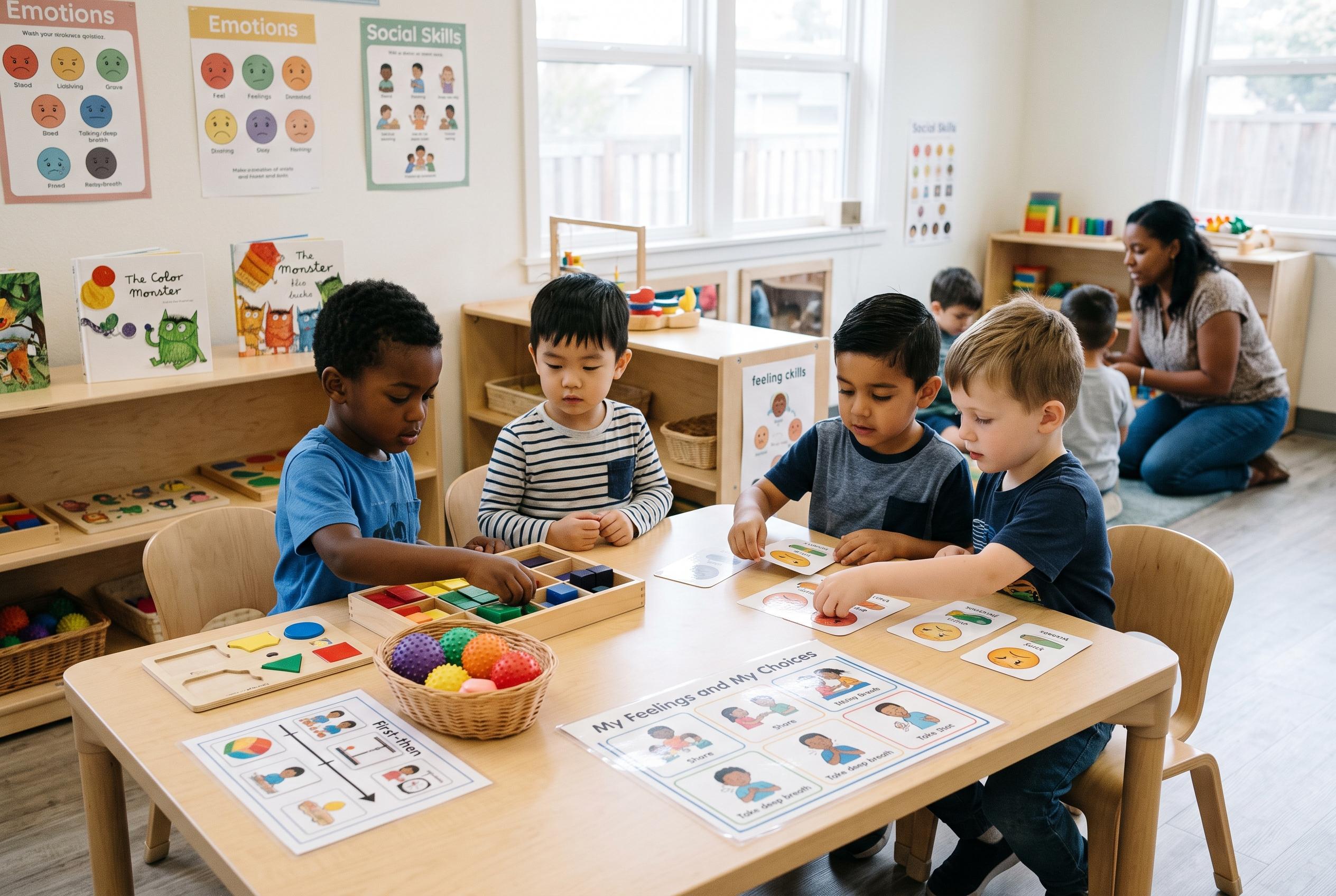

Research indicates that boys tend to show lower skills in self-regulation and executive functions before starting school, highlighting the need for play and tailored support to close early developmental gaps and boost long-term success.
Research suggests that some boys arrive at preschool already behind girls in the skills that matter most for classroom success, even before formal reading and maths begin. A Spanish-language commentary in Vanguardia cited recent findings showing that 48% of boys met general school-readiness markers, compared with 56% of girls, a gap that mirrors broader evidence from child-development research. Studies of preschool executive function, which covers skills such as remembering instructions, stopping an impulse and shifting attention, have also found boys tending to score lower than girls on measures of inhibitory control and short-term memory.
The point, researchers say, is not that boys are less capable, but that readiness for school is about far more than letters and numbers. Teachers often look first for a child’s ability to listen, wait, take turns, handle frustration and stay with a task. A systematic review published in a medical journal found that preschool interventions can strengthen self-regulation and executive function, and that these abilities are closely tied to later academic and social-emotional success. Another study linked executive control in early childhood to later classroom behaviour, suggesting that attention and on-task involvement can shape how well children learn once they are in school.
The Vanguardia commentary also points to a broader change in preschool itself. Over time, many early-years settings have become more academic and less play-based, reducing the time children spend running, talking, building, imagining and exploring. That shift can be especially demanding for children who still need to build the ability to sit still, manage movement and resist impulse. At the same time, evidence from a meta-analysis of early childhood education programmes suggests that boys and girls benefit similarly in core cognitive, achievement and behaviour outcomes, although boys may gain more in some longer-term school measures such as reduced grade retention and special education placement.
That leaves parents and teachers with a practical challenge: not to lower expectations, but to give children repeated chances to practise the skills school requires. Child-development research indicates that early gaps are shaped in part by the kinds of stimulation children receive at home and in preschool, and that these differences can persist over time. In that sense, play is not a distraction from learning but one of the main ways children develop the regulation, language and social habits that make learning possible. The question, then, is not only whether a child can read, count or write a name, but whether that child is learning how to learn.
Disclaimer: This content is for informational purposes only and is not intended to be a substitute for professional medical judgment, advice, diagnosis, or treatment.