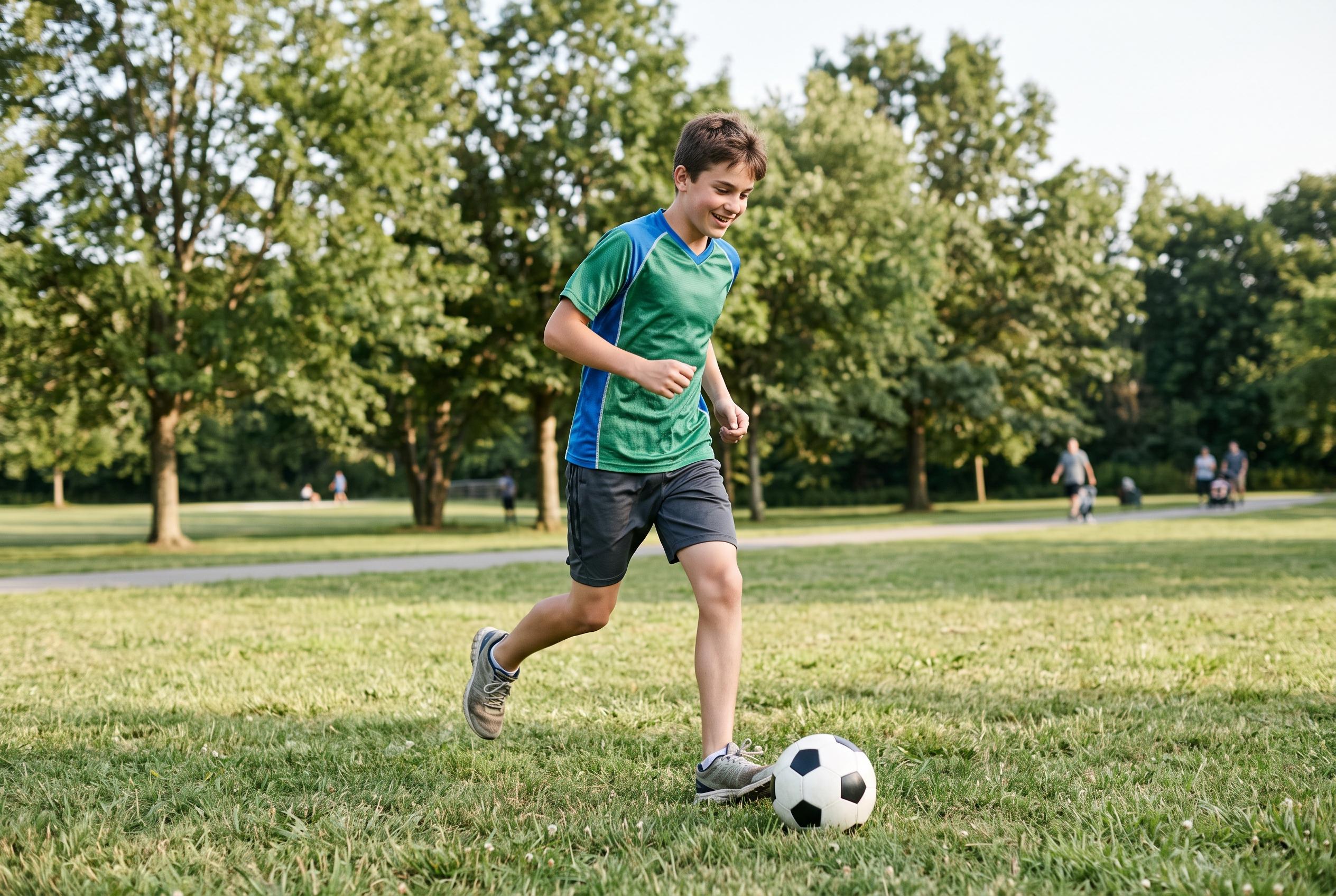

A recent study reveals that teenagers’ confidence in their physical abilities serves as a key link between movement and emotional skills, highlighting the importance of physical activity for holistic adolescent development.
A new study in Scientific Reports suggests that physical activity, social adaptation and emotional intelligence are linked in adolescents, with a teenager’s view of their own physical abilities emerging as a key bridge between movement and emotional skills. The research, which examined 616 students in grades 7 to 9 at four junior high schools in Xinjiang, China, found that connections within each area were stronger than links between different areas.
Researchers used surveys to look at vigorous and moderate activity, walking and sedentary time, alongside physical self-perception, physical self-efficacy and adjustment to the school environment. They also measured several parts of emotional intelligence, including recognising emotions, managing them, responding to other people’s feelings and using emotions in helpful ways. The clearest pattern was that physical self-perception , how confident students felt about their bodies and physical abilities , sat at the centre of the network.
The study found that vigorous activity was closely associated with physical self-perception, while that self-perception was in turn linked to managing emotions and using emotions to support motivation, problem-solving and decision-making. Sedentary behaviour, by contrast, had few strong ties to the other measures. The authors said the findings suggest movement should be seen as part of a broader whole-student picture rather than simply a fitness issue.
The new work fits with earlier research pointing in the same direction. A study in PubMed on 500 adolescents in Hunan Province found that physical activity significantly influenced emotional intelligence and positive emotions, with interpersonal forgiveness also playing a mediating role. Another study, published in PubMed and based on 600 adolescents in Changsha, found that moderate-to-vigorous physical activity was associated with better emotional intelligence and self-rated health, while lower psychosocial stress helped explain part of the relationship. Taken together, the studies suggest schools and families may be able to support adolescent wellbeing by creating more chances for regular movement, confidence-building activity and supportive routines.
Disclaimer: This content is for informational purposes only and is not intended to be a substitute for professional medical judgment, advice, diagnosis, or treatment.