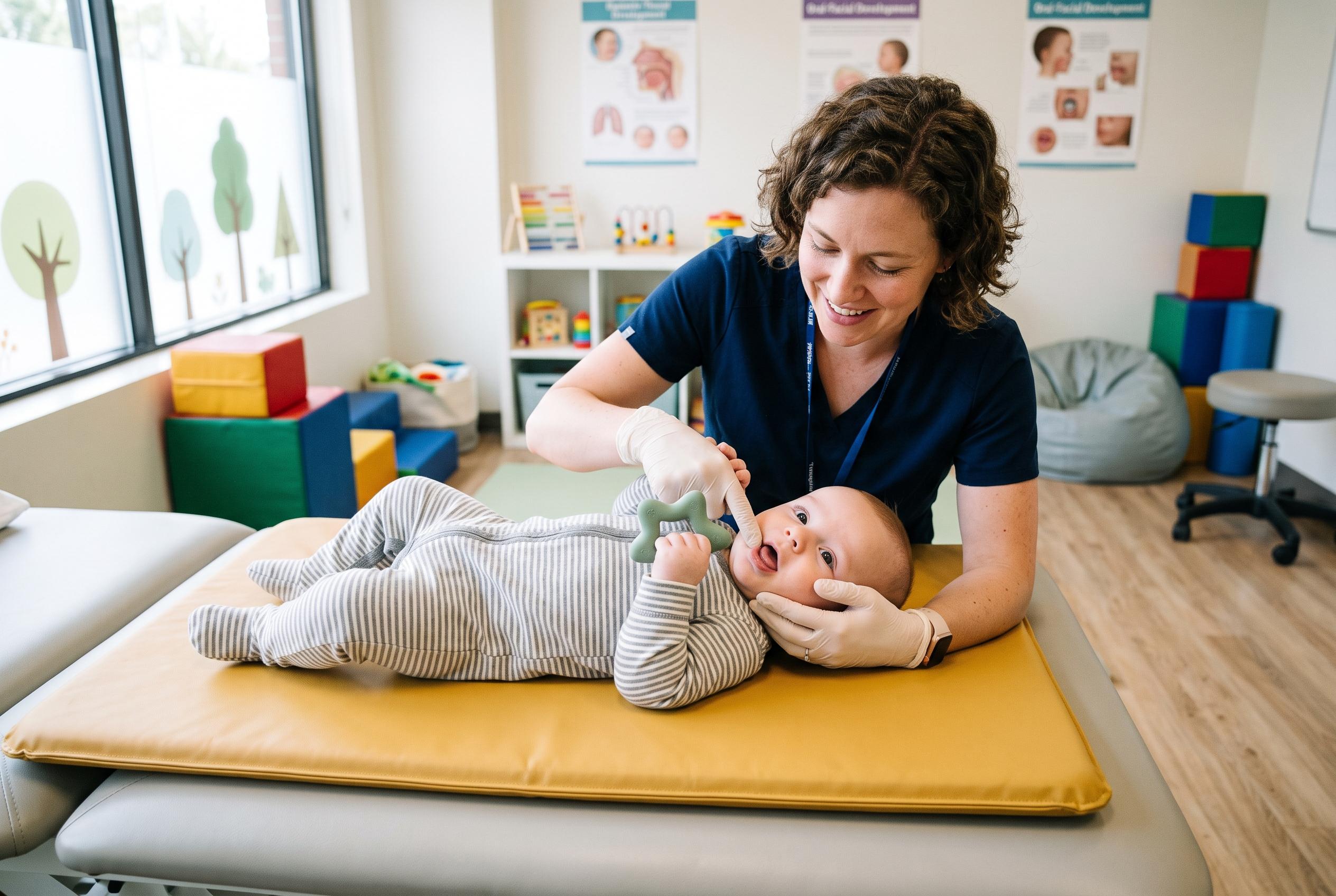

Research from Almeria indicates that a month of myofunctional therapy could improve feeding outcomes in infants with tongue-tie and lower surgical interventions, offering a potential conservative alternative.
Researchers in Almeria say a month of myofunctional therapy may help infants with tongue-tie breastfeed more effectively and could reduce the need for surgery, according to a randomised trial published in the Journal of Human Lactation. The study, led by teams from the University of Almeria and Torrecárdenas University Hospital, adds fresh evidence to a debate that has grown in recent years as parents and clinicians look for ways to ease feeding problems in babies diagnosed with ankyloglossia, the medical term for a restricted lingual frenulum.
The trial followed 200 infants, split evenly between those who received oral-motor stretches and massages and those whose families were given breastfeeding education alone. According to the article indexed on PubMed, the therapy group recorded better tongue function, stronger breastfeeding scores and less nipple pain for mothers. The researchers also found that babies in the therapy arm were more likely to avoid a surgical procedure, with an odds ratio of 4.63 and a statistically significant result.
That finding matters because the broader evidence base has been mixed. A systematic review published in 2022 found that surgery generally outperformed myofunctional therapy on its own, although combined treatment tended to do better than either approach separately. More recent trials have continued to show that frenotomy can improve breastfeeding and reduce pain, while different surgical methods, including laser and scalpel techniques, also appear to help. Against that backdrop, the Almeria study stands out for testing therapy as an early conservative option rather than only as a follow-up to surgery.
The authors say the results do not mean every baby with tongue-tie can avoid an operation, but they do suggest that function, not just appearance, should guide treatment decisions. In their view, better tongue movement and more successful feeding were closely linked, pointing to a practical role for myofunctional therapy in selected cases. For families and clinicians, the message is less about replacing surgery altogether than about having another evidence-based option before moving to the operating theatre.
Disclaimer: This content is for informational purposes only and is not intended to be a substitute for professional medical judgment, advice, diagnosis, or treatment.