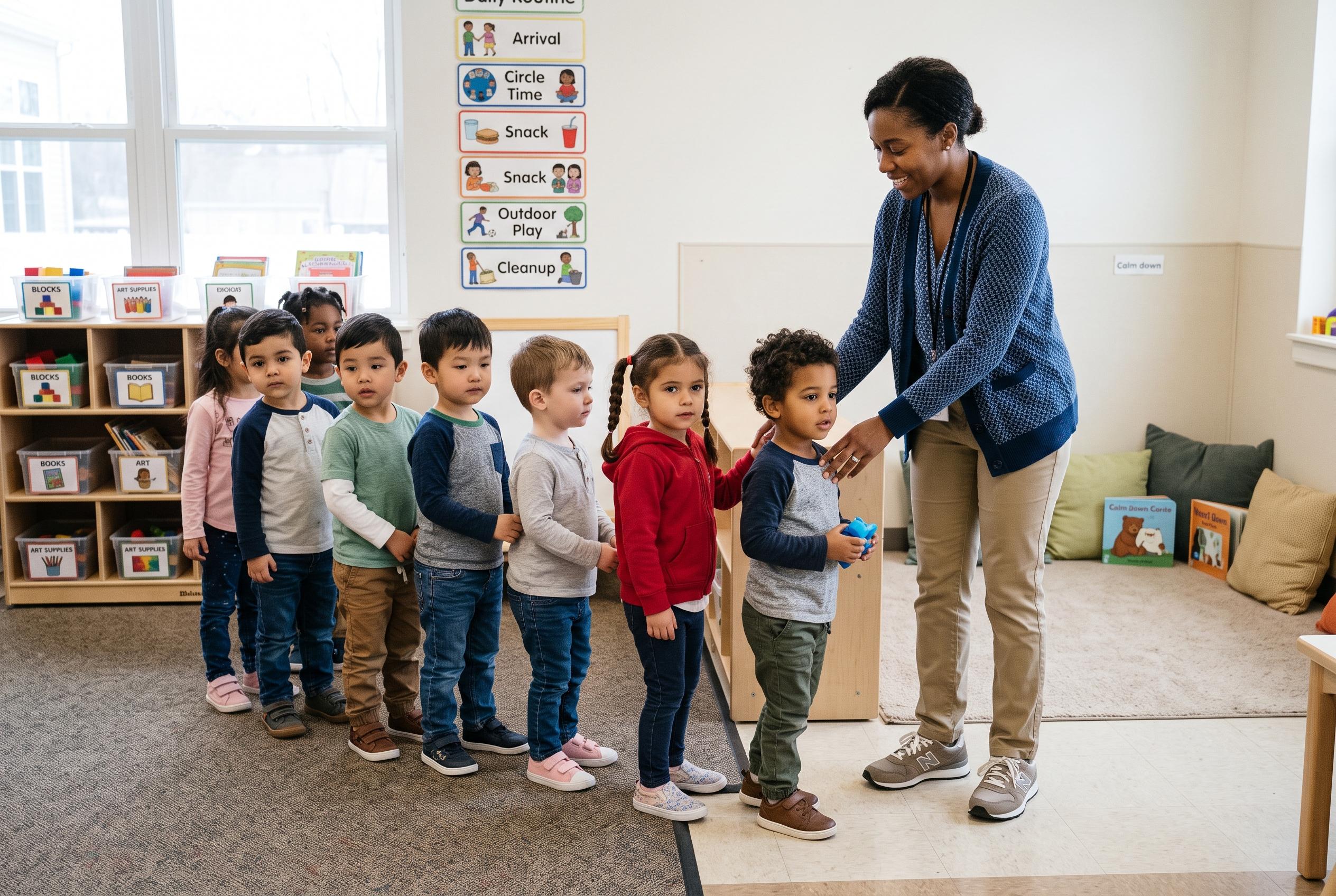

Effective classroom routines, when modelled, practised, and reinforced consistently, are key to establishing a secure, independent, and focused learning environment for young children, new research reveals.
In the first weeks of kindergarten, the most valuable lesson is often not reading or counting but learning how the classroom works. Educators and early childhood experts consistently say that clear routines give young children the structure and predictability they need to settle in, understand expectations and begin building independence. The Kindergarten Cafe argues that teachers who take time to teach routines carefully at the start of the year are far less likely to spend months dealing with avoidable disruption.
One of the most common missteps is assuming children will absorb a routine after hearing it once. The Kindergarten Cafe says kindergarten pupils need to see a procedure demonstrated clearly before they can reproduce it, while the Australian Education Research Organisation advises a step-by-step approach: introduce the routine, model it, provide practice and then reinforce it consistently. Scholastic makes the same point in its guidance on early childhood transition, noting that routines help 5- and 6-year-olds feel secure as they adjust to school.
Pacing matters as much as explanation. The Kindergarten Cafe warns that teachers often rush to academic content before habits are in place, but research-based guidance suggests that time spent on routines pays off later in fewer interruptions and more teaching time. Iowa E-Learning Central says predictable routines can also reduce behavioural problems and support emotional and social development, giving children a stronger sense of safety in the classroom.
Another frequent problem is expecting independence too soon. Young children may complete a task correctly once and still need many more chances before the routine becomes automatic. The Singapore? No, the provided sources from the Australian Education Research Organisation and the Journal of Family Theory & Review both point to repetition as central to self-regulation and confidence. In practice, that means teachers often need to break procedures into smaller steps, then add responsibility gradually as children succeed.
Routines also need revisiting. ASCD recommends reviewing and refining classroom procedures rather than treating them as one-time lessons, and Iowa E-Learning Central says visual supports can help reinforce expectations over time. The Kindergarten Cafe suggests quick refreshers before familiar activities, along with positive narration such as noticing when students are ready or following directions correctly. That kind of feedback helps children connect their behaviour with a smoothly running classroom.
Consistency is the final piece. If a teacher changes expectations from day to day, children quickly learn that the routine is optional. The Kindergarten Cafe stresses that the response must be the same every time, whether that means waiting for a quiet signal or stopping to reteach a transition that is not working. Early childhood specialists say flexibility still matters, because a routine that works for one class may need adjusting for another. The key is to reteach the new expectation from the beginning rather than assuming children will adapt on their own.
The broader message from classroom management research is simple: routines are not an administrative extra, but part of the curriculum of early schooling. When teachers model carefully, practise patiently and reinforce consistently, they create the conditions for children to feel safe, act independently and focus on learning.
Disclaimer: This content is for informational purposes only and is not intended to be a substitute for professional medical judgment, advice, diagnosis, or treatment.