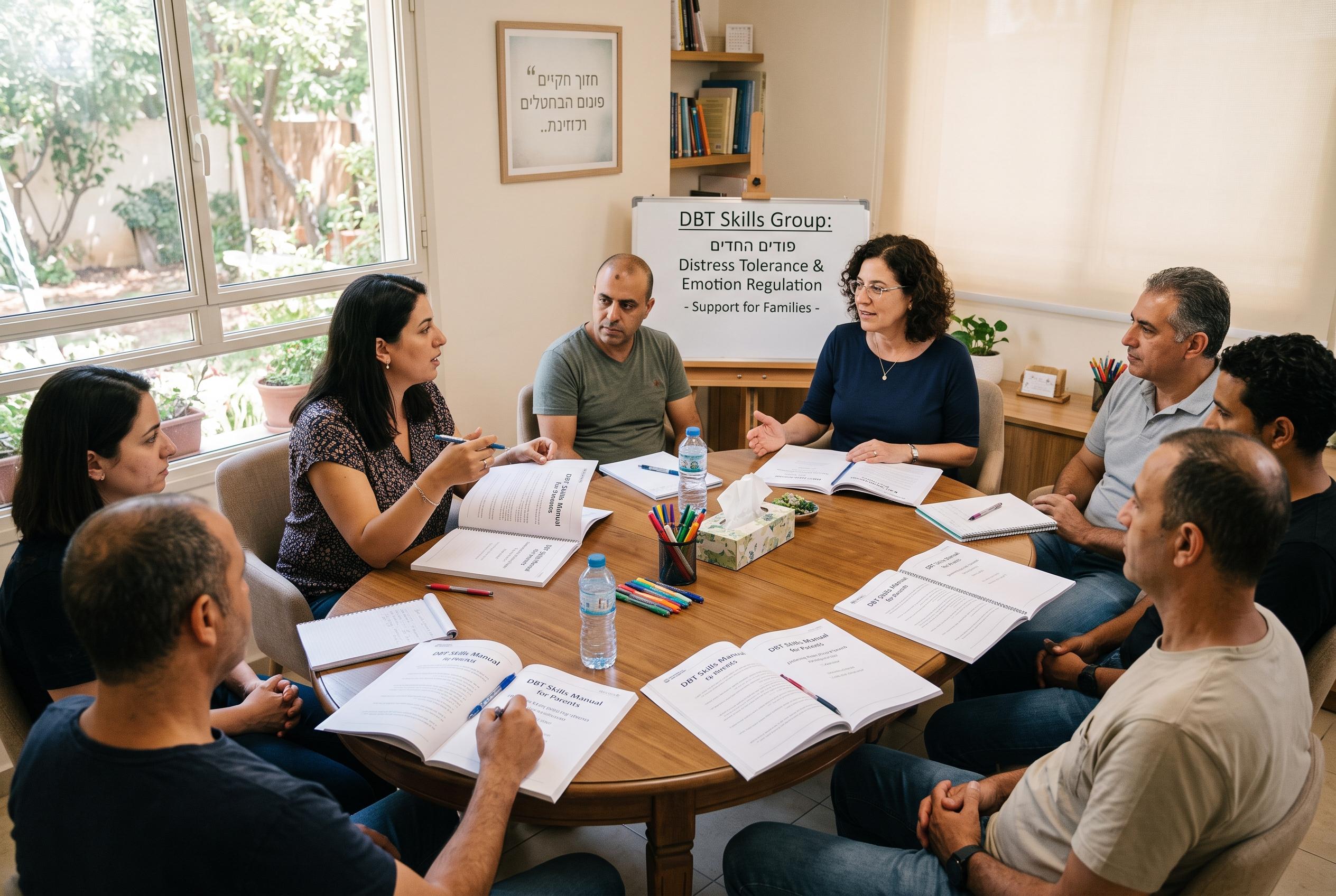

A pilot study conducted in Israel demonstrates that a parent-only DBT skills group can be effectively delivered in routine care to reduce parental helplessness and improve adolescent mental health, even in high-stress environments following recent terror attacks.
A pilot study in Frontiers in Psychiatry has found that a parent-only dialectical behaviour therapy skills group can be delivered in routine care for adolescents at high risk of self-harm and suicide, with early signs of benefit for both families and young people. The programme, run in a public mental health setting after the October 7 attack and during the continuing war in Israel, enrolled 41 parents of 32 adolescents aged 12 to 18 who were struggling with severe emotion dysregulation, self-harm or a previous suicide attempt.
Researchers reported that 95.3% of parents who started the 20-session group completed it, suggesting the model is workable in a strained service environment. According to the study, parents showed marked reductions in helplessness and family power struggles after treatment, and those improvements were still evident at 3-month follow-up. The adolescents’ overall clinical severity, rated independently by blinded clinicians using the Clinical Global Impression scale, also improved by follow-up.
The findings matter because the study was designed for a period of intense collective stress. The authors linked the need for the intervention to the psychological toll of war and terrorism on Israeli adolescents, alongside long wait times and limited capacity in the public mental health system. They argued that focusing on parents may be especially useful when teenagers are unwilling or unable to engage reliably in treatment, a common problem in crisis cases.
The group followed standard DBT skills training, with sessions on mindfulness, validation, emotion regulation, distress tolerance and interpersonal effectiveness. Parents also reported a short-term increase in cognitive reappraisal, a strategy that involves reframing stressful situations, while broader measures of adolescent difficulties improved only modestly. The strongest and most sustained change was a drop in parental helplessness, which the authors said may be central to reducing conflict at home and helping adults respond more effectively during crises.
The study is only a pilot and had no control group, so it cannot prove the gains were caused by the programme. Even so, the results add to a growing body of research suggesting that family-based DBT approaches may help reduce self-harm risk. Other recent studies cited by the authors, including work on parent-adolescent DBT skills training and caregiver-focused DBT groups, have also pointed to improvements in family interaction, mood symptoms and treatment stability.
Disclaimer: This content is for informational purposes only and is not intended to be a substitute for professional medical judgment, advice, diagnosis, or treatment.