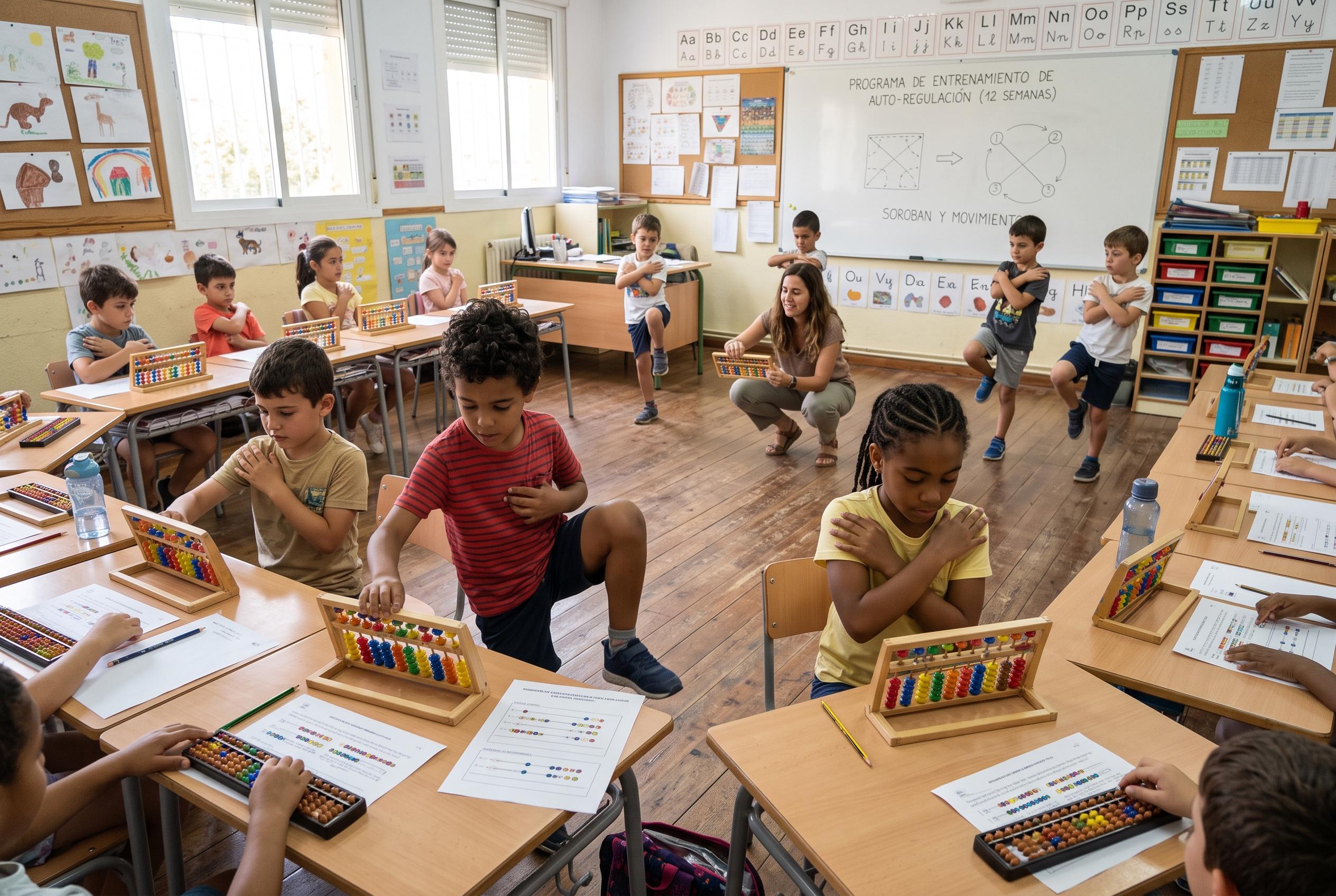

A 12-week school-based programme in Spain integrating motor activities with soroban abacus training shows promising effects on young children’s self-regulation, emotional regulation, and classroom adjustment, highlighting innovative approaches to early education.
Researchers in Spain say a 12-week school-based programme that combined motor games with soroban abacus training was linked to better self-regulation, emotional regulation and classroom adjustment among young primary pupils, adding to a growing body of work on integrated physical and cognitive learning. The study, published in Frontiers in Psychology, involved 82 children in the first cycle of primary school and compared an intervention group with a control group that followed the regular curriculum.
According to the article, the children who took part in the programme were assessed before and after the intervention using validated questionnaires completed by the children themselves and by teachers. The researchers report that the experimental group improved on the study’s main outcomes, with moderate to large effects on self-regulation and emotional regulation, alongside gains across several measures of school adjustment. Those measures included emotional symptoms, behavioural difficulties, peer problems, hyperactivity and prosocial behaviour.
The intervention was delivered during physical education lessons and paired movement-based tasks with progressively more demanding abacus exercises. The authors say the sessions were designed to challenge attention, planning, inhibition and emotional control at the same time, using cooperative games, balance drills, relay activities and staged soroban practice. They argue that this kind of combined training may be especially useful in early schooling, when executive functions and social-emotional skills are still developing rapidly.
The findings fit with other recent research suggesting that structured movement can support cognition and behaviour when it is paired with a clear learning goal. A related study in Frontiers in Physiology reported gains in self-regulation, emotional regulation and school adjustment after a similar physical-cognitive programme, while a study indexed by PubMed found improvements in flexibility and motor coordination from abacus-plus-exercise training. Another trial published in Education Sciences reported better attention, memory and impulsivity control after abacus and exercise sessions.
Still, the Frontiers in Psychology paper stresses caution. The sample was small, the analysis relied on per-protocol data and there was no follow-up to show whether the effects lasted. The authors also note that some of the school-adjustment results were exploratory and not adjusted for multiple comparisons, which means they should be treated as preliminary until larger confirmatory studies are completed.
Disclaimer: This content is for informational purposes only and is not intended to be a substitute for professional medical judgment, advice, diagnosis, or treatment.