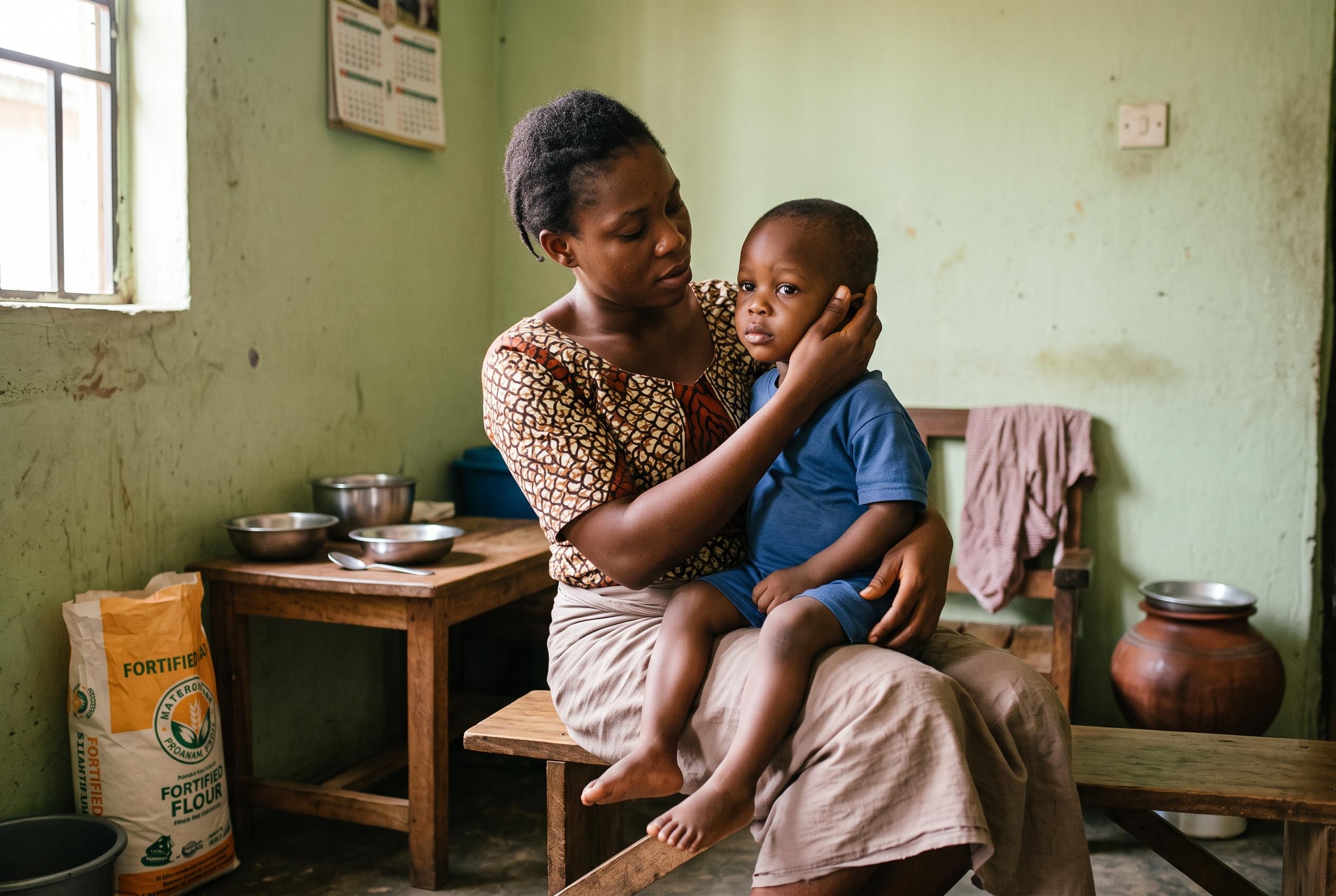

A new analysis highlights that Nigeria’s ongoing child stunting epidemic could result in a $412 billion economic loss by 2043, urging urgent shifts towards early-childhood nutrition and maternal health investments to safeguard the nation’s future growth.
Nigeria’s long-running child stunting crisis could shave hundreds of billions of dollars off growth by the time today’s young children reach adulthood, according to a new policy analysis that argues the country’s economic ambitions will remain hollow without a major shift towards nutrition and early-childhood investment. The report, published on July 7, says the cost of inaction could amount to $412 billion in lost gross domestic product by 2043 if current trends continue, with the burden concentrated in the North West and North East. It argues that stunting is not a historical footnote but an active national emergency, affecting about 40% of children under five and leaving deep and lasting damage that begins before birth and can echo through education, earnings and public finances.
The analysis says the scale of the problem is visible in Nigeria’s own health data, which has kept child stunting between 37% and 43% across surveys since 1990. It estimates that 119 million Nigerians were born stunted between 1960 and 2025, with about 76 million still alive. State figures underline the regional divide: Jigawa, Kebbi and Zamfara record the highest levels, while Lagos, Anambra and Enugu are among the lowest. Using the World Health Organisation and Unicef’s classification, the report says 33 of Nigeria’s 37 states and the Federal Capital Territory fall into the “high” or “very high” bands. But it also warns against turning the numbers into ethnic or regional stereotypes, stressing that the data map policy failure, not any group’s capability.
The report links the crisis to poverty, weak health coverage and poor maternal nutrition. It says Nigeria’s 2022 Multidimensional Poverty Index shows child poverty above 90% in the North West and North East, compared with 74% in the South East and 65% in the South West, helping explain why patronage politics thrives where deprivation is deepest. It also points to maternal undernutrition and anaemia as upstream drivers, noting low birth weight greatly raises the risk of later stunting. The analysis cites national figures showing 63% antenatal care coverage, only 24% of women beginning care in the first trimester and maternal anaemia at about 61%. Research presented alongside the report also finds that the affordability of healthy diets is strongly associated with community-level stunting in Nigeria, with hotter and drier areas facing a steeper burden.
To argue that Nigeria has no excuse for delay, the report invokes Obafemi Awolowo’s 1955 free primary education drive in the old Western Region as a home-grown example of putting human development ahead of prestige infrastructure. It says the critical window runs from conception through age 5, not merely the first 1,000 days, and calls for a national early-childhood feeding and stimulation programme tied to pre-primary schooling. The report also says the country should prioritise maternal and antenatal nutrition before wider postnatal interventions. Its broader warning is political as much as economic: a nation that treats child nutrition as secondary, the analysis argues, cannot credibly claim to be building a $1 trillion economy.
Disclaimer: This content is for informational purposes only and is not intended to be a substitute for professional medical judgment, advice, diagnosis, or treatment.