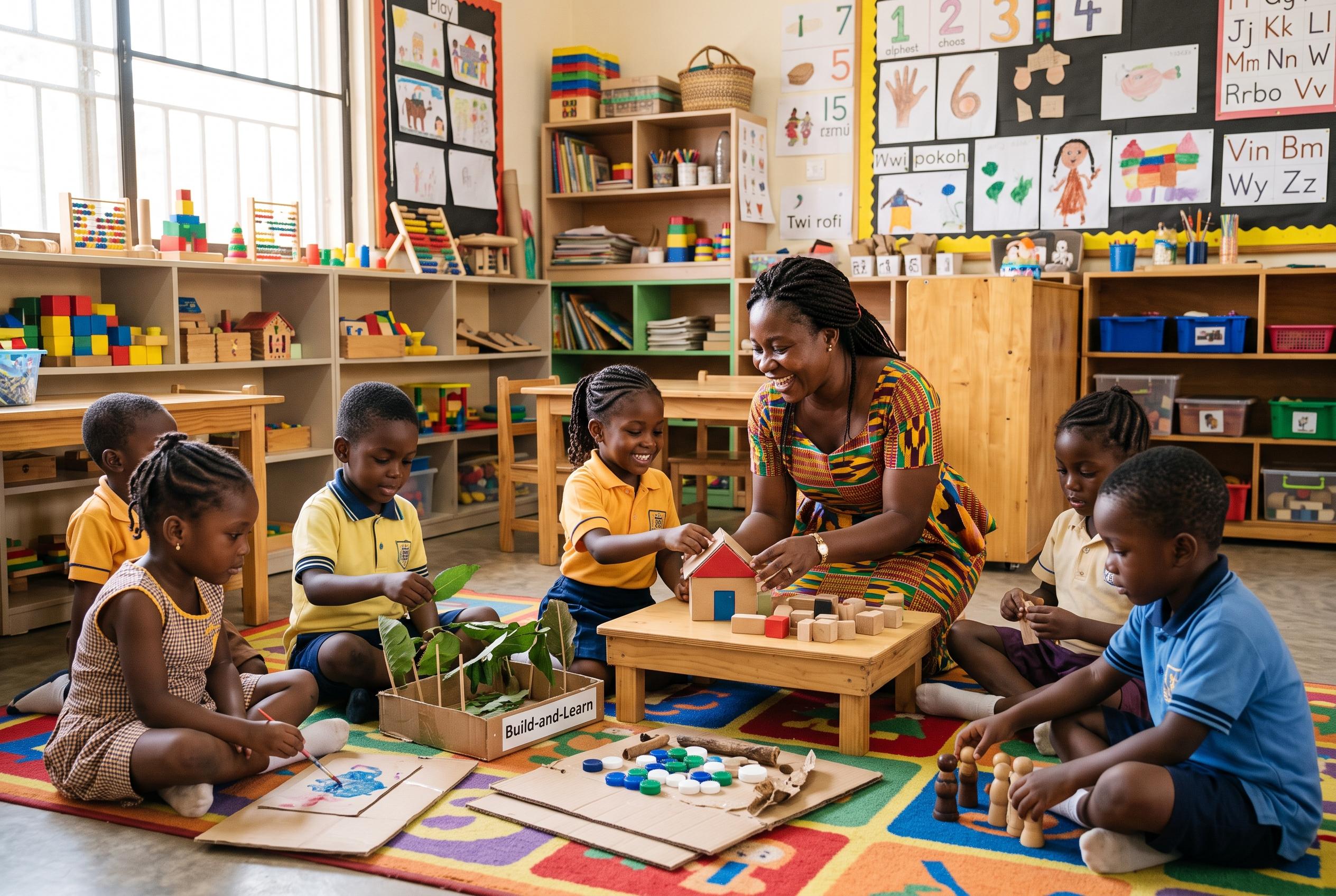

The UK-based NGO Sabre Education has been recognised by the Khalifa Award for its innovative play-oriented teacher training in Ghana, underscoring the global shift towards scalable, quality early childhood development methods.
The Khalifa Award for Education has highlighted Sabre Education as a model for early-years teaching, saying the UK-based non-governmental organisation won in the programmes, curricula and teaching methods category for its play-based teacher training approach. The award’s organisers said the recognition reflects the growing international focus on high-quality early learning and on methods that can be scaled sustainably in public systems.
According to the award announcement, Sabre Education’s work with the Government of Ghana has helped spread a teaching model built around learning through play, with training designed to help teachers create child-centred classrooms. The organisation says its wider mission is to influence policy and practice in early childhood education, improve learning environments and support universal access to quality pre-primary education in Ghana by 2030.
Hamid Al Houti, secretary-general of the Khalifa Award for Education, said the early-learning category is important because it shines a light on strong scientific and practical approaches to supporting young children. He added that the award is intended to recognise initiatives that generate positive human impact. Sabre Education’s chief executive, Susan Everhart, said the charity was proud of the recognition and described the group as an international non-governmental organisation working with governments to strengthen early childhood education in Ghana and across sub-Saharan Africa.
Sabre Education, which was established in 2004, says its work has focused on teacher development, policy influence and improving classroom environments for young children. The charity has argued that play-based learning can help create more effective kindergarten systems at relatively low cost, particularly in countries where access to early childhood education remains limited.
Disclaimer: This content is for informational purposes only and is not intended to be a substitute for professional medical judgment, advice, diagnosis, or treatment.