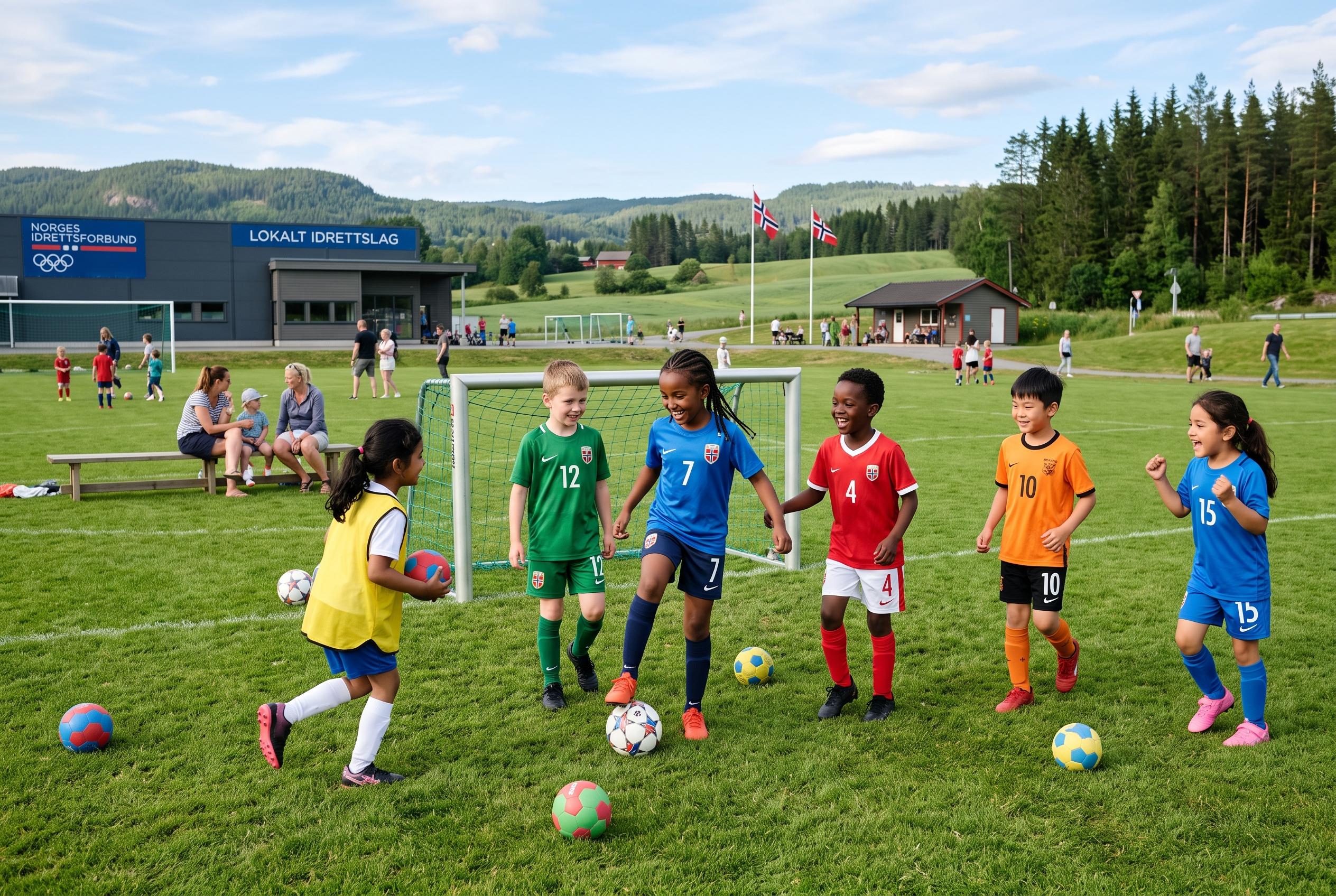

Experts warn that focusing on early talent pathways and commercial programmes risks creating barriers to participation, especially for girls with minority backgrounds, potentially undermining the principle of ‘Idrettsglede for alle’.
If Norwegian sport wants “Idrettsglede for alle” to mean what it says, it cannot only think about how to bring more girls with minority backgrounds into clubs. It also has to ask whether children’s sport is becoming harder to enter in the first place.
That is the argument made by Åse Mørkve and Ezinne Okparaebo, who warn that early specialisation, talent tracks and greater parental involvement are reshaping grassroots sport. In their view, more children are being exposed to academy-style environments and commercial programmes long before their teenage years, often in ways that favour families already fluent in sporting culture.
Their concern is not just social, but practical. Research from Johns Hopkins Medicine and a systematic review on youth sport specialisation both point to the risks of focusing on one sport too early, including overuse injuries, burnout and higher drop-out rates. The evidence suggests that broad participation through the middle teenage years tends to support healthier long-term development than year-round specialisation in a single discipline.
Mørkve, drawing on her doctoral work, says girls with minority backgrounds often describe sport as a source of joy and belonging, but also as a place marked by economic, cultural and language barriers. A report from the Research Centre for Child and Youth Sport similarly highlights those obstacles, while wider research on girls’ participation shows that costs, social pressure and weak support can push them out during the years when involvement matters most.
The wider point is that inclusion cannot be reduced to recruitment alone. If sport becomes more dependent on money, time, insider knowledge and early performance pathways, it risks serving those already inside the system while raising the barrier for everyone else. That, Mørkve and Okparaebo argue, would leave Norwegian sport less open, not more.
Disclaimer: This content is for informational purposes only and is not intended to be a substitute for professional medical judgment, advice, diagnosis, or treatment.