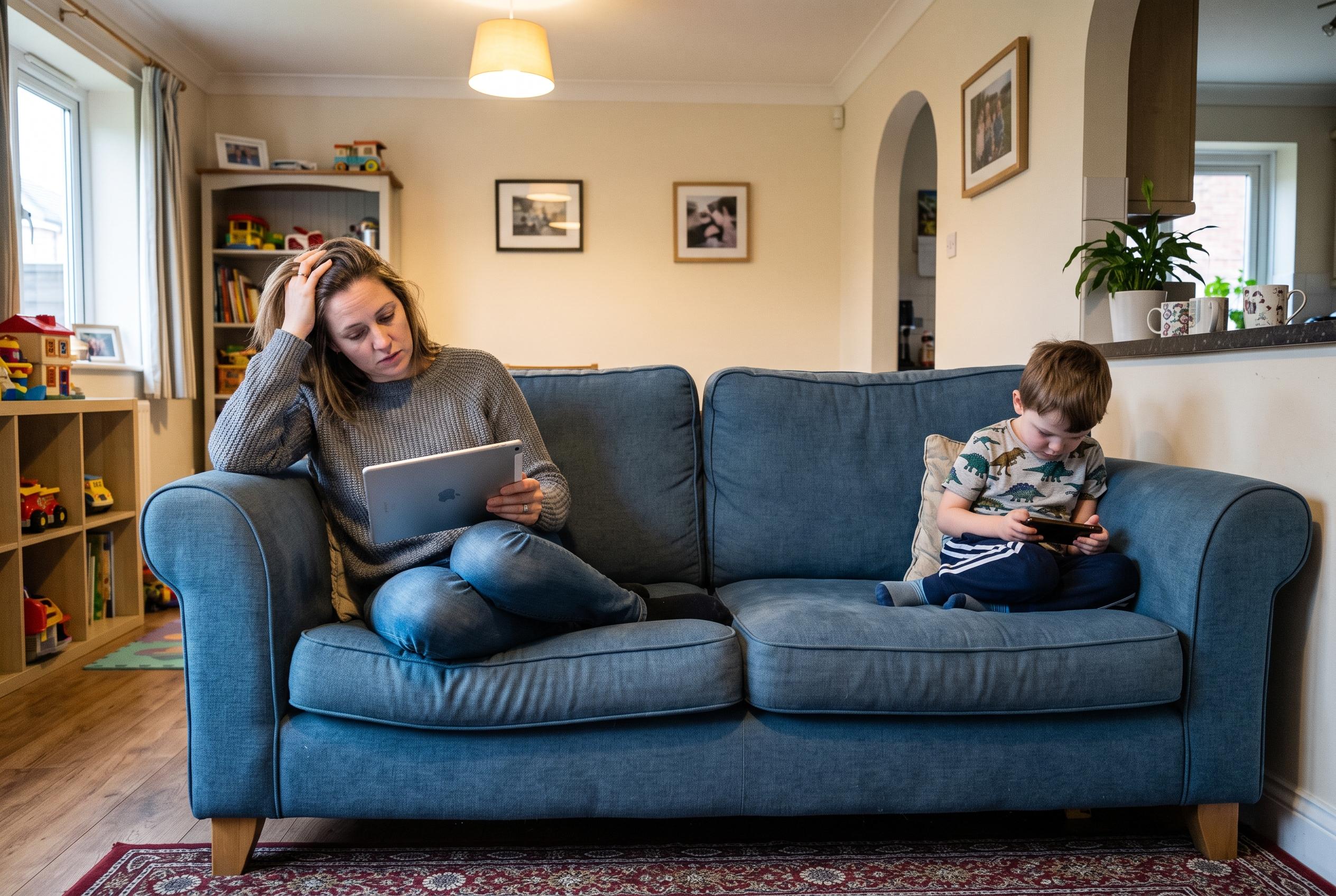

Research from Florida International University reveals that parental stress influences young children’s screen use more than behaviour, prompting calls for focused support and clearer boundaries.
New research from Florida International University suggests the biggest driver of a young child’s screen time may be the parent’s stress level, not the child’s behaviour. In a survey of 822 caregivers of children ages 4 to 8, researchers at FIU’s Center for Children and Families found that stressed parents were more likely to hand over a phone or tablet to keep a child occupied or soothed, and less likely to enforce limits once screens were in use.
The study’s practical advice starts with adults: parents should seek support for their own stress before focusing only on the child’s device use. The researchers also recommend setting clear limits, choosing age-appropriate content and making time for shared parent-child activities that reduce reliance on screens as a default calming tool. FIU has made similar recommendations in earlier guidance, including using media more intentionally rather than treating it as a guilt-free free-for-all.
The findings fit a broader body of research linking heavy screen exposure with child well-being. A 2024 study published in BMC Public Health found higher screen use was associated with more depression, anxiety and irritability in 9- and 10-year-olds, with the strongest risks tied to video chatting, watching videos and playing games. The U.S. Surgeon General has also warned that excessive screen time can affect children’s emotional, cognitive and physical development.
Another study published in Family Relations found that higher parenting stress was associated with more screen time in children, reinforcing the idea that media habits at home are closely tied to caregiver well-being. FIU psychologists have long advised parents to use technology with purpose, build in breaks and, when possible, steer children toward social or educational uses that do not crowd out other healthy routines.
Disclaimer: This content is for informational purposes only and is not intended to be a substitute for professional medical judgment, advice, diagnosis, or treatment.