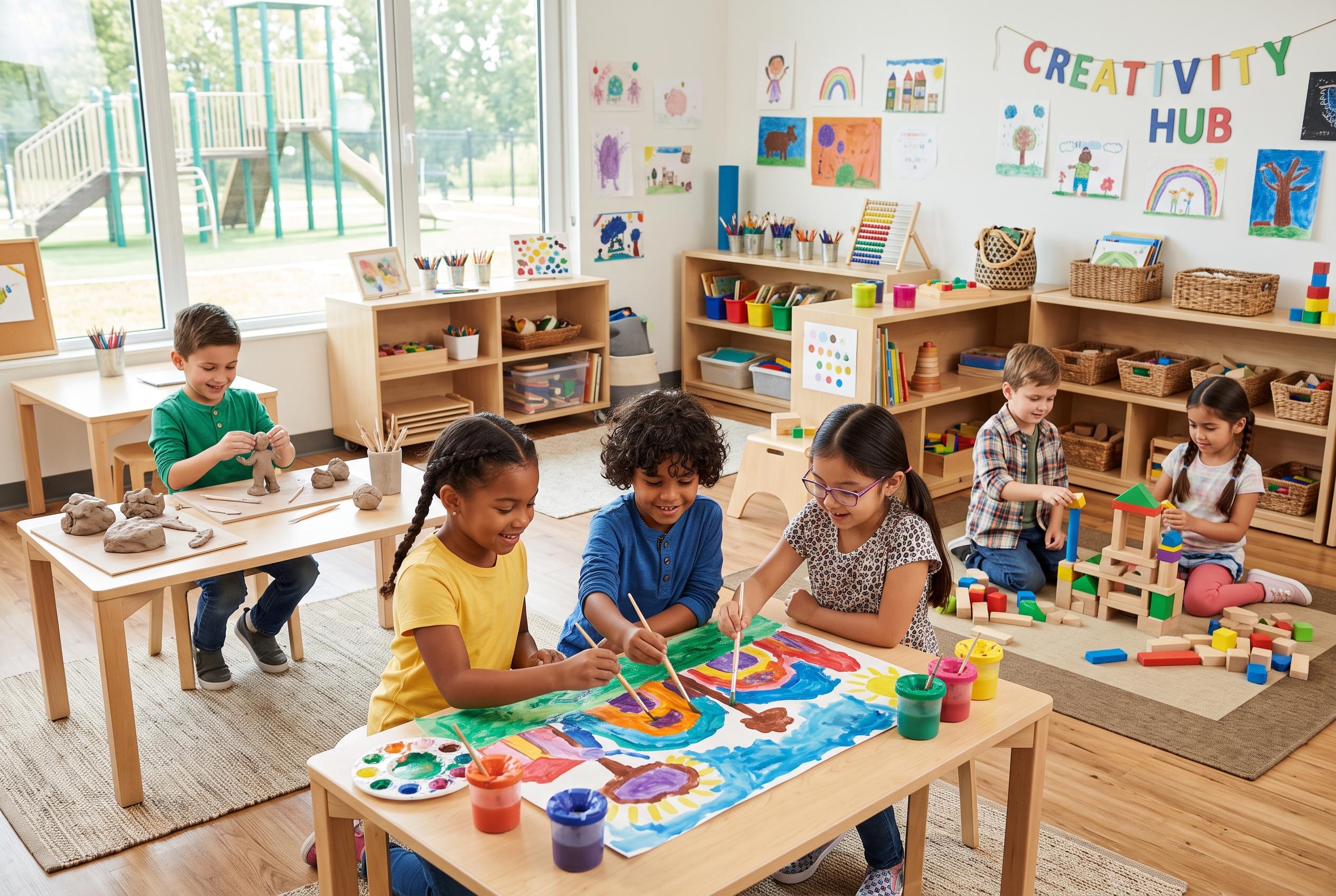

As artificial intelligence advances in mimicking human creative outputs, educators emphasise the importance of arts education in fostering imagination, empathy, and collaboration, skills that machines cannot replicate and which are vital for children’s future resilience.
As artificial intelligence grows more capable of producing text, images, music and video, the question for parents is no longer whether machines can imitate creativity, but what kind of human abilities children need to stand apart from them. The answer, the case for arts education suggests, lies in the skills technology cannot genuinely replicate: imagination, empathy, collaboration and emotional expression. The National Endowment for the Arts says childhood arts experiences are linked with stronger academic and social outcomes, while Brookings has argued that the arts help children confront different perspectives and reflect on the human condition.
That is one reason educators and arts advocates say music, drama, dance and visual art should not be viewed as optional enrichment. Child Trends says arts participation is associated with better academic performance, stronger literacy, more civic engagement and a greater likelihood of continuing to post-secondary education. The Wallace Foundation has also pointed to the role arts education can play in helping children build social bonds, improve behaviour and strengthen cognition.
The benefits are not limited to the arts classroom. Creative activities can support learning across subjects by reinforcing pattern recognition, sequencing, spatial reasoning and communication. Arts Council Oklahoma City says arts programmes can also improve attendance, reduce misconduct and support graduation, especially when instruction is sequential and taught by trained teachers. For children, the value is practical as well as expressive: making music, acting in a play or painting a picture requires problem-solving, persistence and teamwork.
The article’s central argument is particularly relevant in Tennessee, where public schools are required to provide visual art and music in kindergarten through eighth grade and high school students must earn a Fine Arts credit to graduate. Even so, the deeper point is that children encounter the arts long before formal lessons begin. They invent stories, sing made-up songs, dance in living rooms and turn ordinary objects into props for play. Those moments, arts advocates say, are not trivial.
In an AI-shaped future, the case for encouraging that kind of creativity becomes stronger, not weaker. Machines may generate polished results, but they do not feel joy, disappointment or hope as they create. They do not learn how to read a room, share an idea or comfort an audience. That is why arts education is increasingly being framed not as a luxury, but as part of raising resilient, imaginative and socially aware children.
Disclaimer: This content is for informational purposes only and is not intended to be a substitute for professional medical judgment, advice, diagnosis, or treatment.