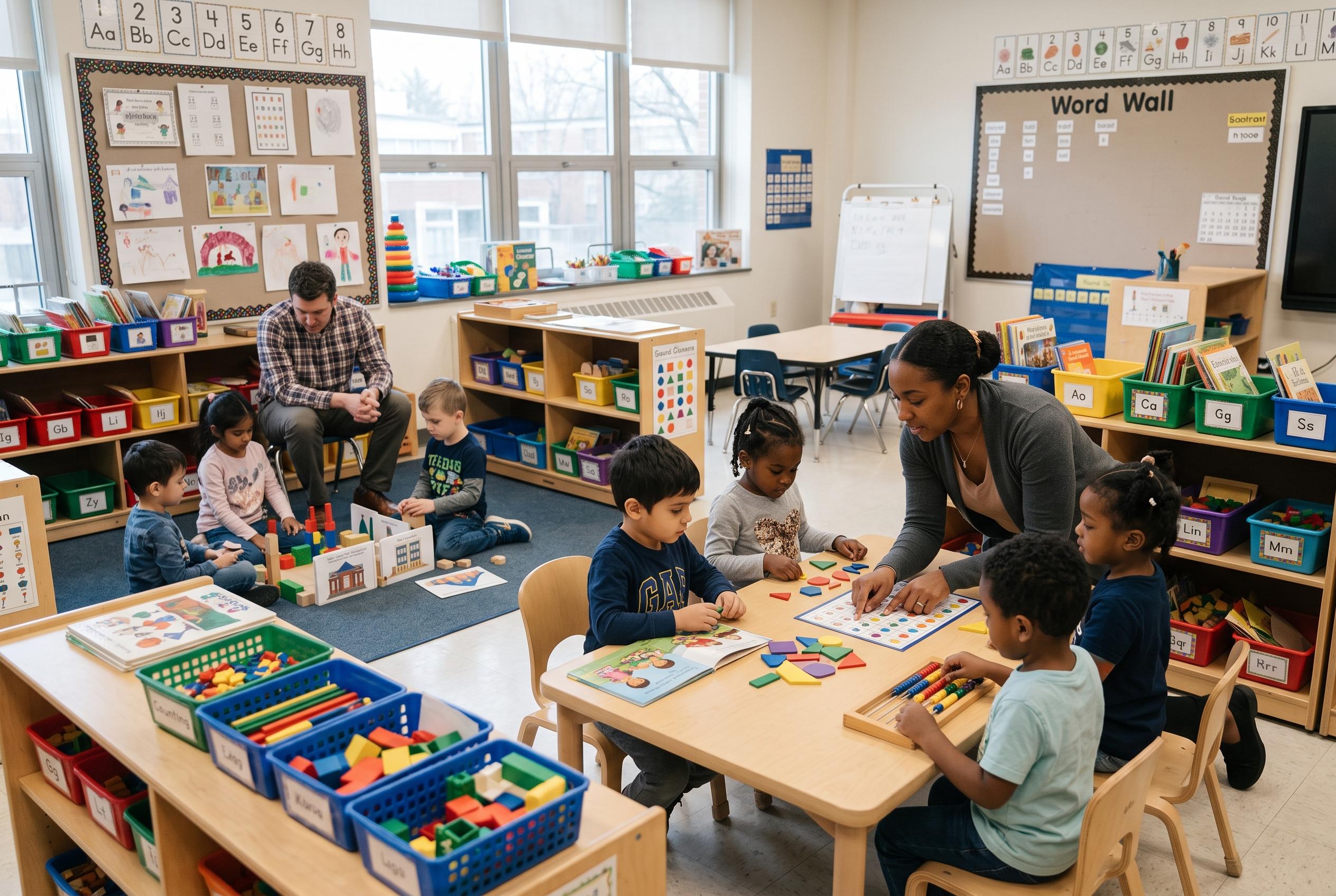

A two-decade study in Miami-Dade County finds children attending public school pre-kindergarten outperform peers in later academic milestones, highlighting the role of teacher preparation and the potential for lasting educational advantages.
A long-running study in Miami-Dade County has found that children who attended public school pre-kindergarten outperformed peers from other child care settings all the way through high school. Researchers tracked 400,000 public school students over two decades and found that those who started in public school pre-K scored higher on standardised tests and earned better grades later in their schooling, according to the paper published in Early Childhood Research Quarterly.
The findings add weight to earlier Miami research showing that public school pre-K children were more likely to enter kindergarten ready to learn than children in centre-based or family child care. Those earlier studies focused on low-income and ethnically diverse children in the city, where a large Hispanic population gave researchers an unusually substantial sample to examine. The newest analysis suggests the advantage did not fade after entry to school but continued into adolescence.
One factor that stood out was teacher preparation. Public school pre-K was the only setting in the comparison group that required lead teachers to hold a college degree, and the researchers argued that more formal training may have improved classroom quality. That interpretation fits with earlier work suggesting that structured preschool can help children arrive at school with stronger academic skills, although other research has found the benefits of pre-K can be more mixed once children are in the primary grades.
The broader debate remains whether early education works best as a short-term school-readiness boost or as a lasting academic intervention. A Russell Sage Foundation report found that some prekindergarten gains in reading and maths at school entry can fade by first grade, even as behavioural effects linger. The Miami study, by contrast, points to a more durable pattern when children attend public school pre-K, and its authors say the lesson may be less about one model replacing all others than about borrowing what works from public school classrooms and applying it more widely.
Disclaimer: This content is for informational purposes only and is not intended to be a substitute for professional medical judgment, advice, diagnosis, or treatment.