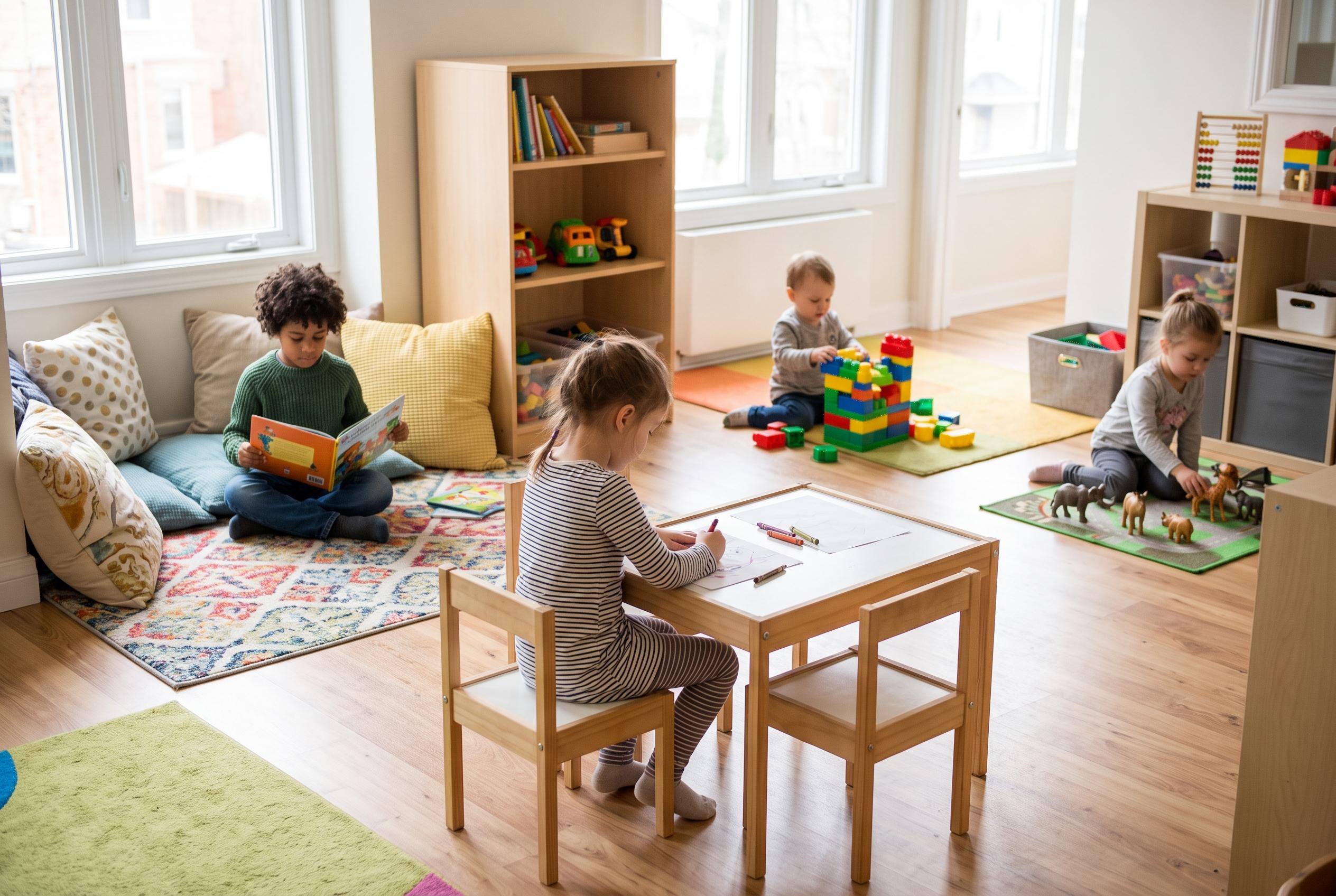

New studies reveal that children who prefer playing alone are often not socially isolated or unhappy, highlighting the importance of context and individual preferences in childhood development.
New research suggests that children who prefer to play alone are not automatically unhappy or socially adrift. A study published in The Elementary School Journal and highlighted by Nautilus found that some fourth- and fifth-graders who were seen by classmates as keeping to themselves still reported solid one-to-one friendships and, in some cases, a healthy sense of belonging in class. That distinction matters because it suggests solitary play can be a preference rather than a warning sign. The Wiley study on solitary play reaches a similar conclusion, saying this behaviour can be a normal part of development when it is not tied to distress or isolation.
The University of Georgia researchers surveyed more than 470 pupils and asked them to identify peers who liked to play alone even though they were generally well liked. They then measured the children’s own views of their friendships and their place in the wider group. Children labelled as solitary were, on average, less satisfied with their standing in the class, but that picture changed when a child placed greater importance on belonging. Those pupils tended to feel better about both their close friendships and their broader social lives, suggesting that a sense of membership in the group may soften the emotional cost of being different.
That finding fits with earlier research showing that not all quiet play is the same. A longitudinal study on nonsocial peer behaviour found links between persistent withdrawal, stronger emotionality and lower social competence, while a chapter on solitary play argues that context and individual differences are crucial in judging whether time alone is healthy or a sign of trouble. Other work on children’s use of time also suggests that social development is shaped by how children divide their days, not simply by whether they play alone at times.
For parents and teachers, the practical lesson is not to push every reserved child into the biggest, loudest game on the playground. The researchers suggest that smaller, more familiar settings may work better for children who prefer solo play, especially if they are hesitant about large groups. That advice is consistent with playground research showing that some solitary behaviour is ordinary, but can become more concerning when it lasts and begins to limit a child’s social opportunities. In other words, the goal is not to eliminate alone time, but to make sure it remains a choice rather than a dead end.
Disclaimer: This content is for informational purposes only and is not intended to be a substitute for professional medical judgment, advice, diagnosis, or treatment.