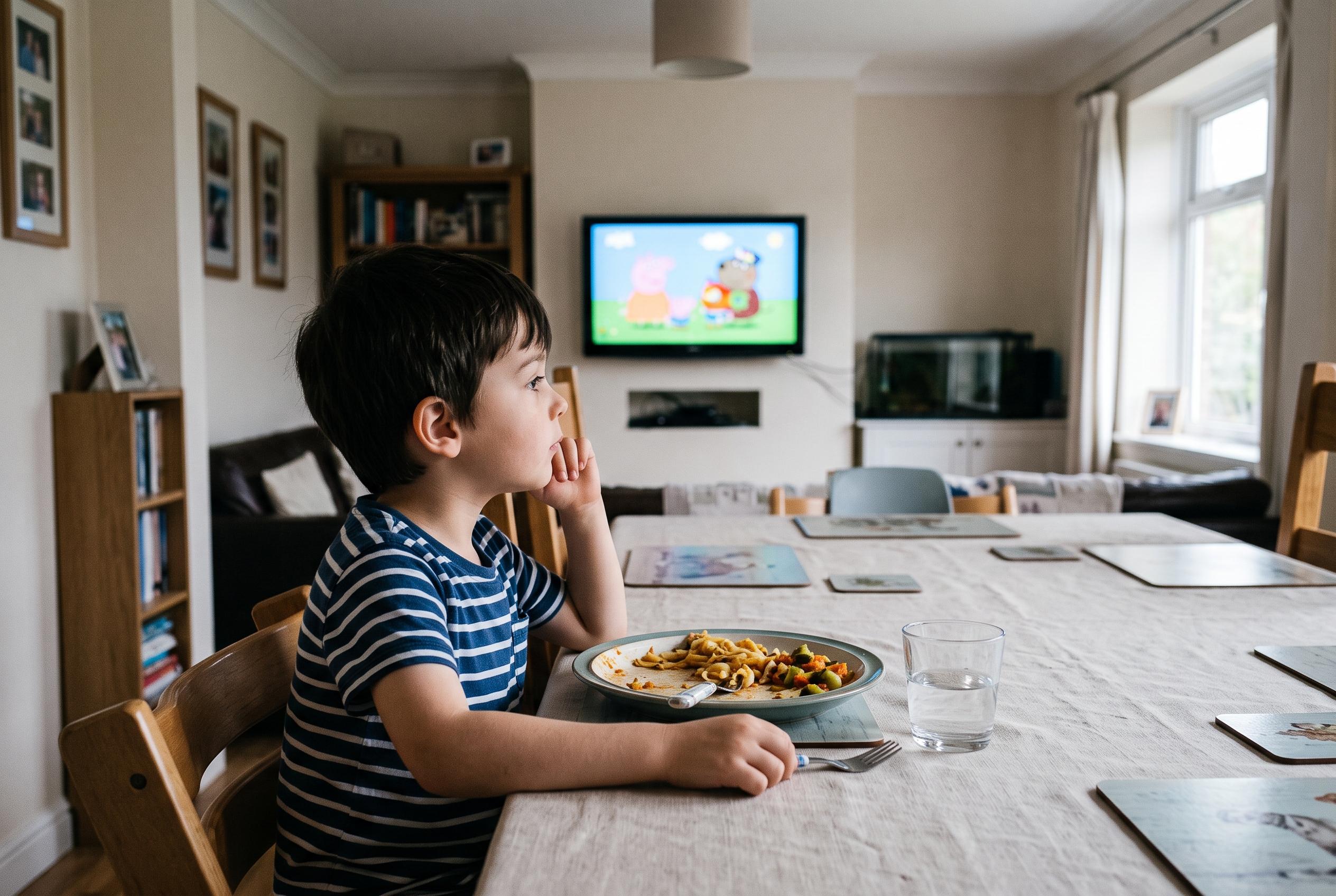

New research suggests that watching television while eating can diminish meal awareness, affect satisfaction, and promote overconsumption, especially in children, raising concerns over diet quality and obesity risk.
Eating while watching television may feel harmless, especially if the food is a bowl of vegetables or wholegrains rather than crisps or sweets. But research increasingly suggests that the screen itself can alter how much people eat, how well they remember it and even how satisfied they feel afterwards.
One of the main explanations is distraction. When attention is pulled into a programme, people may miss the internal signals that tell them they are full. A study discussed by BBC Science Focus, drawing on data from the Netherlands, found that people spent longer eating on the days when they ate while watching television, which researchers interpreted as a sign that the meal had been less fully registered in the moment. Other work published in Appetite found that snacking in front of the television reduced recall of what had been eaten and encouraged greater intake later.
The effect appears to go beyond simple forgetfulness. Studies in cognitive psychology suggest that when people are distracted, food can seem less rewarding, which weakens the sense of satisfaction that normally ends a meal. Research cited by the BBC also indicates that mental load can change how people experience taste, with some participants reporting that food seemed less sweet when they were forced to hold longer numbers in working memory while eating.
Advertising makes the picture more complicated, particularly for children. A study in the International Journal of Obesity found that exposure to food advertising increased children’s tendency to choose advertised foods, with the effect stronger in those genetically more responsive to food cues. Separate research published in the Journal of Public Policy & Marketing found that television viewing was linked with later obesity in children aged 7 and older, especially when unhealthy food marketing was part of the viewing environment. Other trials have shown that both television and online food adverts can raise children’s energy intake.
Family meals are not automatically protective if a screen is on in the room. Research in Public Health Nutrition found that television during family meals was associated with poorer diet quality and a less positive emotional atmosphere at the table. In other words, the screen can interfere not only with eating behaviour but with the social setting around the meal.
That does not mean every distracted meal leads to overeating. A study in the journal Appetite found that some people ate less when their attention was absorbed by a programme they had already seen, suggesting that boredom and engagement may matter as much as distraction. Another study of restrained eaters found that walking while eating encouraged more calorie intake, showing that the effects of distraction can depend on context and the kind of behaviour involved.
Still, the broad message is that screen time can make eating less mindful and less predictable. For those trying to manage appetite or improve diet quality, the safest approach may be simple: if the meal matters, the screen probably should not be part of it.
Disclaimer: This content is for informational purposes only and is not intended to be a substitute for professional medical judgment, advice, diagnosis, or treatment.