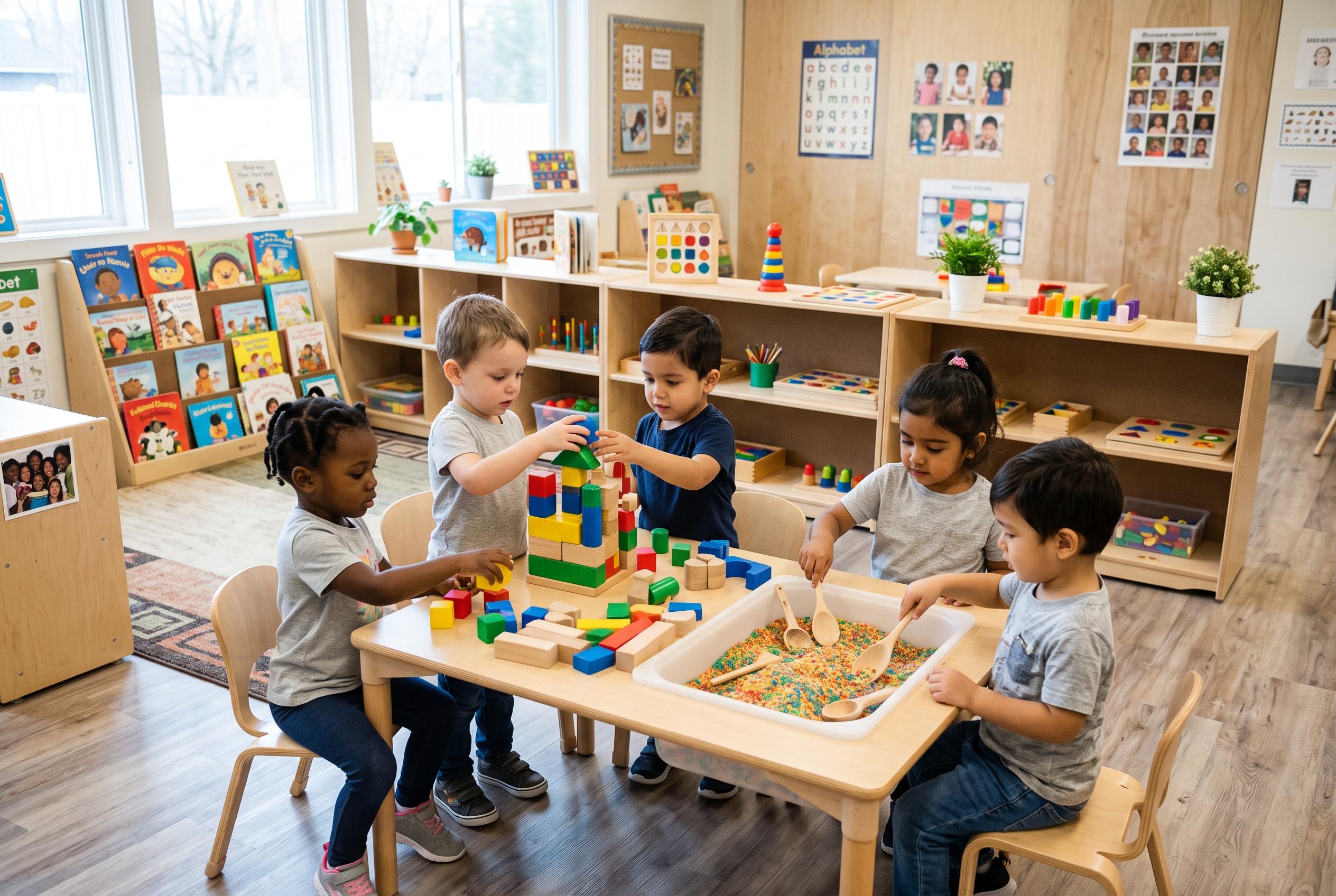

A comprehensive 20-year study of Tulsa’s universal pre-kindergarten programme reveals sustained academic, social, and civic advantages, adding to evidence that high-quality early education reshapes lifelong outcomes.
A 20-year study of Tulsa’s universal pre-kindergarten programme adds to a growing body of evidence that early childhood education can deliver benefits well beyond the classroom, according to Georgetown University’s McCourt School of Public Policy. The research tracked children who attended the programme and found gains that extended from early academic progress to later school completion, college enrolment and civic participation, supporting the view that high-quality public pre-K can have lasting social returns.
The Tulsa findings sit alongside other research pointing in the same direction. A randomised trial in a district near Denver, analysed by Stanford’s Center for Education Policy Analysis and also featured in work from the University of Virginia, found that children offered full-day pre-K made stronger gains than those in half-day places across vocabulary, literacy, maths, cognition and physical development. The Virginia researchers said the full-day model also appeared to reduce later special education and English learner designations for children with possible developmental needs.
Longer-run evidence is also emerging from state-funded programmes. An IZA Institute of Labor Economics paper on Texas found that public pre-K increased enrolment, especially where few alternative preschool options existed, and reported a rise in high school graduation rates and earnings at age 27 in districts that offered places for both 3-year-olds and 4-year-olds. The study found no measurable effect on college enrolment, suggesting that the design and quality of programmes matter as much as access.
Recent third-grade research published in Early Childhood Research Quarterly adds another layer. That study followed nearly 28,000 children, many of them Latino, Black and from low-income families, and found that those who attended public school pre-K at age 4 outperformed peers in centre-based or family childcare settings. The gains were strongest in districts with weaker elementary schools, a reminder that the benefits of pre-K are easier to sustain when later schooling is also strong.
Disclaimer: This content is for informational purposes only and is not intended to be a substitute for professional medical judgment, advice, diagnosis, or treatment.