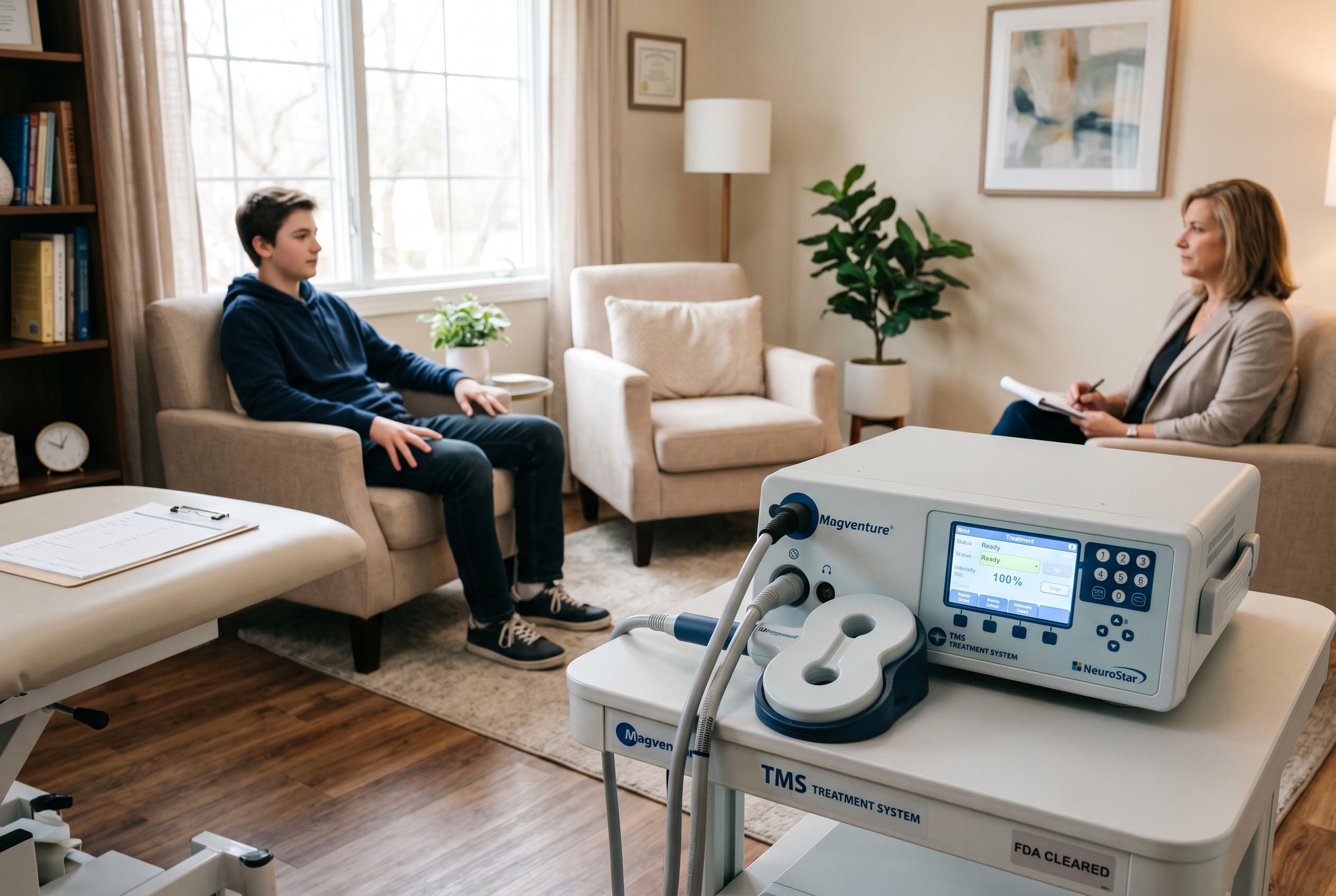

Transcranial magnetic stimulation (TMS) is gaining traction as a supplementary treatment for teenagers with major depressive disorder, with recent FDA clearances signalling a new phase of development and cautious optimism in the field.
Transcranial magnetic stimulation is emerging as another option for teenagers with major depressive disorder when medication on its own has not done enough. According to Inspire TMS Denver, the Food and Drug Administration cleared one TMS system in 2025 for adolescents aged 15 to 21 as an add-on treatment, not as a replacement for antidepressants. Medical Economics later reported a separate FDA clearance for BrainsWay’s Deep TMS system for the same age group, underscoring how quickly the field has moved.
The important distinction is that the treatment is adjunctive. In practice, that means it is meant to be used alongside antidepressant medication for young patients who have not responded adequately to drugs alone. Clinics promoting TMS as a standalone fix are going beyond what the clearance described in these accounts supports. Inspire TMS Denver also says it requires a teen to already have both a psychiatrist and a therapist before treatment begins, reflecting the need for close clinical oversight.
The procedure itself is non-invasive. Magnetic pulses are directed at a region of the brain involved in mood regulation while the patient stays awake, with no sedation or anaesthetic. Sessions are brief, usually about 20 minutes, and treatment is typically delivered on weekdays over roughly six weeks, followed by a short taper. Side effects are usually mild and local, such as scalp discomfort or a headache, and most patients can return to school and normal activities straight away.
Research cited in the supplied material suggests the approach has promise, but it is still developing. A review in the Journal of the American Academy of Child and Adolescent Psychiatry found encouraging response rates, while also noting that many studies have been small and methodologically limited. A more recent report in Molecular Psychiatry called for longer-term research to better understand durability of benefit and any delayed effects in the developing brain. Real-world data highlighted by Medical Economics and a study indexed in PubMed both point to meaningful improvement in many adolescents and young adults, but the broader message remains cautious: TMS may be a useful addition to care, not a cure-all, and the best results appear when it is carefully integrated with medication and therapy.
Disclaimer: This content is for informational purposes only and is not intended to be a substitute for professional medical judgment, advice, diagnosis, or treatment.