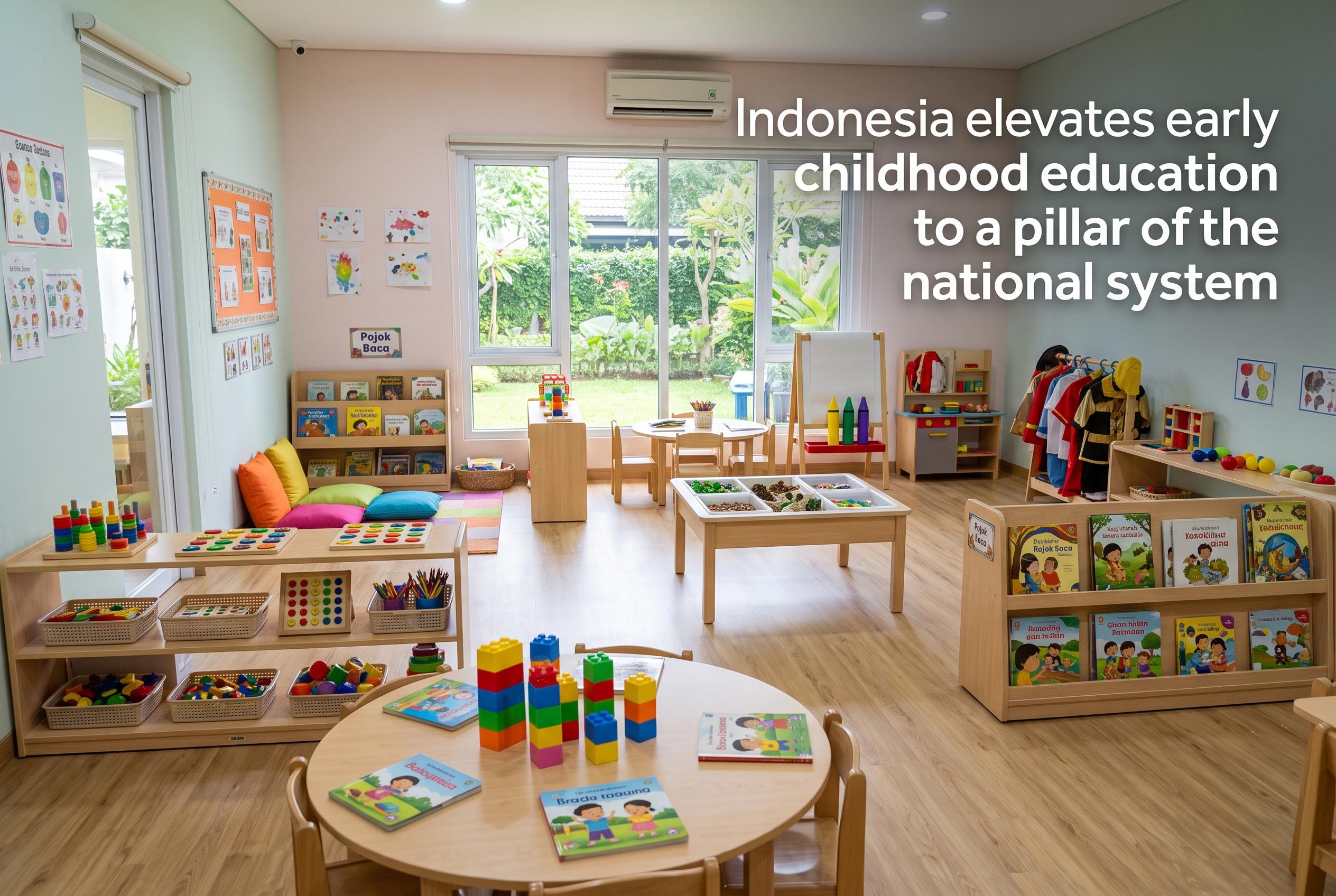

Indonesia’s education ministry is redefining PAUD as a central element of the country’s formal education framework, linking policy reforms with nationwide infrastructure improvements and enhanced early cognitive development initiatives.
Indonesia’s education ministry is pushing to recast early childhood education as a core part of the national system, with deputy education minister Fajar Riza Ul Haq saying PAUD is no longer being treated as a mere add-on. Speaking in Batam on Tuesday, August 11, he said the government wants pre-school education to sit fully within the country’s formal education framework, backed by improved facilities and a stronger focus on children’s early cognitive development.
That policy direction is now feeding into the planned revision of the National Education System Law, which is being discussed with the House of Representatives’ Commission X. According to Media Indonesia, one of the central issues under review is whether the legal definition of a teacher should be widened to include professional educators at PAUD level as well as those in primary and secondary education. The aim is to lift the standing of early-years teachers and give PAUD a clearer institutional role.
The wider push is tied to President Prabowo Subianto’s drive to upgrade education infrastructure nationwide. The government has said it wants to eliminate severely damaged schools by 2028 and complete the revitalisation of 100,000 schools by 2027. Fajar has urged local education offices to be more selective in identifying schools that genuinely need support, while stressing that physical repairs alone are not enough. He has argued that early learning should also build curiosity, with children encouraged to ask questions rather than simply memorise answers.
Fajar has also linked PAUD to imagination, social development and a sense of security, saying it should function as a second home for young children. He has cautioned that digital interactive boards are only support tools and should not replace teachers, adding that their use in PAUD should be limited so children still spend most of their time interacting with one another. He closed his Batam visit on Wednesday, August 12, by meeting children from several kindergartens in Belakang Padang and joining a mass exercise session with them.
Disclaimer: This content is for informational purposes only and is not intended to be a substitute for professional medical judgment, advice, diagnosis, or treatment.