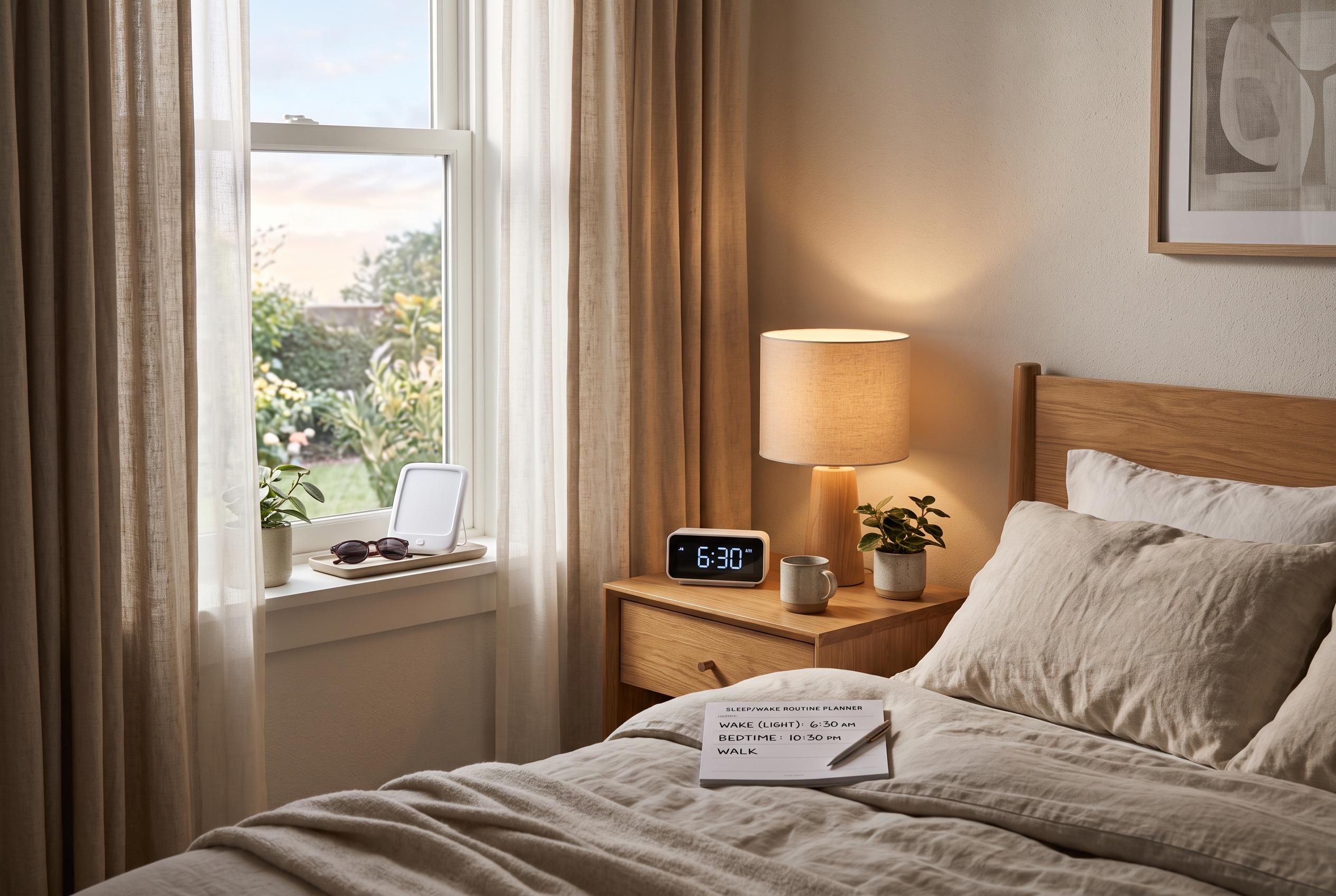

New approaches to improving sleep involve more than willpower, highlighting the importance of light exposure, consistent wake times, and gradual changes to reset the body’s internal clock and combat delayed sleep issues.
Trying to sleep earlier is rarely a matter of willpower. The more effective approach is to shift the body clock that tells you when you feel sleepy, then let bedtime follow. Sleep experts commonly frame that clock as a circadian rhythm driven largely by light exposure, not by intention, which is why simply getting into bed sooner often leads to long stretches of wakefulness rather than an earlier night’s rest.
The key move is to anchor the wake-up time, not the bedtime. Sleep Foundation and Healthline both advise making wake time consistent every day and changing it in small steps, usually about 15 minutes every few days, so the body has time to adapt. Morning light is central to that adjustment because it helps advance the circadian rhythm, while sleeping in on weekends can undo progress by pushing the clock back again.
Light should work in two directions: more of it early, less of it late. Healthline and other sleep guides recommend getting bright outdoor light shortly after waking, then dimming lights in the evening and cutting back on screen exposure before bed. The logic is simple: morning light helps bring sleep forward, while bright evening light tells the brain to stay alert for longer.
Moving bedtime earlier also works better when it happens gradually. Sleep Foundation recommends shifting both bedtime and wake time in small increments, and its guidance on delayed sleep-wake phase syndrome notes that light therapy and, in some cases, carefully timed melatonin can help reset a delayed schedule. Clinical literature on circadian rhythm sleep disorders likewise stresses that phase-shifting often needs individualised treatment rather than one-size-fits-all advice.
The sleep environment matters too. Common recommendations from Sleep Foundation, Healthline and related sleep advice pieces include keeping the bedroom cool, quiet and dark, limiting stimulating activity before bed, avoiding caffeine late in the day and using a wind-down routine that signals the day is ending. Exercise can help as well, especially if it is done earlier rather than immediately before bed.
Not every late night is a body-clock problem. Some people stay up because evening is the only part of the day that feels like their own, a pattern often described as revenge bedtime procrastination. In those cases, the solution is behavioural as much as biological: build in protected personal time earlier in the evening, set a wrap-up alarm and remove obvious temptations such as autoplay and phone use in bed.
If a delayed schedule is long-standing, severe or accompanied by snoring, gasping or persistent fatigue, sleep specialists say it may be more than a habit. Delayed sleep-wake phase disorder is a recognised circadian condition, and clinical sources recommend evaluation with sleep logs, actigraphy or melatonin-timing tests when self-help measures do not move the schedule. In those cases, professional guidance is often the quickest path to lasting change.
Disclaimer: This content is for informational purposes only and is not intended to be a substitute for professional medical judgment, advice, diagnosis, or treatment.