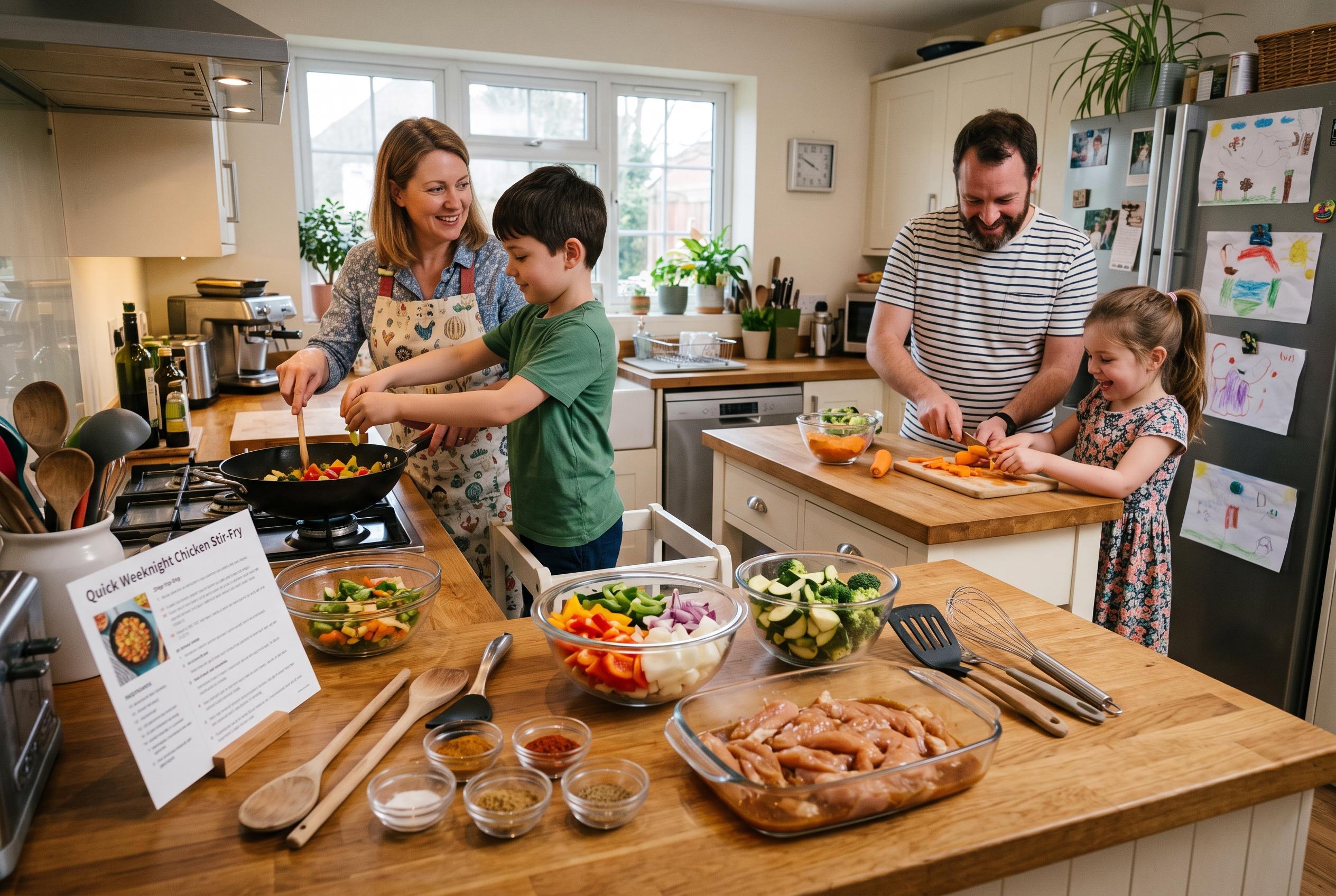

Innovative parenting strategy promotes step-by-step cooking responsibilities and organised meal prep to foster independence and ease weeknight pressures for busy families.
Busy families are being encouraged to treat dinner not as a daily scramble but as a repeated lesson in routine, responsibility and confidence-building. The parenting approach outlined by NotInTheKitchenAnyMore.com is built around predictable roles, small tasks and steady practice, with parents guiding children through simple jobs until they become habits. The aim is not only to cut the strain of evening meals but to help children learn practical skills they can keep using as they grow.
That emphasis on gradual responsibility aligns with children’s cooking-safety advice from Children’s Healthcare of Atlanta, which recommends age-appropriate tasks and close supervision. Younger children can begin with basic jobs such as washing fruit and vegetables, while older children can move on to more complex work with appliances and other kitchen tools. The broader point is that children gain confidence when tasks are introduced step by step rather than all at once.
Meal planning also sits at the centre of the method. Several family meal-prep guides, including those from MyChefDeck, NestSync and Derby Lane Dreams, point to Sunday planning sessions and short prep blocks as a practical way to reduce weeknight pressure. Common tactics include choosing a limited set of meals for the week, preparing base ingredients in advance and building dinners from a few reliable components. ParentMap similarly recommends keeping a master list of family favourites and involving children in planning so the work is shared rather than left to one adult.
The NotInTheKitchenAnyMore.com model extends that logic into the household itself. It encourages parents to assign one clear kitchen role per child, rotate responsibilities and use checklists or chore cards to make expectations obvious. In practice, that can mean one child sets the table, another pours drinks and an older child helps plate food or warm a side dish. The result, advocates say, is less friction, fewer reminders and a family routine in which children learn both independence and the discipline needed to contribute to daily life.
Disclaimer: This content is for informational purposes only and is not intended to be a substitute for professional medical judgment, advice, diagnosis, or treatment.