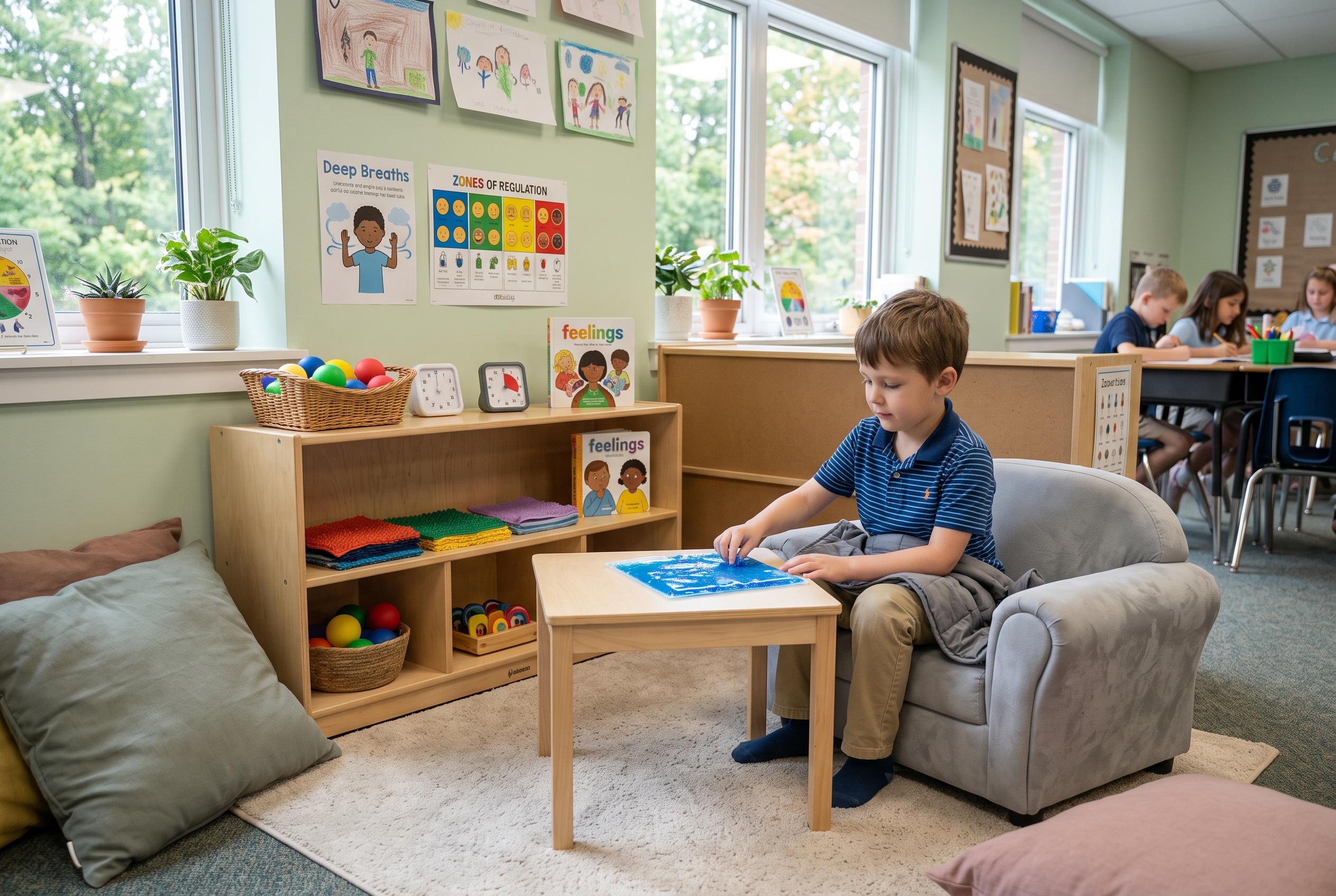

Classroom calm-down corners, bespoke spaces designed to aid children’s emotional regulation, are gaining traction for reducing disruptions and fostering wellbeing, with innovative setups tailored to age and needs.
A classroom calm-down corner can give children a designated place to recover when emotions start to run high, helping them return to learning without turning a difficult moment into a disruption. The idea is simple: offer pupils a quiet, predictable space where they can pause, breathe and settle themselves before rejoining the lesson. Educators who use these corners say they can help children practise self-regulation rather than acting out when they feel overloaded. According to a guide from SensoryGift, the approach is also intended to reduce disruptive behaviour while supporting emotional wellbeing.
The strongest versions are tailored to the age group, the room and the needs of the children using them. Preschool Bright Start says an effective setup does not have to be elaborate, but it should feel welcoming and easy to use. That can mean a cushion, beanbag or soft rug for comfort, along with visual prompts that remind children what to do next. SensoryGift adds that teachers should think carefully about location, rules and expectations so the space feels safe rather than punitive.
The materials inside the corner matter too. Common choices include breathing cards, stuffed animals, puzzles, colouring pages, stress balls, books, art materials, writing supplies and sensory tools such as putty, headphones or kinetic sand. The aim is not to distract children indefinitely, but to help them reset in a way that suits different temperaments and sensory needs. Mrs. D’s Corner suggests a kit can also include visual strategy cards, bubbles, resistance bands and simple activity books, giving pupils several ways to calm themselves without needing much adult intervention.
Research and classroom experience both point to broader gains. Thompson’s 2021 study, cited by Kids Yoga Stories, found that negative behaviour decreased after a classroom calm-down corner was introduced in a primary setting. That fits with the wider view that children need repeated opportunities to practise emotional regulation, problem-solving and communication. For teachers, the benefit is not only a quieter classroom but a practical way to help pupils build habits they can use well beyond school.
Disclaimer: This content is for informational purposes only and is not intended to be a substitute for professional medical judgment, advice, diagnosis, or treatment.